And Then There Were None
Book Summary & Analysis
Book summary and writing analysis of And Then There Were None by Agatha Christie.
And Then There Were None works because Christie builds a perfectly sealed narrative machine, then turns the crank and never lets you look away. The central dramatic question stays brutally simple: who controls the island, and who dies next? You don’t read to “solve” in a cozy way; you read to survive in your imagination. Christie makes every page answer the question and worsen the answer.
You can’t imitate this book by copying the body count or the nursery rhyme gimmick. If you do, you’ll produce noise: a string of deaths without moral pressure. Christie’s engine runs on accusation and complicity. Each guest arrives with a private story they don’t want exposed, and the plot weaponizes that secrecy. The novel doesn’t ask, “Who is the killer?” first. It asks, “What do these people deserve?” and then uses that to ration sympathy.
The inciting incident happens at the first dinner on Soldier Island, off the Devon coast, in a newly built modern house that feels too clean to trust. A recorded voice plays and publicly charges each person with a specific death they caused or allowed. That moment forces a decision: confess, deny, or counterattack. Christie doesn’t “start with a murder.” She starts with a courtroom that has no judge, no exits, and no agreed rules. If you start your version with a corpse, you’ll miss the real ignition: public accusation that forces characters to act against their self-image.
Christie assigns the protagonist role to Justice Wargrave in the slyest way possible: she makes him feel like the story’s stabilizing mind. He speaks in reasoned, legal terms, proposes procedures, and seems committed to safety. The primary opposing force looks like an external killer, but the deeper antagonist operates as a system: isolation, dwindling supplies, and the group’s collapsing trust. Christie turns “Who did it?” into “Who will the group choose to believe?” and that gives every conversation stakes.
Stakes escalate by narrowing options in three directions at once. Physical escape vanishes first: the boat fails to arrive, the weather turns, the sea stays indifferent. Social escape vanishes next: the group needs unity but can’t afford it, because any unity creates a target. Psychological escape vanishes last: even if you behave perfectly, your past can convict you. Each death removes not just a person, but a skillset, an alibi possibility, a witness, a potential ally.
If you imitate Christie naively, you’ll over-explain your puzzle or under-build your suspects. Christie does the opposite. She gives you crisp roles and readable temperaments (the soldier, the doctor, the governess, the mercenary) and then she pressures those roles until they crack. She also keeps the clue stream “quiet.” Clues show up as ordinary logistics and ordinary speech. That’s why the reveal lands: you realize you watched the mechanism the whole time and kept calling it atmosphere.
The setting matters because it behaves like a character with a contract. Late 1930s England gives Christie a culture of reputation and class performance, so denial carries social weight. Soldier Island gives her a finite map you can hold in your head: the house, the cliffs, the shoreline, the bedrooms, the dining room with the recorded voice. When the cast shrinks, that map grows louder. You don’t need a bigger world; you need a smaller one that becomes harder to live in.
The book ultimately succeeds because it runs a moral experiment under thriller lighting. Everyone tries to control the narrative of their own guilt; the story punishes that impulse. And Christie does it without sermonizing. She just keeps making the next step feel like the only step, until the only steps left point inward. That’s the blueprint: trap your characters inside a decision machine, then make each decision cost them more than they expected.
Story Structure & Narrative Arc
Story structure and emotional arc in And Then There Were None.
The emotional trajectory plays like a subversive Tragedy disguised as a puzzle-box thriller. The group starts with ordinary confidence—polite manners, private agendas, the belief that reason and procedure can control events. It ends in atomized fear and moral exposure, where “innocent until proven guilty” turns into “alive until proven dead.” Wargrave begins as a voice of order; he ends as the architect of order taken to monstrous completion.
Christie lands her low points by converting safety rituals into threats. Dinner conversation becomes testimony. Sleeping becomes vulnerability. A headcount becomes a verdict. Sentiment flips whenever the group thinks it has stabilized—after a plan, after a speech, after a supposed certainty—and then a death proves the plan naive. The climactic force comes less from surprise and more from inevitability: the reader senses the system tightening, but keeps hoping for a loophole that the story refuses to provide.

Studying this book—and stuck on your pages?
Put your draft in Draftly. Fix scenes and dialogue in the text—not in another tab. When you want sharper feedback, AI editors are ready.
Free welcome credits included. No credit card needed.Writing Lessons from And Then There Were None
What writers can learn from Agatha Christie in And Then There Were None.
Christie’s masterstroke sits in her control of information temperature. She doesn’t “withhold clues” in a theatrical way; she normalizes them. She makes the island’s practical details—locked rooms, missing objects, timing, who heard what—feel like background until you realize background drives causality. That choice keeps the prose brisk and the reader confident, which matters because confidence makes readers careless. Careless readers misjudge the obvious.
Watch how she uses dialogue as a weapon, not a delivery system. After the recorded accusation, characters don’t swap exposition; they negotiate blame in real time. When Vera Claythorne clashes with Philip Lombard, their exchanges keep shifting between flirtation, contempt, and calculation. Christie lets their tone changes tell you more than their words. Modern writers often slap in “snappy banter” to keep pace. Christie uses verbal friction to change the power map of the room.
She builds atmosphere through logistics, not purple fog. The new house on Soldier Island feels clinical, staged, almost like a showroom. That matters because it denies the characters comforting history. They can’t lean on tradition or familiar routines; they must invent procedure while fear rises. Notice how often Christie returns you to concrete spaces—the dining room where the voice speaks, the bedrooms where people listen to footsteps, the shoreline where rescue fails. She makes place enforce behavior.
Structurally, she treats each death as a plot edit, not a shock beat. Every removal simplifies some possibilities and complicates others. The remaining cast loses a function: a doctor’s authority, a soldier’s discipline, a servant’s access, a judge’s procedure. Many modern thrillers rely on late twists to “earn” momentum. Christie earns momentum by shrinking the system and making every scene do two jobs: advance the murder sequence and degrade the group’s ability to think together.
How to Write Like Agatha Christie
Writing tips inspired by Agatha Christie's And Then There Were None.
You need a voice that sounds calm while it tightens the screws. Christie writes with clean sentences and steady observation, then lets dread build from what people do, not what the narrator declares. Don’t narrate fear. Stage it. Put characters in ordinary actions—pouring drinks, checking locks, counting figurines—and let those actions carry menace because of context. If you add melodramatic emphasis, you’ll break the spell. Treat horror like paperwork and your reader will supply the panic.
Build characters as moral cases, not quirky profiles. Each guest arrives with a self-justifying story and a social mask they can perform under pressure. Give each person a credible way to sound innocent and a private reason to fear exposure. Then design how they fight: who argues procedure, who bullies, who flatters, who vanishes into silence. Track how guilt changes their tactics. If you can swap two characters’ reactions without rewriting the scene, you don’t have characters yet.
Avoid the genre trap of “random death lottery.” Christie avoids it by making the killings feel like judgments, not accidents, and by making the group’s choices matter. Each attempt to impose order—buddy systems, searches, locking doors—creates new vulnerabilities. If your murderer can strike anytime for any reason, you remove suspense because you remove cause. Tie every major turn to a decision, a misread, or a social rupture. Your reader doesn’t need fairness. They need consequence.
Write this exercise and don’t cheat. Create a closed setting with ten people who each carry a secret wrongdoing. In scene one, force a public accusation that names the wrongdoing precisely. List five “procedures” the group tries to stay safe. For each procedure, write the exact way it fails because of human nature, not because you needed another body. After each death, delete one capability from the group and rewrite the next plan with fewer resources. End when planning collapses into pure psychology.
Who Would Edit This Book?

Callum Rhys Mahoney
Developmental Fiction Editor and Manuscript CoachI grew up between Wagga and my aunt’s place out near Narrandera, in a family that could argue for sport and then feed you like nothing happened. Books were around, but not in a precious way. My old man liked stories where people did what they said they’d do, even if it cost them. I still hear that voice when a character “can’t” make a decision because the plot needs another chapter. I didn’t set out to be an editor. I studied teaching, worked a few rough years in classrooms, and then left after a run of short contracts and one admin reshuffle that made it clear I was replaceable. A mate pulled me into doing learning materials and assessments because I could spot where people were gaming the question. That work taught me to watch for what the text rewards versus what it claims to reward - which is the same problem in a lot of manuscripts. I also spent a couple of seasons doing night shifts at a servo when money got tight. I kept a notebook behind the counter and wrote scenes between customers, mostly to stay awake. I remember one bloke coming in every Thursday, buying the same pie, and telling me the same story about a dog he swore was smarter than his ex. I don’t know why I remember that, but I do. Editing started as favour-work. People in town found out I’d read their drafts and I’d send back long emails with scene-by-scene notes. Somewhere along the line it became my paid work, mostly because I was consistent and because I’m not afraid to say, “This turn doesn’t belong to your protagonist.” I’m biased toward decisive characters and I don’t plan to cure myself of it; I’d rather a story risk an ugly choice than drift into polite inevitability.

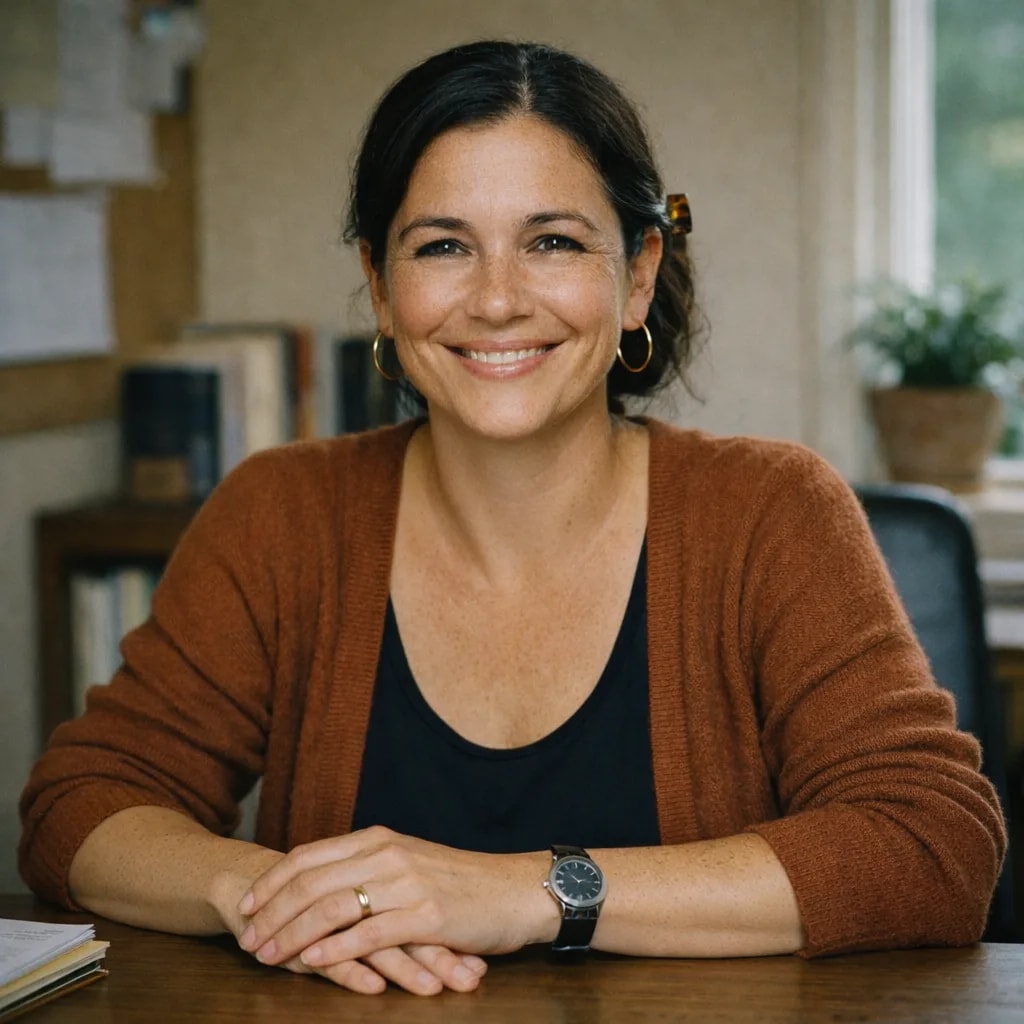
Danae Marcelline Brooks
Developmental Fiction Editor & Manuscript CoachI grew up between church basements, tidewater heat, and people who could tell a whole family story while stirring a pot and never looking up. My mom kept paperback romances in a shoebox like they were contraband, and my aunt kept a shelf of mystery novels with cracked spines. I read both. I learned early that readers forgive a lot, but they don’t forgive being bored or being lied to. I didn’t come up dreaming about editing. I wanted steadier work than “writer,” and I was the kid who could take notes fast, so I ended up in admin jobs where I got volunteered into fixing other people’s documents. Outside of that, I spent a couple years doing hair out of a friend’s kitchen. That part of my life doesn’t explain my editing, but it’s true: I still remember the sound of a cape snapping and how people tell you the most pointed truths when they think you’re not allowed to answer back. Sometimes I miss that kind of honesty. A storm took out power for a week when I was in my late twenties, and I agreed to help a neighbor organize a stack of workshop pages because there wasn’t much else to do at night. The pages were a mess, but the voice was alive. I wrote margin notes the way I talk, not the way school taught me, and the neighbor asked for more. That turned into being the person people handed drafts to. I still carry this old belief that if you “work hard enough,” the story will behave. I don’t defend it, but I catch myself acting like it’s true when I see a writer piling scenes on top of scenes. Now I’m a developmental editor because I’m impatient with pretty sentences that protect a story from making decisions. My bias is I’ll side-eye passive main characters harder than most editors will, even when the genre gives them excuses. I don’t correct that. It’s the lens I read through, and writers who want a gentler read should pick someone else. If you want a first reader who will point at the exact scene where your book starts dodging consequences, I’m your person.
Frequently Asked Questions
- What makes And Then There Were None so compelling?
- Many people think the book hooks you because Christie stacks shocking deaths. Deaths help, but the real hook comes from the closed system: no exits, a finite suspect pool, and public moral accusations that force everyone to perform innocence. Christie also escalates by removing resources and trust at the same time, so every solution creates a new problem. If you want the same compulsion in your work, track how each scene reduces options and increases interpersonal risk, not just body count.
- How do I write a book like And Then There Were None without copying it?
- A common assumption says you need a remote island, a rhyme, and a big twist. You don’t. You need a sealed environment, a moral lever that makes characters lie, and a sequence where each event shrinks the group’s ability to cooperate. Design your own “accusation engine” that forces decisions in public, then punish the easiest self-protective choices. Readers forgive different settings and methods; they won’t forgive a plot where events don’t feel earned by behavior.
- What themes are explored in And Then There Were None?
- People often label the theme as simple justice: guilt gets punished. Christie complicates that by showing how reputation, class, and self-story warp the idea of justice into performance. The book also explores complicity—harm done by omission, cowardice, and convenient rationalizations. If you write with these themes, avoid speeches. Put characters in situations where they must choose between safety and truth, then let the choice stain them in visible ways the group reacts to.
- Is And Then There Were None appropriate for younger readers?
- A common rule says classic mysteries stay “safe” because they avoid graphic content. Christie avoids gore, but she doesn’t avoid dread, death, or moral cruelty, and the psychological pressure can feel intense. The appropriateness depends on the reader’s tolerance for sustained anxiety and for stories that offer little comfort. If you aim for a similar tone, you can keep the language clean while still writing emotionally harsh outcomes—tone matters as much as content.
- How long is And Then There Were None?
- People assume classics run long and slow. This one usually sits around 250–300 pages depending on edition, and Christie writes with unusually tight pacing for an ensemble cast. She keeps scenes short, objectives clear, and transitions purposeful, which makes the book feel even faster than its page count. If you want that speed, cut travelogue, compress repeated conversations, and make every scene change either the suspect logic or the social balance of power.
- What writing lessons can mystery writers learn from Agatha Christie’s structure here?
- Writers often believe a mystery succeeds when the solution surprises the reader. Surprise matters, but Christie earns the ending by controlling procedure: who leads, how the group investigates, what counts as evidence, and how fear changes those rules. She also keeps clues mundane so they hide in plain sight. If you apply the lesson, outline your investigation steps like a chain of decisions, then test each step for how it could backfire under stress and mistrust.
About Agatha Christie
Hide one misreadable fact inside an ordinary scene. Readers accuse the wrong person with confidence, then blame themselves.
In the last chapter of The Murder of Roger Ackroyd, the narrator goes back over his own manuscript and demonstrates that he wrote nothing false anywhere in it. He is right. His account of that night is accurate to the minute, and the ten minutes in which he did the killing sit in the white space between two of his sentences, a gap he points out himself at the end, when he wonders aloud whether a row of stars there would have made anybody ask about it.
That gap is the method. Christie hands you true facts and lets you assign them the wrong weight. The false conclusion you reach is your own work. She supplies the material and steps back. Her endings land as an accusation rather than a trick. You built the wrong case.
The hard part is doubleness. One sentence has to work twice, and neither reading can look built. Most writers manage the second reading. Drafts die on the first: the clue gets a sentence to itself, or an adjective too many, or a beat of silence after it, and the reader's hand goes up.
Her furniture has dated. The machine has not, and readers raised on spoiler threads and twist-literate television still lose to it, because she is not competing on novelty. She competes on inference. Inference is the one thing every reader brings to the first page.












Ready to improve your draft with direction?
Open Draftly, bring your draft, and move from stuck to a stronger draft without losing your voice. Editors are on standby when you want a deeper pass.
Free welcome credits included. No credit card needed.