Brave New World
Book Summary & Analysis
Book summary and writing analysis of Brave New World by Aldous Huxley.
Brave New World works because it refuses the lazy dystopia move of “bad government vs brave rebel.” Huxley builds a world where most people feel fine. That choice forces a sharper central dramatic question: can a person stay human—feel real grief, love, and moral weight—inside a society that treats discomfort as a design flaw? If you try to imitate this book by copying its slogans and gadgets, you will write a tour guide. Huxley writes a pressure test.
He sets the story in the World State, centuries after the Nine Years’ War, primarily in London at the Central London Hatchery and Conditioning Centre. You smell antiseptic order. You hear jingles. You watch infants trained like lab animals. He doesn’t ask you to “imagine” the society; he makes you witness procedures, policies, and routines that create citizens who want what the system needs them to want. That’s the engine: social control that runs through pleasure, not terror.
Pick your protagonist carefully. The book splits your attention among Bernard Marx, Lenina Crowne, and John “the Savage,” but the clearest arc belongs to John because he can still want something the system cannot provide. Bernard supplies the first crack in the facade—a man who resents his place but still craves approval. The primary opposing force doesn’t wear a villain mustache. It wears a lab coat and a smile: Mustapha Mond, plus the conditioning itself, plus the crowd’s cheerful refusal to feel.
The inciting incident doesn’t arrive as an explosion; it arrives as a permissive choice. Bernard persuades Lenina to take a holiday to the Savage Reservation in New Mexico. That decision matters because it breaks the rule that keeps the World State stable: don’t let citizens see alternatives that could make them compare. Huxley uses the trip as a structural hinge. He moves you from “this society feels odd” to “this society defines oddness as disease.”
Stakes escalate through contrast, not body count. On the Reservation, John grows up on Shakespeare and hunger and humiliation. Back in London, the State manufactures happiness with sex, sport, and soma. When Bernard brings John to London, Huxley turns John into a living contaminant. John’s presence threatens the only resource the World State truly protects: emotional uniformity. The closer John comes to the center, the more the system must respond—not with violence first, but with entertainment, containment, and finally removal.
Huxley keeps tightening the screws by forcing public collisions instead of private brooding. Lenina reaches for John with the only script she knows, and he reads it as spiritual vandalism. Bernard tries to use John as social leverage, and his “outsider” pose collapses under attention. The society doesn’t chase John; it absorbs him, displays him, then gawks at his refusal. That escalation feels inevitable because Huxley never lets you forget the machinery that makes everyone else “reasonable.”
The philosophical argument lands because Huxley stages it as a character confrontation, not an essay. Mustapha Mond can answer John. That matters. If you write your dystopian authority figure as a straw man, you hand your reader an escape hatch: they can feel superior and stop thinking. Mond defends stability, comfort, and the end of war with articulate calm. John defends suffering because suffering implies choice. The story’s pressure peaks when both positions sound partly true.
The ending proves the book’s real warning: the system doesn’t need to kill you if it can make your values unlivable. John tries to build a private moral universe, and the crowd turns it into spectacle. Huxley escalates the stakes from social embarrassment to existential impossibility. If you imitate the surface—soma, slogans, sex—you will miss the deeper craft move: Huxley designs a world where the antagonist wins by satisfying needs too quickly, leaving no room for a soul to grow.
Story Structure & Narrative Arc
Story structure and emotional arc in Brave New World.
The emotional trajectory plays like a subversive tragedy with a brief “rise” that only sharpens the fall. John begins with hunger for meaning and a belief that art and suffering can dignify life. He ends with that belief cornered, mocked, and made unlivable. The world doesn’t crush him with brute force; it crushes him with consensus.
Sentiment shifts hit hard because Huxley makes each high point come from visibility, then turns visibility into captivity. The “uplift” of John entering London flips into a sinking realization that admiration can function as a cage. The low points land because the antagonism stays polite. Mond argues cleanly. Lenina desires sincerely. The crowd plays joyfully. That cheerfulness makes each moral shock feel colder, and it makes John’s final choices feel like the only remaining form of agency.

Studying this book—and stuck on your pages?
Put your draft in Draftly. Fix scenes and dialogue in the text—not in another tab. When you want sharper feedback, AI editors are ready.
Free welcome credits included. No credit card needed.Writing Lessons from Brave New World
What writers can learn from Aldous Huxley in Brave New World.
Huxley earns his authority with procedural specificity. He opens inside the Hatchery, not in a rebel’s hideout, because he wants you to feel how control operates as routine. He stacks concrete actions—bottles, belts, hypnopaedia slogans, scheduled pleasures—until the world stops reading like an idea and starts reading like a workflow. Most modern dystopias rush to the “resistance” because it feels dramatic. Huxley makes compliance dramatic by showing you exactly how a person’s desires get installed.
He uses irony like a scalpel. The language sounds clean, managerial, almost merry, while the implications stay grotesque. That tonal mismatch creates a steady unease without needing constant violence. Watch how slogans and jingles compress complex ethics into repeatable noise; he doesn’t just tell you propaganda exists, he writes it in a form your brain can’t help but remember. Many writers try to achieve satire by sneering at their world. Huxley does it by letting the world speak fluently and letting you do the wincing.
Dialogue carries real argument because the opposing force can think. The confrontation between John and Mustapha Mond works because Mond answers with trade-offs, not threats. He frames happiness as social engineering and suffering as inefficiency, and he speaks as a man who has seen history’s bloodshed. John counters with Shakespeare and the right to be unhappy. You don’t need to agree with either, but you must respect both. A common shortcut turns the authority figure into a cartoon so the hero can “win” a speech. Huxley refuses you that comfort.
He builds atmosphere through social spaces, not weather. The feel of the novel comes from rooms designed to manage bodies: the Conditioning Centre, the feelies, the hospital ward where Linda dies, the planned leisure zones. Each location enforces a behavior script, so the setting acts like a silent character. When Lenina and John collide, you don’t just watch two people misunderstand each other; you watch two moral operating systems crash in real time. That’s why the book lingers. It doesn’t decorate a theme. It stages a system and then dares a soul to live inside it.
How to Write Like Aldous Huxley
Writing tips inspired by Aldous Huxley's Brave New World.
Write your voice like you run a lab that sells happiness. Keep sentences clean. Keep diction managerial. Then slip in one detail that makes the reader’s stomach tighten. If you narrate your dystopia with constant outrage, you teach the reader how to feel and you kill discovery. Huxley lets cheerfulness do the damage. Practice writing a paragraph where everything sounds sensible, even kind, while the underlying act crosses a moral line. That contrast creates your signature pressure.
Build characters as collisions between programming and private ache. Bernard wants status more than truth, so he can’t carry a pure rebel arc. Lenina follows her training faithfully, which makes her sincerity tragic rather than villainous. John wants meaning so intensely that he turns desire into doctrine. Give each major character one need the system rewards and one need it punishes. Then force scenes where the rewarded need sabotages the punished one. Readers trust contradictions that cost something.
Avoid the genre trap of turning your world into a list of rules. Huxley avoids the brochure effect by making every piece of world-building change a relationship in the moment. The Reservation doesn’t exist to add “grit.” It exists to create a comparison that injures everyone who sees it. If your dystopian detail doesn’t complicate a choice, cut it. And don’t hide behind a vague “they control us.” Show who benefits today, who loses today, and what ordinary people do at 2 p.m. on a Tuesday.
Try this exercise and don’t cheat. Write a scene in a clinical public place where someone experiences real grief, and the surrounding culture treats grief as rude. Write it from the viewpoint of an outsider who cannot translate their pain into the available social scripts. Then write the authority’s response as calm problem-solving, not cruelty. End the scene with the crowd doing something pleasant. If your reader feels colder after the pleasant moment, you built the same engine Huxley built.
Who Would Edit This Book?
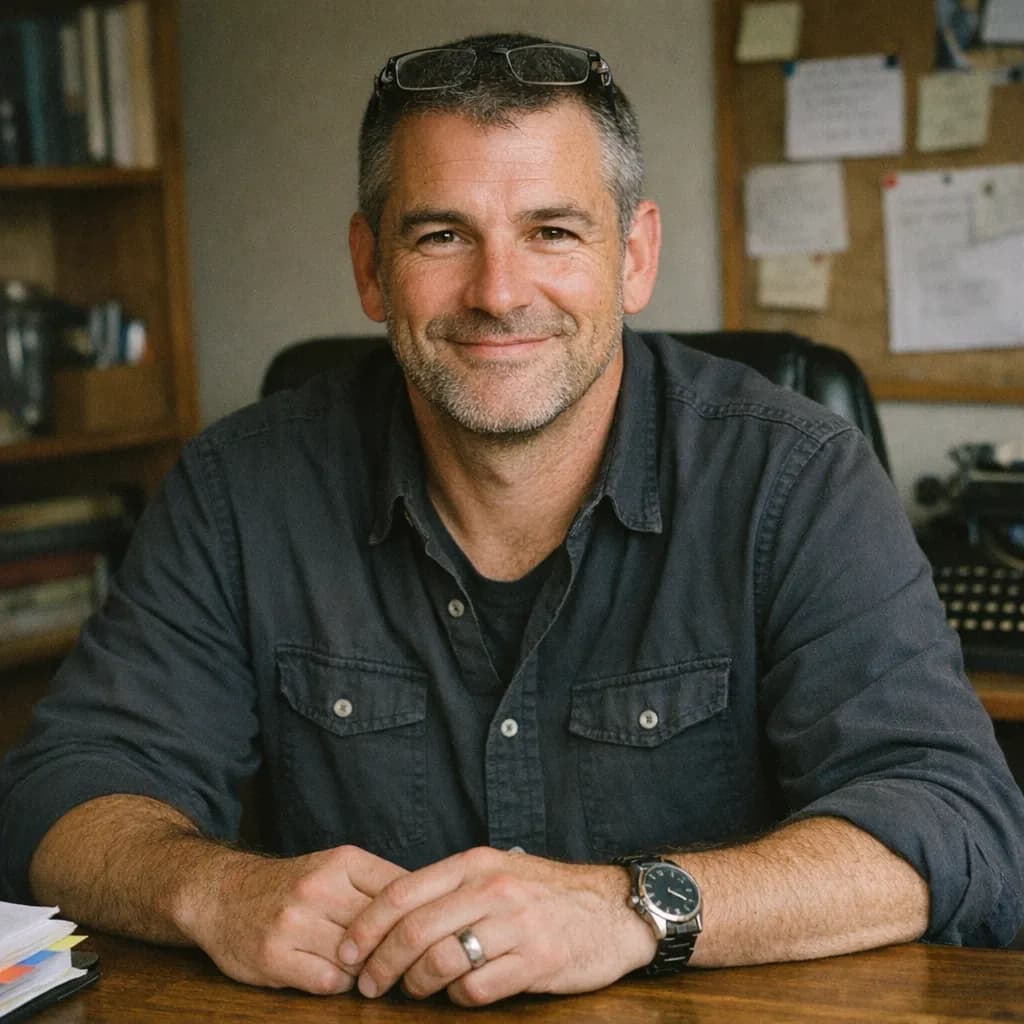
Callum Rhys Mahoney
Developmental Fiction Editor and Manuscript CoachI grew up between Wagga and my aunt’s place out near Narrandera, in a family that could argue for sport and then feed you like nothing happened. Books were around, but not in a precious way. My old man liked stories where people did what they said they’d do, even if it cost them. I still hear that voice when a character “can’t” make a decision because the plot needs another chapter. I didn’t set out to be an editor. I studied teaching, worked a few rough years in classrooms, and then left after a run of short contracts and one admin reshuffle that made it clear I was replaceable. A mate pulled me into doing learning materials and assessments because I could spot where people were gaming the question. That work taught me to watch for what the text rewards versus what it claims to reward - which is the same problem in a lot of manuscripts. I also spent a couple of seasons doing night shifts at a servo when money got tight. I kept a notebook behind the counter and wrote scenes between customers, mostly to stay awake. I remember one bloke coming in every Thursday, buying the same pie, and telling me the same story about a dog he swore was smarter than his ex. I don’t know why I remember that, but I do. Editing started as favour-work. People in town found out I’d read their drafts and I’d send back long emails with scene-by-scene notes. Somewhere along the line it became my paid work, mostly because I was consistent and because I’m not afraid to say, “This turn doesn’t belong to your protagonist.” I’m biased toward decisive characters and I don’t plan to cure myself of it; I’d rather a story risk an ugly choice than drift into polite inevitability.
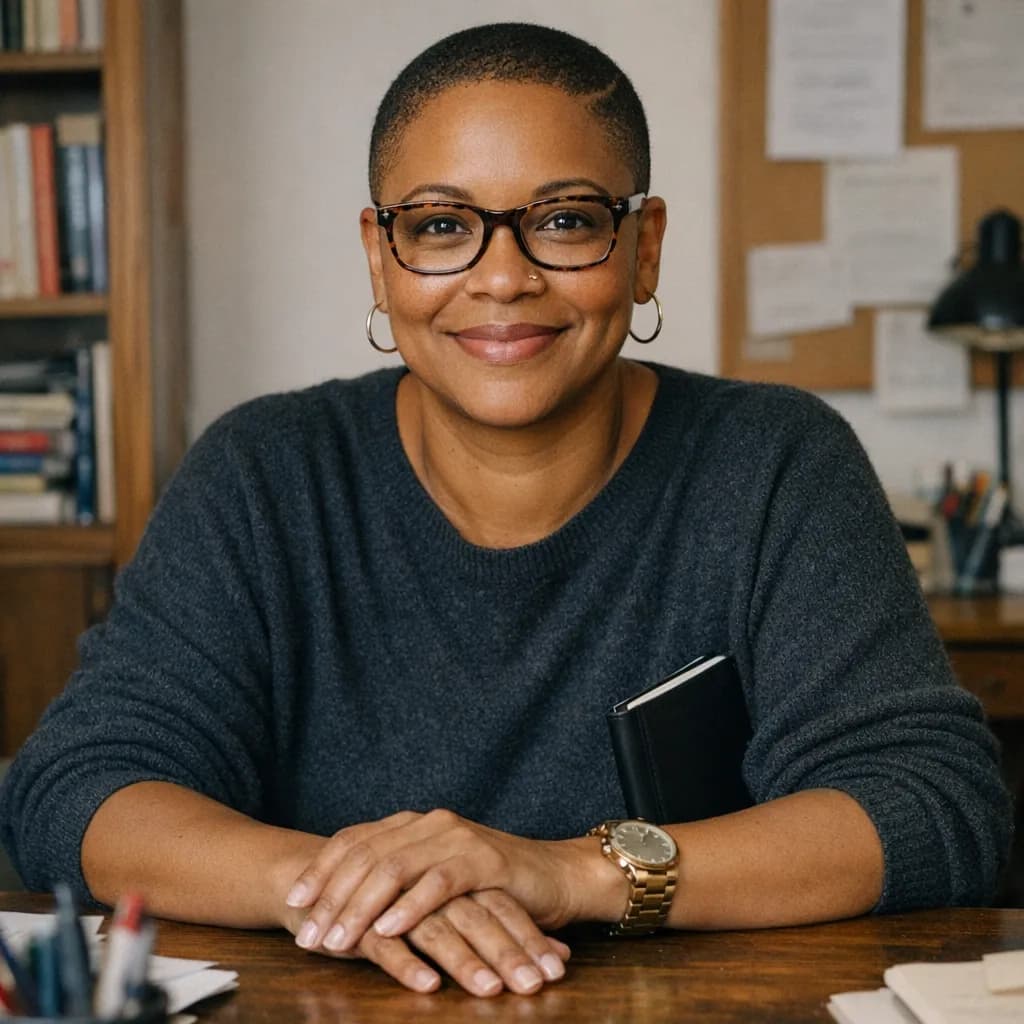
Danae Marcelline Brooks
Developmental Fiction Editor & Manuscript CoachI grew up between church basements, tidewater heat, and people who could tell a whole family story while stirring a pot and never looking up. My mom kept paperback romances in a shoebox like they were contraband, and my aunt kept a shelf of mystery novels with cracked spines. I read both. I learned early that readers forgive a lot, but they don’t forgive being bored or being lied to. I didn’t come up dreaming about editing. I wanted steadier work than “writer,” and I was the kid who could take notes fast, so I ended up in admin jobs where I got volunteered into fixing other people’s documents. Outside of that, I spent a couple years doing hair out of a friend’s kitchen. That part of my life doesn’t explain my editing, but it’s true: I still remember the sound of a cape snapping and how people tell you the most pointed truths when they think you’re not allowed to answer back. Sometimes I miss that kind of honesty. A storm took out power for a week when I was in my late twenties, and I agreed to help a neighbor organize a stack of workshop pages because there wasn’t much else to do at night. The pages were a mess, but the voice was alive. I wrote margin notes the way I talk, not the way school taught me, and the neighbor asked for more. That turned into being the person people handed drafts to. I still carry this old belief that if you “work hard enough,” the story will behave. I don’t defend it, but I catch myself acting like it’s true when I see a writer piling scenes on top of scenes. Now I’m a developmental editor because I’m impatient with pretty sentences that protect a story from making decisions. My bias is I’ll side-eye passive main characters harder than most editors will, even when the genre gives them excuses. I don’t correct that. It’s the lens I read through, and writers who want a gentler read should pick someone else. If you want a first reader who will point at the exact scene where your book starts dodging consequences, I’m your person.
Frequently Asked Questions
- What makes Brave New World so compelling?
- Many readers assume dystopias work because the regime commits obvious atrocities and the hero fights back. Huxley flips that: he makes comfort, convenience, and social approval do the policing, so conflict grows from what characters can’t say or feel without becoming “wrong.” The book compels writers because it shows how to build an antagonist out of incentives and norms, not just guards and laws. If your own story feels preachy, check whether your opposition can offer believable benefits.
- How long is Brave New World?
- A common rule says “classic novels run long,” so writers expect a slow, sprawling read. Brave New World stays relatively short (often around 60–70k words depending on edition), and it moves fast because Huxley front-loads the system and then detonates it with one catalytic contrast. For craft, that length teaches economy: you can build a whole society if each scene performs double duty as plot pressure and world proof. If your draft bloats, ask what each scene changes.
- What themes are explored in Brave New World?
- People often reduce the themes to “technology bad” or “government control,” which misses the sharper target. Huxley explores the trade between stability and truth, pleasure and meaning, and social harmony and individual conscience; he also interrogates how consumerism turns people into predictable appetites. Notice how he makes “happiness” feel suspect by defining it as the absence of depth, not the presence of joy. When you write theme, make it a choice characters pay for, not a message you announce.
- Is Brave New World appropriate for young readers?
- A common assumption says classics automatically suit advanced students, but appropriateness depends on maturity and context. The novel includes explicit references to casual sex, reproductive engineering, and drug use, and it frames these as normalized, which can challenge or confuse younger readers without guidance. For writers, that discomfort matters: Huxley uses taboo normalization to create moral vertigo. If you borrow that technique, you must control tone carefully so you provoke thought, not accidental endorsement.
- How does Brave New World handle world-building without info-dumps?
- Writers often hear “show, don’t tell” and then avoid explanation entirely, leaving readers lost. Huxley does the opposite: he explains through staged instruction—like the Hatchery tour—where explanation itself becomes a power display. He embeds slogans, procedures, and schedules inside scenes with hierarchy and social risk, so exposition carries tension. The lesson isn’t “never explain.” It’s “make explanation an action someone performs for a reason.” If your exposition feels flat, give it a social cost.
- How do I write a book like Brave New World?
- A common misconception says you should start by inventing clever tech and catchy slogans. Huxley starts with a moral design problem: what if a society removed pain so thoroughly that it also removed growth? Build your system from incentives, then build characters whose deepest values the system cannot accommodate. Finally, force public collisions where the system responds with calm competence, not melodrama. If you feel tempted to preach, translate the point into a scene where someone gets what they want and hates the price.
About Aldous Huxley
Use polished, logical sentences to escort the reader into an uncomfortable truth, then snap the trap shut with a single ironic turn.
Aldous Huxley writes like a man holding two instruments at once: a microscope and a megaphone. He lets you watch a mind rationalize its own compromises, then turns that private logic into public diagnosis. His pages rarely beg you to “feel.” They persuade you to notice. And once you notice, you can’t un-notice.
His engine runs on controlled contrast: the elegant sentence against the ugly truth, the polished social scene against the crude animal motive beneath it. He often builds a paragraph like a courtroom argument—observation, qualification, counterexample, verdict—then undercuts the verdict with a joke sharp enough to draw blood. The humor isn’t decoration. It’s the lever that keeps you reading while he rearranges your assumptions.
Imitating him fails because you copy the surface (the cleverness) and skip the wiring (the ethical pressure). Huxley earns his aphorisms by staging the thought that produces them. He makes abstractions feel physical by anchoring them to posture, appetite, boredom, vanity. He also calibrates distance: close enough to recognize yourself, far enough to laugh—then wince.
Modern writers still need him because he solved a problem we keep pretending we don’t have: how to write ideas without writing sermons. He drafts like an essayist who respects scene and revises like a satirist who respects the reader’s patience. He changed the terms of literary persuasion: you can build meaning through intelligence and still keep narrative traction—if you control irony, rhythm, and viewpoint with editorial discipline.












Ready to improve your draft with direction?
Open Draftly, bring your draft, and move from stuck to a stronger draft without losing your voice. Editors are on standby when you want a deeper pass.
Free welcome credits included. No credit card needed.