The Road
Book Summary & Analysis
Book summary and writing analysis of The Road by Cormac McCarthy.
If you think The Road works because it feels bleak, you’ll copy the ash and miss the fire. The novel runs on a tight central dramatic question: can a father keep his son alive long enough to reach some version of “south” before the world, and the father’s body, gives out? McCarthy doesn’t ask you to admire ruin. He forces you to track a moving target: survival plus moral continuity. That second part—the “carrying the fire” idea—keeps the book from collapsing into disaster tourism.
The inciting incident doesn’t arrive as an explosion. It arrives as a decision. Early on, after another night of scanning the dark with a pistol and counting bullets, the father commits to leaving their current shelter and pushing forward along the road toward warmer weather. The scene matters because it locks the story into a one-way corridor. Staying means slow death. Moving means faster danger. Either way, the boy pays. That’s the mechanism: pick a direction and let every mile argue with it.
The protagonist, the man (the father), fights a primary opposing force that wears two faces. Face one: the post-apocalyptic environment—cold, hunger, sickness, empty towns, gray snow, burned forests, a coastline that offers no salvation. Face two: other survivors organized by appetite, including cannibals and slavers, who convert scarcity into cruelty. McCarthy sets the story in an unnamed America after an unspecified cataclysm; you travel highways, abandoned suburbs, and charred woods with a shopping cart and a tarp. He refuses to worldbuild with lore because lore would distract you from the only fact that matters: everything costs.
Stakes escalate through subtraction. Food runs out. Shoes fail. Winter bites. The father’s cough sharpens into a countdown. Then McCarthy adds human threat in spikes: glimpsed figures, a truck of armed men, a house that looks ordinary until it doesn’t. Each escalation forces a choice that injures the father’s self-image as a protector. He wants to raise a “good guy” in a world that rewards monsters. That’s the pressure cooker, and it tightens because the boy watches.
Structurally, the book behaves like a chain of moral tests connected by logistics. Can you risk a road to find a town? Can you enter a house? Can you help a stranger? Can you steal from someone weaker? McCarthy makes each episode do double work: it advances the survival math and it revises the father-son contract. When the father points the gun or lies “for safety,” you feel the cost land inside their relationship, not just in the body count.
The midpoint relief—finding a hidden cache with food and supplies—looks like a genre reward, but McCarthy uses it as a craft trapdoor. Comfort doesn’t solve the story; it changes the kind of danger. For a brief stretch they can eat, wash, and sleep. That temporary restoration raises the stakes because it reminds you what life could feel like, and then it yanks it away. If you imitate this book and treat “a good find” as your happy turn, you’ll flatten the emotional graph.
Late structure turns the screw by narrowing options. They reach the coast and discover it doesn’t offer rescue, just another shade of empty. The father’s body fails harder, and the boy’s agency grows: he questions, he pleads, he insists on mercy. McCarthy stages the real climax inside that transfer of moral authority—who decides what “good” costs when the protector can’t protect.
The ending works because it resolves the dramatic question in the only honest currency the book has left: responsibility. McCarthy doesn’t hand you a rebuilt society. He hands you a boy who must choose whether “the fire” stays real without his father policing it. If you try to copy The Road by writing thin characters in a thickly ruined world, you’ll get mood. McCarthy got meaning by making every bleak detail argue with a single intimate relationship.
Story Structure & Narrative Arc
Story structure and emotional arc in The Road.
The Road uses a subversive “Man in a Hole” rhythm that keeps falling, briefly climbs, then falls deeper—but the internal arc moves in the opposite direction. The father starts with total control as his religion: he believes vigilance can outwork fate. He ends with relinquishment: he can’t brute-force survival, so he tries to pass on a code.
Key sentiment shifts land because McCarthy never treats relief as safety. He gives you a small rise—warmth, food, a clean place to sleep—then he charges interest with dread, guilt, or pursuit. The lowest points hit hardest when they combine physical peril with a moral aftershock: the boy witnesses what survival asks them to become. The climactic force comes from inevitability: the father’s failing body turns every choice into a final exam, and the book makes you feel time as a predator.

Studying this book—and stuck on your pages?
Put your draft in Draftly. Fix scenes and dialogue in the text—not in another tab. When you want sharper feedback, AI editors are ready.
Free welcome credits included. No credit card needed.Writing Lessons from The Road
What writers can learn from Cormac McCarthy in The Road.
McCarthy builds authority through omission. He strips names (“the man,” “the boy”), trims punctuation, and cuts explanatory bridges between moments. That restraint forces you to do the work of inference, which makes every conclusion feel earned and personal. Writers often imitate the short sentences and forget the harder part: he calibrates each line to the character’s bandwidth. When the world narrows to hunger and threat, the prose narrows too, and it never pretends the characters think in pretty paragraphs.
He turns repetition into structure, not decoration. “Okay” becomes a vow, a question, a sedative, and sometimes a lie. Notice how the father uses language to manage the boy’s panic: he answers with certainty even when he doesn’t possess it. In dialogue between the man and the boy—especially when the boy asks whether they’re still the “good guys”—McCarthy lets the boy press on the father’s justifications until they creak. Many modern novels outsource this to internal monologue and moral commentary. McCarthy makes it a two-person negotiation with consequences.
He nails atmosphere by chaining concrete sensory facts to decision points. A road disappears under ash. A supermarket sits looted and silent. The basement scene doesn’t horrify because it “shows darkness”; it horrifies because the father must choose speed over rescue with the boy watching. That pairing—place detail plus immediate ethical cost—creates dread that lingers. Writers often overbuild the apocalypse with history, factions, and clever terminology. McCarthy gives you a cart, a can opener, wet shoes, and one bullet count. You feel the world because you feel the math.
Most importantly, he keeps the story from becoming nihilism by installing a moral throughline as tangible as food. “Carrying the fire” functions like an internal MacGuffin: you can’t eat it, but you can lose it. Every episode tests whether the father protects the boy’s body at the expense of the boy’s soul. That’s why the book reads fast despite its spareness; you don’t turn pages to learn what happened to the world. You turn pages to learn what survival will demand next, and whether the boy will still recognize himself when it does.
How to Write Like Cormac McCarthy
Writing tips inspired by Cormac McCarthy's The Road.
Write your voice as if you can’t afford extra words. Not because minimalism looks serious, but because your viewpoint character literally lacks the energy for ornament. Read your paragraphs aloud and cut any sentence that sounds like you performing “style.” Then add back a few sharp, plain images that carry weight, like ash on skin or a single can in a cart. Keep your line breaks purposeful. Silence can act like punctuation when you place it after a moral hit.
Build your characters through rules under stress, not backstory. The father survives by controlling variables, and the boy survives by insisting on meaning. Give each character a small code they repeat, then design scenes that tempt them to break it. Let the relationship change through micro-decisions: who speaks first, who gets the last word, who gets lied to “for their own good.” If you want the bond to feel real, make protection create resentment and make tenderness create risk.
Avoid the genre trap of mistaking bleakness for depth. Readers don’t stay because you describe ruined houses; they stay because each ruin forces a choice with a price. Don’t stack horrors in a row like trailers for dread. McCarthy varies threat distance: sometimes the danger sits miles away as a rumor, sometimes it breathes in the next room. And don’t let your world become a costume for speeches about humanity. Put the ethics in actions that cost calories, time, and safety.
Try this exercise. Write a 1,200-word sequence of five stops along a road. At each stop, your characters face one survival problem and one moral problem that collide. Use the same repeated line of dialogue three times, but make it mean something different each time. Include one “false relief” scene where they find shelter or food, then end the sequence by taking it away through a believable consequence. Revise once with a single goal: cut every explanation that the next action can prove.
Who Would Edit This Book?
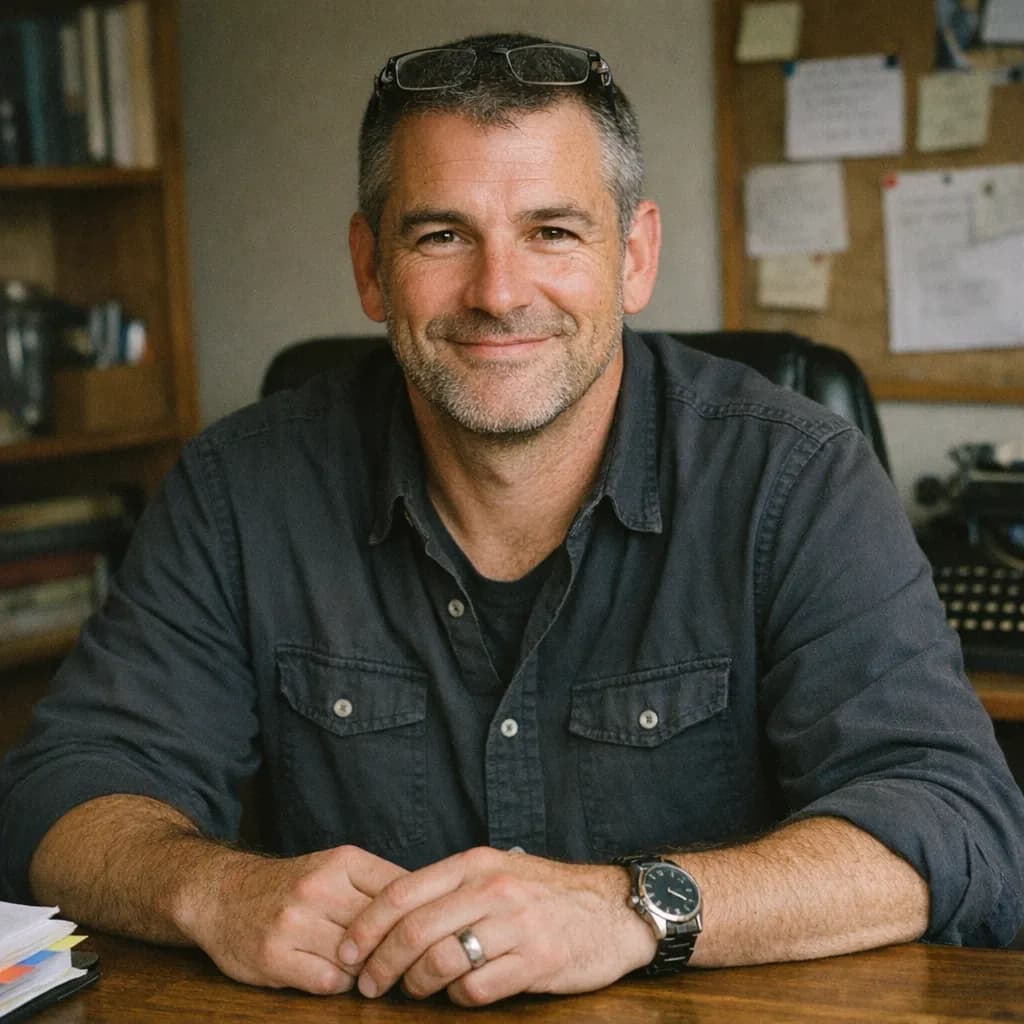
Callum Rhys Mahoney
Developmental Fiction Editor and Manuscript CoachI grew up between Wagga and my aunt’s place out near Narrandera, in a family that could argue for sport and then feed you like nothing happened. Books were around, but not in a precious way. My old man liked stories where people did what they said they’d do, even if it cost them. I still hear that voice when a character “can’t” make a decision because the plot needs another chapter. I didn’t set out to be an editor. I studied teaching, worked a few rough years in classrooms, and then left after a run of short contracts and one admin reshuffle that made it clear I was replaceable. A mate pulled me into doing learning materials and assessments because I could spot where people were gaming the question. That work taught me to watch for what the text rewards versus what it claims to reward - which is the same problem in a lot of manuscripts. I also spent a couple of seasons doing night shifts at a servo when money got tight. I kept a notebook behind the counter and wrote scenes between customers, mostly to stay awake. I remember one bloke coming in every Thursday, buying the same pie, and telling me the same story about a dog he swore was smarter than his ex. I don’t know why I remember that, but I do. Editing started as favour-work. People in town found out I’d read their drafts and I’d send back long emails with scene-by-scene notes. Somewhere along the line it became my paid work, mostly because I was consistent and because I’m not afraid to say, “This turn doesn’t belong to your protagonist.” I’m biased toward decisive characters and I don’t plan to cure myself of it; I’d rather a story risk an ugly choice than drift into polite inevitability.

Danae Marcelline Brooks
Developmental Fiction Editor & Manuscript CoachI grew up between church basements, tidewater heat, and people who could tell a whole family story while stirring a pot and never looking up. My mom kept paperback romances in a shoebox like they were contraband, and my aunt kept a shelf of mystery novels with cracked spines. I read both. I learned early that readers forgive a lot, but they don’t forgive being bored or being lied to. I didn’t come up dreaming about editing. I wanted steadier work than “writer,” and I was the kid who could take notes fast, so I ended up in admin jobs where I got volunteered into fixing other people’s documents. Outside of that, I spent a couple years doing hair out of a friend’s kitchen. That part of my life doesn’t explain my editing, but it’s true: I still remember the sound of a cape snapping and how people tell you the most pointed truths when they think you’re not allowed to answer back. Sometimes I miss that kind of honesty. A storm took out power for a week when I was in my late twenties, and I agreed to help a neighbor organize a stack of workshop pages because there wasn’t much else to do at night. The pages were a mess, but the voice was alive. I wrote margin notes the way I talk, not the way school taught me, and the neighbor asked for more. That turned into being the person people handed drafts to. I still carry this old belief that if you “work hard enough,” the story will behave. I don’t defend it, but I catch myself acting like it’s true when I see a writer piling scenes on top of scenes. Now I’m a developmental editor because I’m impatient with pretty sentences that protect a story from making decisions. My bias is I’ll side-eye passive main characters harder than most editors will, even when the genre gives them excuses. I don’t correct that. It’s the lens I read through, and writers who want a gentler read should pick someone else. If you want a first reader who will point at the exact scene where your book starts dodging consequences, I’m your person.
Frequently Asked Questions
- What makes The Road by Cormac McCarthy so compelling?
- A common assumption says the book grips you because it feels grim and extreme. The deeper hook comes from how McCarthy ties every external danger to a private contract between father and son: survive, and stay “good.” He keeps the plot simple so each scene can function as a moral test with physical consequences, which makes the pages turn even when “nothing happens” in a conventional sense. If you borrow the bleak surface without building that two-layer pressure, your draft will feel static.
- How long is The Road by Cormac McCarthy?
- Many readers assume length matters most because it signals how much “world” you must build. The Road runs about 240–290 pages depending on edition, but the real lesson sits in density: McCarthy compresses setup and explanation so scenes move like linked necessities. You can write a short novel that drags if you treat episodes as atmosphere-only. Track what changes after each scene—supplies, location, trust, or moral certainty—and you’ll earn momentum at any page count.
- What themes are explored in The Road by Cormac McCarthy?
- People often reduce the themes to “survival” and “hope,” which sounds tidy and misses the craft. McCarthy explores survival versus goodness as an ongoing negotiation, not a slogan, and he treats love as both fuel and liability. He also studies inheritance: what a parent can pass on when the world erases institutions, language, and future. When you write theme, don’t announce it; make it a recurring choice that grows harder to pay for.
- How does McCarthy create atmosphere and tension in The Road?
- A common rule says you create tension by escalating danger and adding shocks. McCarthy creates tension by controlling information and proximity: he lets threats appear as distant signs, then suddenly appear as immediate bodies. He anchors atmosphere in tactile specifics—cold, ash, empty stores, damp clothes—so dread lives in the characters’ senses, not in abstract menace. If you want this effect, tie every descriptive paragraph to a decision point, or cut it.
- Is The Road by Cormac McCarthy appropriate for younger readers?
- Many assume a parent-child story automatically suits teens because it centers on family. The Road contains graphic implications and explicit brutality, plus sustained psychological distress, so appropriateness depends on the reader’s maturity and context, not just age. From a craft angle, note how McCarthy handles violence: he often shows aftermath and choice rather than lingering spectacle, which can make it feel even more intense. If you write dark material, calibrate what you depict to what the scene must change.
- How do writers write a book like The Road without copying it?
- Writers often think they should copy the sparse sentences, nameless characters, and bleak setting. Instead, copy the underlying engine: a simple route structure, strict resource math, and a repeating moral question that each scene answers differently. Build a relationship that can break under pressure, and make every “find” or “escape” create a new cost. When you revise, ask a blunt question: what did this scene force your characters to do that they won’t forgive themselves for?
About Cormac McCarthy
Withhold every motive and give the physical facts alone. The dread a reader builds is worse than any you could write.
McCarthy takes out the machinery that tells you how to feel. No quotation marks. No "he thought." No adverb after the verb of speech. What stays is the physical record, and he keeps that at full strength: the weather, the road surface, the make of the rifle, the order in which a man does things with his hands. Readers call this spare writing. Open Blood Meridian at any page of desert and count the nouns, and the label falls apart. He spends his budget on what a camera could record and spends nothing on what only the author could know, and the gap between those two accounts is where the dread lives.
The long sentences are inventories. He joins them with "and" and refuses to rank the items, so a dead horse and a change in the light arrive with equal billing, and the reader has to decide which one matters. Then he stops. A four-word sentence lands like a verdict. That alternation is the engine, and it works in any genre and on any subject, because it has nothing to do with the desert or the violence.
His method has a cost his imitators inherit without noticing. Take away the interiority and the surface carries twice the load, which means you need to know your material at a level most drafts have not reached. Hemingway set out the condition in Death in the Afternoon: omit what you know and the reader feels it, omit what you have not decided and you leave a hole with nothing under it.














Ready to improve your draft with direction?
Open Draftly, bring your draft, and move from stuck to a stronger draft without losing your voice. Editors are on standby when you want a deeper pass.
Free welcome credits included. No credit card needed.