Killers of the Flower Moon
Book Summary & Analysis
Book summary and writing analysis of Killers of the Flower Moon by David Grann.
Killers of the Flower Moon works because it refuses to behave like a tidy true-crime “case.” David Grann builds the book around a central dramatic question that keeps mutating: Who is killing the Osage for their oil wealth, and how far does the corruption go? He treats the investigation as a living organism, not a timeline. Every answer creates a bigger problem, which forces you to keep reading for the next layer of cause, not the next twist.
You can track the engine through one deliberate structural move: Grann starts with victims and a community under siege, then he introduces the investigator later, when your outrage already has momentum. The setting does heavy lifting here. You sit in 1920s Osage County, Oklahoma, where oil money turns guardianship laws into a weapon and where white “protectors” control Osage headrights, finances, and medical decisions. Grann makes the place feel specific without romanticizing it, and that specificity keeps the book from floating into vague historical tragedy.
The inciting incident doesn’t come from a single cinematic murder. Grann lights the fuse with a pattern: the death of Anna Brown and the eerie normalizing of Osage deaths that follow. He frames a key decision-point when the Osage leadership—under pressure, dismissed by local power, and running out of options—pushes for federal help after local law enforcement and courts fail them. That choice sets the story on rails: once the community invites an outside institution in, you get jurisdiction, bureaucracy, and the collision between local conspiracy and federal procedure.
Grann’s protagonist, in craft terms, shifts depending on the act. Early on, the story orbits Mollie Burkhart and the Osage community as they endure the losses and try to name the monster. Then Grann pivots to Tom White, the Bureau agent who arrives to do what local systems refuse to do: follow money, build witnesses, and survive long enough to testify. The primary opposing force never reduces to a single villain. It operates as an ecosystem of greed: a network of businessmen, lawmen, doctors, and “friends” who profit from Osage deaths while hiding behind legality and polite society.
The stakes escalate across structure by narrowing from “people are dying” to “the killings form a coordinated campaign,” then widening again when the conspiracy reaches into courts, banks, and family homes. Grann repeatedly forces a hard upgrade: what looks like isolated violence becomes systematic extraction. He keeps pressure on the reader by making each investigative gain cost something—another witness recants, another person dies, another institution shrugs.
If you imitate this book naively, you will copy the surface: murders, clues, courtroom scenes. You will miss the real mechanism: Grann engineers moral suspense. He asks you not only what happened, but why ordinary people tolerated it, enabled it, and benefited from it. That’s why the book hurts in a productive way. It shows you the price of calling something “history” and using that label to stop looking.
Grann also cheats in the best way: he tells you, implicitly, that the official story won’t be enough. He signals gaps, lost files, self-serving testimony, and the temptation to accept closure because closure feels respectful. Then he takes that comfort away. The late-game reframing—where the narrative confronts what earlier investigations missed or chose not to see—turns the book into an argument about narrative authority. He makes you feel how a story can erase people even while it “solves” a case.
That’s the warning for your own work. Don’t treat research as supporting material for your plot. Treat it as the plot. When your facts fight each other, don’t sand them down. Stage that conflict on the page and make the reader live inside the uncertainty until the truth, whatever you can prove, earns its weight.
Story Structure & Narrative Arc
Story structure and emotional arc in Killers of the Flower Moon.
The emotional trajectory plays like a tragedy that disguises itself as an investigation, then subverts the usual “justice restored” ending. The internal starting state belongs to the reader as much as any character: you begin thinking a determined investigator can restore order. You end recognizing how thoroughly a system can normalize theft and murder, and how partial any resolution stays when power controls the record.
Key sentiment shifts land because Grann alternates between intimacy and procedure. He brings you close to individual losses in the Osage community, then yanks you into the cold mechanics of guardianship, insurance, and legal obstruction. Each investigative “win” briefly lifts fortune, but the book drops you harder when you learn how many people participated, how many deaths never received full accounting, and how easily institutions accept a convenient conclusion.

Studying this book—and stuck on your pages?
Put your draft in Draftly. Fix scenes and dialogue in the text—not in another tab. When you want sharper feedback, AI editors are ready.
Free welcome credits included. No credit card needed.Writing Lessons from Killers of the Flower Moon
What writers can learn from David Grann in Killers of the Flower Moon.
Grann earns suspense without inventing plot. He does it with calibration: he gives you just enough verified detail to form a theory, then he shows you the next document, the next witness, the next contradiction that breaks your theory. Notice how often he uses names, amounts, dates, and locations not as decoration but as leverage. A number becomes a motive. A signature becomes a trapdoor. That’s craft you can steal: treat specificity as a source of tension, not a reward you hand out after the tension.
He also builds character through systems, not just psychology. Mollie Burkhart doesn’t need pages of interior monologue to feel real; you watch her navigate doctors, banks, guardians, funerals, and family ties while danger hides inside “care.” Tom White reads as competent because Grann shows him choosing constraints: he uses undercover tactics, he manages informants, he protects testimony, and he keeps the case alive inside bureaucracy. You learn who a person is by the pressure they can tolerate and the rules they decide to bend.
Pay attention to dialogue and how Grann uses it sparingly, like a blade. He doesn’t stack pages of banter. He picks exchanges that reveal power. When William Hale presents himself as a benefactor to the Burkharts and the Osage—offering help, advice, money—Grann lets the politeness do the threatening. Hale’s friendliness becomes a mask the reader learns to distrust. Many modern writers “summarize the vibe” of manipulation; Grann stages it in spoken courtesies that land because they match the era’s social habits.
Atmosphere comes from concrete logistics. You feel Fairfax and the Osage Hills through the machinery of wealth and death: oil leases, headrights, guardianship papers, funeral processions, and the quiet isolation that lets a conspiracy breathe. Grann resists the shortcut of turning the setting into a mood board. He uses place as a mechanism that controls who can speak, who can move money, who can call the law, and who gets believed. That’s why the horror feels civilized, which makes it worse—and more memorable.
How to Write Like David Grann
Writing tips inspired by David Grann's Killers of the Flower Moon.
Write with controlled outrage, not performative anger. Grann never begs you to feel; he stacks facts until feeling becomes inevitable. You should do the same. Choose a narrative stance early and hold it. If you want a calm, reportorial voice, don’t suddenly “turn lyrical” at the worst moment. If you want a moral voice, don’t preach. Make the sentence-level choices carry the judgment by what you linger on and what you refuse to soften.
Build people as intersections of desire and permission. In this book, greed matters, but access matters more. Ask who can sign papers, who can call a sheriff, who can declare someone incompetent, who can inherit. Then design your characters around those levers. Give your protagonist a skill that fits the arena. Tom White doesn’t “want justice” in the abstract; he knows how to run an investigation inside institutional constraints. Competence becomes character.
Avoid the true-crime trap of mistaking shock for structure. A pile of atrocities doesn’t create narrative drive; it creates numbness. Grann avoids that by treating each death as a turn of the screw in a larger machine: motive clarifies, methods evolve, the circle of beneficiaries tightens. He also avoids the lazy villain shortcut. He shows a network, not a cartoon. If you simplify the opposing force into one monster, you will write a satisfying story and a dishonest one.
Steal this exercise. Pick a historical or real-world wrongdoing and collect ten verifiable artifacts: a letter, a ledger entry, a court filing, an obituary, a map, a photo caption, a receipt, a regulation, a witness statement, a news clipping. Arrange them so each artifact answers one question but raises a worse one. Then write 1,500 words where you move artifact to artifact as if you run an investigation, not a lecture. End by naming what the record still hides.
Who Would Edit This Book?

Alistair Rowan McEwan
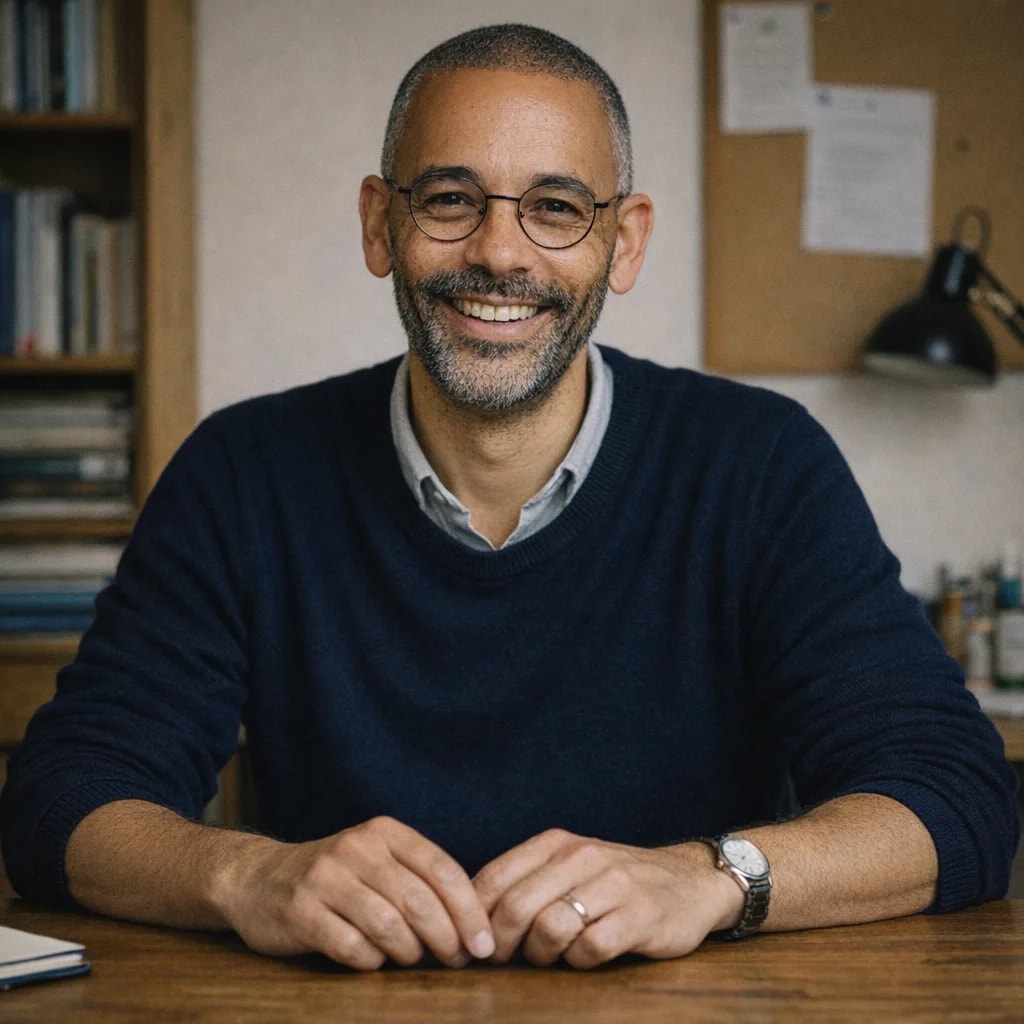
Developmental Editor and Non-Fiction Manuscript CoachI grew up between Leeds and Glasgow, in that half-and-half way where you’re never fully from one place, so you learn to listen for what people mean instead of what they say. My mum kept old paperbacks and my dad kept newspapers, and I read both with the same suspicion. I still hear my gran’s voice when I write notes: she’d tap the page and say, “Aye, but what made that happen?” At nineteen I worked nights stacking shelves and days in a dull admin job for a small training provider, mostly because rent doesn’t care about your plans. They had me tidying course handouts and “improving the flow,” which meant cutting waffle and moving sections around until the trainer could teach without apologising. Around that time I got obsessed with making the perfect chilli recipe and kept a notebook of tiny tweaks. It didn’t make me a better editor, but I still do it, and I still overreact when a list of ingredients comes before the method. I didn’t set out to be an editor. A friend needed a second pair of eyes on a grant application, then another person asked, then a whole department started sliding documents onto my desk because I’d tell them the truth without making it personal. Later, I ended up in a communications role after a reorg - pure convenience - and I started doing beta-style reads for people writing practical books and narrative non-fiction on the side. Now I work with authors who want a manuscript that can survive a hard reader. I’m calm about most things, but I’m stubborn about causality: if a chapter claims a result, I want to see the choice that led there, and what it cost. I know my bias: I don’t spend long admiring lyrical voice if the argument is dodging responsibility. I’m the person you hand the draft to when you want the first reader who says, “This part doesn’t earn its conclusion,” and then shows you where it went off the rails.

Arjunveer “Arj” Sandhu
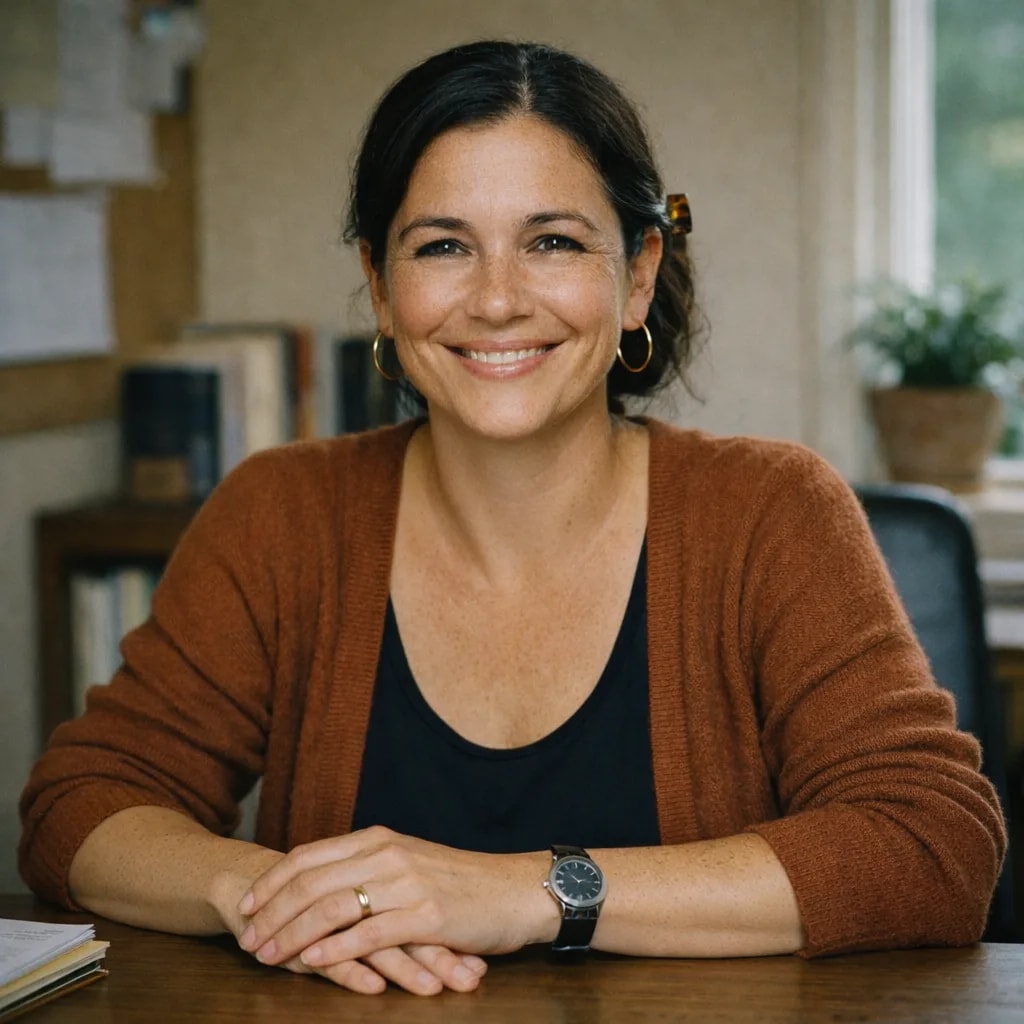
Nonfiction Manuscript Editor & Writing Coach (Generalist)I grew up between Punjabi at home and English everywhere else, which taught me early that “I understood it” and “it was said clearly” aren’t the same thing. My dad ran a small trucking outfit and kept every receipt like it was scripture. My mom read Punjabi poetry and refused to explain it. I landed in the middle: I like meaning you can point to, and I don’t trust pretty fog. I didn’t plan on editing. I studied business because it was easy to explain at family dinners, then worked jobs where nobody had time for long sentences - operations, training docs, policy rewrites. I took a night improv course once because a friend wouldn’t go alone. I was bad at it. I still keep the ticket stub like it proves something. I started giving notes because people kept sending drafts with “can you make this make sense?” and I didn’t know how to say no. A supervisor once handed me a 40-page internal guide and said, “Fix it by Friday or we get audited.” That deadline became a habit: I read fast, I mark the real breaks, and I don’t pretend confusion is a personality trait. I’m harsher on fuzzy claims than clunky style, and I’m not interested in correcting that. Now I work with authors who want a first reader who won’t protect feelings at the expense of the book. I still ask, “What are you promising me in the first ten pages?” I don’t care if your voice is charming if your logic cheats. If your structure is designed to wander on purpose, I’m probably not your best match.
Frequently Asked Questions
- What makes Killers of the Flower Moon so compelling?
- Many people think it hooks you with shocking crimes alone, but shock fades fast on the page. Grann keeps you locked in by turning documentation into suspense: each verified detail narrows the suspect pool while expanding the scale of complicity. He also withholds the comfort of a single clean villain, so your mind keeps working, not just reacting. If you want similar pull, don’t chase twists; build a chain of questions where every answer carries a cost.
- How long is Killers of the Flower Moon?
- People assume length equals depth, but pacing decides whether length feels heavy or inevitable. Most editions run roughly in the 300–350 page range, and Grann earns that space by structuring the book as an escalation of revelations rather than a straight chronology. He revisits events when new evidence changes their meaning, which creates forward motion even when he looks back. For your own work, measure scenes by what they change, not by page count.
- Is Killers of the Flower Moon appropriate for all audiences?
- Some assume “true crime” means detached entertainment, but this book deals with racial violence, exploitation, and systemic injustice in direct terms. Grann writes with restraint, yet the subject matter stays disturbing because the cruelty often hides behind legality and politeness. Consider the reader you write for and the purpose of the depiction; you don’t need graphic detail to deliver impact, but you do need clarity about harm and its consequences.
- What themes are explored in Killers of the Flower Moon?
- It’s tempting to reduce the themes to greed and murder, but the deeper themes involve authority: who controls money, who controls narrative, and who counts as credible in a court or a newspaper. Grann shows how guardianship laws and “respectable” institutions can launder violence into paperwork. He also presses on the theme of historical record—how an official solution can still erase victims. When you write theme, let systems express it, not speeches.
- How does David Grann structure Killers of the Flower Moon?
- A common assumption says nonfiction should march chronologically, but Grann structures it like an investigation with shifting center of gravity. He starts by immersing you in the community under threat, then introduces the federal investigator when outrage and uncertainty peak. He escalates by widening the conspiracy and later reframes what “solved” even means. If you borrow this, plan your reveal order around reader questions, not around when events happened.
- How do I write a book like Killers of the Flower Moon?
- Many writers think they need a dramatic case and a gritty tone, but the real requirement involves method and ethics. You must build a verifiable chain of evidence, dramatize uncertainty without faking it, and show how power operates through ordinary procedures like banking, medicine, and law. Then you must decide what you can prove versus what you can only suspect, and write that boundary honestly. If you feel tempted to “smooth” the record for a cleaner arc, stop and revise the questions instead.
About David Grann
Use evidence-as-cliffhangers to make the reader turn pages while trusting you more, not less.
David Grann writes like a prosecutor with a poet's patience. He builds scenes from documents, interviews, and physical detail, then arranges those facts to produce dread, wonder, and moral unease. The trick is not "true story, told well." It's controlled disclosure: he makes you feel you're discovering the truth at the same time he shows you how people hid it from themselves.
His engine runs on questions, not answers. He plants a clean premise, then quietly adds a second, uglier premise underneath it. You think you're reading about survival, ambition, crime, exploration. Then he shifts the frame and you realize you're reading about self-justification and the stories people invent to stay innocent. That pivot looks effortless. It isn't. It requires ruthless selection: what to withhold, what to verify, and what to let remain unknowable.
The technical difficulty sits in the seams. Grann must sound certain while carrying uncertainty. He must move fast while staying sourced. He must create suspense without cheating, because the reader's trust sits on a single hair: one overstated claim and the spell breaks. He uses structure the way a thriller writer uses plot—only his twists come from perspective, evidence, and the limits of memory.
Modern writers need him because he proves narrative nonfiction can do more than recount events; it can interrogate the machinery of belief. His process favors accumulation, triangulation, and heavy revision at the level of order and emphasis: not polishing sentences first, but deciding what the reader should suspect on page three, doubt on page thirty, and finally understand—partially—at the end.









Ready to improve your draft with direction?
Open Draftly, bring your draft, and move from stuck to a stronger draft without losing your voice. Editors are on standby when you want a deeper pass.
Free welcome credits included. No credit card needed.