A Farewell to Arms
Book Summary & Analysis
Book summary and writing analysis of A Farewell to Arms by Ernest Hemingway.
A Farewell to Arms works because it treats romance as a tactical problem inside a collapsing system. The central dramatic question stays brutally simple: can Frederic Henry, an American ambulance lieutenant in the Italian army during World War I, build a private life with Catherine Barkley before the war and chance erase it? Don’t miss the key design choice: Hemingway never asks “Will they fall in love?” He asks “What does love cost when the world charges interest every page?”
The inciting incident does not arrive as a poetic thunderclap. It arrives as a practical injury. In the early Milan-to-front rhythm, Frederic floats through the war with a tourist’s detachment until a trench-mortar shell blasts his knee during a meal with the drivers. He does not “realize” the war matters; the war writes itself onto his body and forces him into hospitals, decisions, and a new proximity to Catherine. If you imitate Hemingway and start with numbness, you must attach that numbness to a system that can physically and socially punish it.
The primary opposing force is not a villain. It’s the war’s machinery plus the universe’s indifference, with bureaucracy as its clerical arm. Rinaldi and the officers tempt Frederic toward camaraderie and cynical routine; the medical system and military police demand obedience; nature delivers rain as a recurring threat signal. Hemingway sets the story in specific places that behave like moral climates: the muddy Isonzo front near Gorizia, the hospital in Milan with its clean sheets and hidden shortages, the roads during the Caporetto retreat, and finally the Swiss mountains that look like escape until they don’t.
Stakes escalate by narrowing Frederic’s options. First he risks nothing beyond boredom. Then he risks his body. Then he risks his identity and freedom when he returns to the front and watches the retreat rot into panic and summary justice. Hemingway makes escalation feel inevitable because each choice solves an immediate problem while creating a larger one. Frederic chooses to lean into Catherine because she offers relief; that relief binds him to a future the war can now threaten.
The midpoint turn does not depend on a twist; it depends on a commitment. In Milan, Frederic and Catherine shift from “affair during leave” to “shared life with consequences,” and Hemingway moves the story from episodic war scenes into a focused, domestic war against time, pregnancy, and orders. If you try to copy the surface—short sentences, clipped dialogue—you will miss the engine: he relocates the battlefield into the relationship and then lets the external war break back in.
Then Hemingway tightens the vise. The Caporetto retreat turns the setting into a moving trap: roads clog, authority splinters, fear invents enemies, and moral choices lose their clean edges. Frederic’s antagonists suddenly wear his uniform. When military police begin executing officers for “treason,” Hemingway forces a binary decision that many writers avoid because it feels too stark: submit and likely die, or desert and live with the stain.
From that point, the story runs on pursuit and fragility. Frederic and Catherine flee across a lake into Switzerland, and the calm does not “resolve” the plot; it makes the stakes personal enough to devastate. Hemingway gives you scenes of ordinary happiness—meals, weather, small talk—then reminds you that ordinary happiness still sits inside biology and probability. If you imitate this and only write the calm, you will produce soft pages. Hemingway earns calm by showing you the knife that stays on the table.
The ending does not deliver a lesson; it delivers a verdict on the book’s question. Frederic can choose well, love well, and still lose. That sounds bleak until you notice Hemingway’s real craft move: he makes the loss feel specific, logistical, and therefore believable. You don’t cry because the author tells you life is tragic. You cry because the scenes make you understand, moment by moment, how a man walks from hoping into knowing.
Story Structure & Narrative Arc
Story structure and emotional arc in A Farewell to Arms.
The novel runs a subversive Man-in-a-Hole that ends as tragedy. Frederic starts emotionally unaccountable, using war as a backdrop for appetites and jokes, and he ends stripped of bargaining, facing the fact that love doesn’t grant immunity. He doesn’t become wiser in a speech; he becomes quieter because experience removes the words that used to work.
Key sentiment shifts land with force because Hemingway pairs relief with a bill that comes due later. The hospital romance lifts the value charge into genuine hope, then the retreat snaps the story back into raw survival and moral terror. Switzerland offers the highest “fortune” not because it solves anything, but because it briefly suspends the war’s reach and lets the reader feel what stands to be lost. The final drop hurts because Hemingway never oversells happiness; he shows it in small, ordinary units, so its removal feels like theft, not melodrama.

Studying this book—and stuck on your pages?
Put your draft in Draftly. Fix scenes and dialogue in the text—not in another tab. When you want sharper feedback, AI editors are ready.
Free welcome credits included. No credit card needed.Writing Lessons from A Farewell to Arms
What writers can learn from Ernest Hemingway in A Farewell to Arms.
Writers read this book to study how prose can stay plain and still carry a heavy emotional load. Hemingway builds that load through selective specificity: roads, rain, wine, wound dressing, the shape of a room in Milan. He avoids “war is hell” declarations and instead puts you inside procedures and textures until your nervous system supplies the verdict. Many modern writers try to manufacture intensity with bigger adjectives; Hemingway gets intensity by choosing the one concrete detail you can’t ignore and cutting the rest.
Dialogue does the same job. Watch Frederic and Catherine in Milan, especially the scenes where Catherine talks about being “a good wife” and Frederic answers with half-steps, jokes, and evasions. Hemingway lets their talk operate on two tracks: what they say (light, fast, almost theatrical) and what it costs (dependence, fear, bargaining with fate). If you write “realistic dialogue” as pure transcript, you will bore the reader. Hemingway writes dialogue as strategy. Each line tries to gain safety, intimacy, or control, and the subtext bleeds through the gaps.
Atmosphere comes from repetition with intent, not lyrical fog. The rain motif matters because Hemingway trains you to feel it as an omen through placement, not explanation. He uses the Italian front’s mud and the retreat’s clogged roads to make the world feel morally slippery, then he uses Switzerland’s cold clarity to offer a false sense of clean escape. A common shortcut in war-and-love stories treats setting as scenic wallpaper. Hemingway makes setting a pressure system that changes how characters speak, decide, and even what kinds of hopes seem reasonable.
Structurally, the book teaches you how to pivot from episodic experience to a single spine without announcing the pivot. The early war scenes feel like fragments because Frederic lives like a fragment; the Milan section tightens because love creates a future tense; the retreat turns the plot into a chase because institutions collapse into raw enforcement. Many writers try to force coherence with plot gimmicks. Hemingway earns coherence by aligning structure with Frederic’s internal commitments. When Frederic finally chooses, the story stops wandering because he stops pretending he can stay uninvolved.
How to Write Like Ernest Hemingway
Writing tips inspired by Ernest Hemingway's A Farewell to Arms.
Write the voice the way Hemingway actually uses it, not the way people imitate it. He doesn’t write “short sentences” as a trick; he writes clean sentences because he wants you to track cause and effect without ornament. You must control tone through selection, not decoration. Pick details that carry weight and leave the rest out. If you add a poetic flourish, you must pay for it with accuracy. Your goal reads simple, but your decisions don’t.
Build your protagonist the way Frederic works on the page: through behavior under low-grade pressure before you crank it up. Give your character routines, appetites, and small lies they tell themselves to stay comfortable. Then introduce a system that can punish those lies, not with karma, but with consequences. Also give them one relationship where talk functions as negotiation. Catherine and Frederic don’t just “bond”; they trade comfort, need, and control, and the balance shifts scene by scene.
Avoid the genre trap of glamorizing suffering or romanticizing war as a mood board. Hemingway shows plenty of drinking and bravado, but he never lets it erase logistics, fear, and institutional cruelty. When you write battle-adjacent fiction, don’t rely on chaos to create meaning. Make the reader understand who holds power in the moment, what rule applies, and what happens if the character breaks it. If you can’t state the immediate risk in one plain sentence, you haven’t built the pressure yet.
Try this exercise. Write a four-scene sequence in which your protagonist starts emotionally detached in a dangerous environment, then suffers a concrete injury that forces a change of location and dependence on others. In scene two, write dialogue with a lover or caretaker where both characters want different kinds of safety, and neither says it outright. In scene three, bring the external system back in with an order, inspection, or accusation. In scene four, give them a “safe” place, then introduce one biological or procedural problem that talking cannot solve.
Who Would Edit This Book?
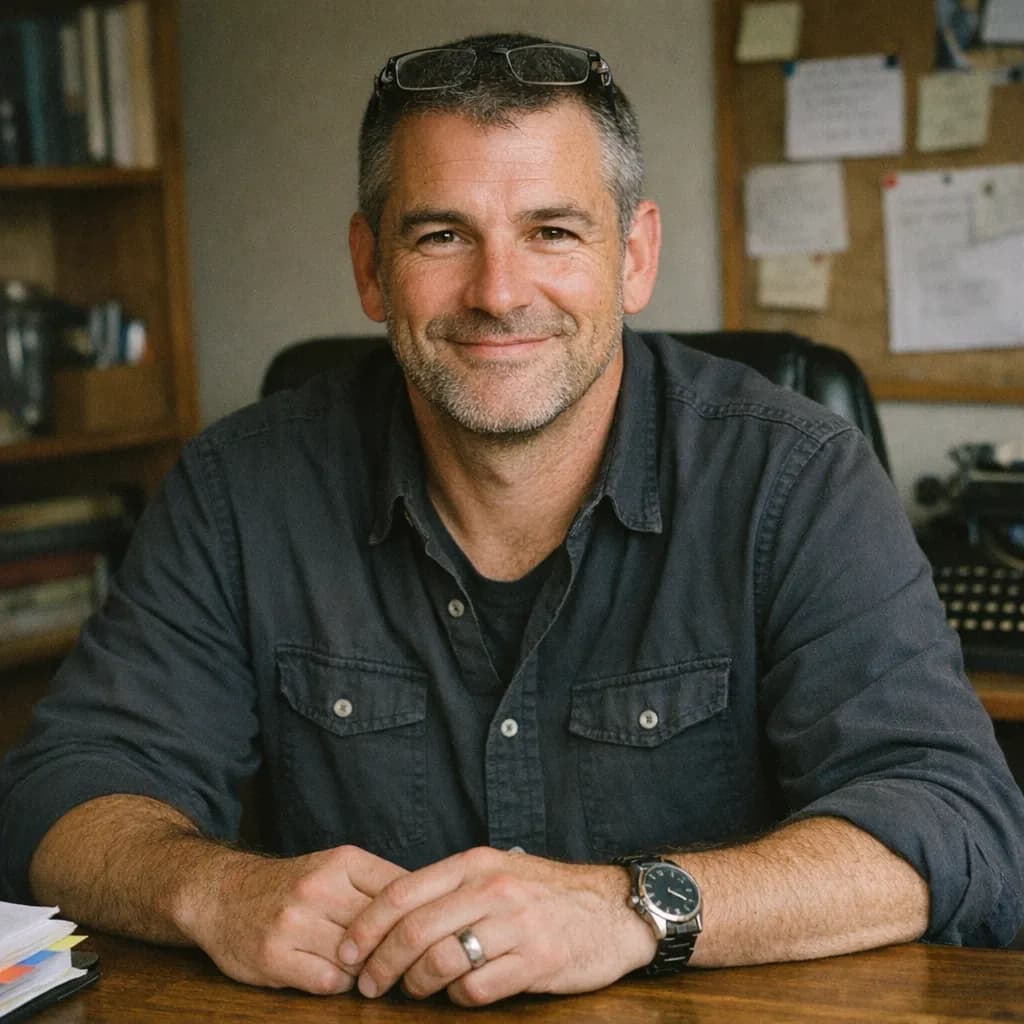
Callum Rhys Mahoney
Developmental Fiction Editor and Manuscript CoachI grew up between Wagga and my aunt’s place out near Narrandera, in a family that could argue for sport and then feed you like nothing happened. Books were around, but not in a precious way. My old man liked stories where people did what they said they’d do, even if it cost them. I still hear that voice when a character “can’t” make a decision because the plot needs another chapter. I didn’t set out to be an editor. I studied teaching, worked a few rough years in classrooms, and then left after a run of short contracts and one admin reshuffle that made it clear I was replaceable. A mate pulled me into doing learning materials and assessments because I could spot where people were gaming the question. That work taught me to watch for what the text rewards versus what it claims to reward - which is the same problem in a lot of manuscripts. I also spent a couple of seasons doing night shifts at a servo when money got tight. I kept a notebook behind the counter and wrote scenes between customers, mostly to stay awake. I remember one bloke coming in every Thursday, buying the same pie, and telling me the same story about a dog he swore was smarter than his ex. I don’t know why I remember that, but I do. Editing started as favour-work. People in town found out I’d read their drafts and I’d send back long emails with scene-by-scene notes. Somewhere along the line it became my paid work, mostly because I was consistent and because I’m not afraid to say, “This turn doesn’t belong to your protagonist.” I’m biased toward decisive characters and I don’t plan to cure myself of it; I’d rather a story risk an ugly choice than drift into polite inevitability.
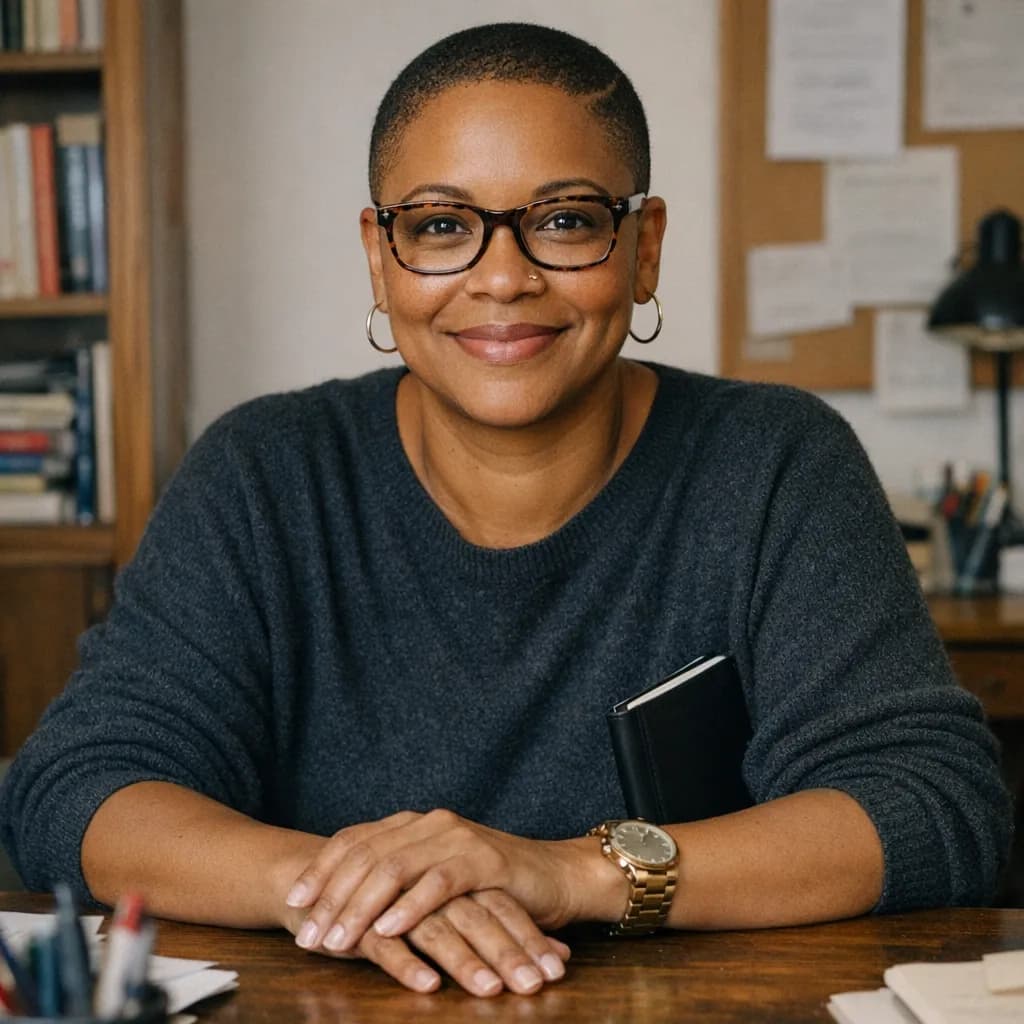
Danae Marcelline Brooks
Developmental Fiction Editor & Manuscript CoachI grew up between church basements, tidewater heat, and people who could tell a whole family story while stirring a pot and never looking up. My mom kept paperback romances in a shoebox like they were contraband, and my aunt kept a shelf of mystery novels with cracked spines. I read both. I learned early that readers forgive a lot, but they don’t forgive being bored or being lied to. I didn’t come up dreaming about editing. I wanted steadier work than “writer,” and I was the kid who could take notes fast, so I ended up in admin jobs where I got volunteered into fixing other people’s documents. Outside of that, I spent a couple years doing hair out of a friend’s kitchen. That part of my life doesn’t explain my editing, but it’s true: I still remember the sound of a cape snapping and how people tell you the most pointed truths when they think you’re not allowed to answer back. Sometimes I miss that kind of honesty. A storm took out power for a week when I was in my late twenties, and I agreed to help a neighbor organize a stack of workshop pages because there wasn’t much else to do at night. The pages were a mess, but the voice was alive. I wrote margin notes the way I talk, not the way school taught me, and the neighbor asked for more. That turned into being the person people handed drafts to. I still carry this old belief that if you “work hard enough,” the story will behave. I don’t defend it, but I catch myself acting like it’s true when I see a writer piling scenes on top of scenes. Now I’m a developmental editor because I’m impatient with pretty sentences that protect a story from making decisions. My bias is I’ll side-eye passive main characters harder than most editors will, even when the genre gives them excuses. I don’t correct that. It’s the lens I read through, and writers who want a gentler read should pick someone else. If you want a first reader who will point at the exact scene where your book starts dodging consequences, I’m your person.
Frequently Asked Questions
- What makes A Farewell to Arms so compelling?
- Many readers assume the book grips you because it sounds “simple” and therefore feels honest. The deeper reason involves structure: Hemingway converts a love story into a survival story, then keeps turning private choices into public consequences. He also makes loss feel earned by tracking logistics and timing instead of speeches. If you want the same pull, don’t chase his sentences; chase his pressure system and make every comfort come with a cost.
- How long is A Farewell to Arms?
- People often treat length as a proxy for difficulty, as if a shorter novel means an easier blueprint to copy. Most editions run roughly 300–350 pages, but the real “length” comes from density: Hemingway packs turning points into scenes that look casual. He also uses spare exposition, so you must infer emotional movement from action and dialogue. When you study it, measure how often a scene changes a commitment, not how fast you can read it.
- What themes are explored in A Farewell to Arms?
- A common assumption says the book only argues that war destroys innocence and love offers refuge. Hemingway goes sharper: he tests whether meaning can survive inside randomness, institutions, and biology. He also examines performance—how characters use bravado, romance, and professional roles to avoid fear. Themes matter less than how scenes force them into choice. If your draft “has themes” but no irreversible decisions, you wrote an essay in costume.
- How does Hemingway create emotion with such plain language?
- Many writers think emotion comes from emotional vocabulary, so they add intensity words and call it depth. Hemingway does the opposite: he limits commentary and lets consequence generate feeling. He repeats concrete signals (weather, wounds, procedures) until your brain anticipates danger, then he confirms it. He also keeps dialogue slightly misaligned, so subtext leaks. If you want this effect, cut explanation and make the scene’s outcome change what the character can do next.
- How do I write a book like A Farewell to Arms?
- The usual advice says “use short sentences” and “show, don’t tell,” which produces a dead, choppy imitation. Instead, build a spine where an external system pressures a private relationship, then escalate by shrinking options until a moral or legal line appears. Write scenes that solve immediate problems while creating larger ones, especially through timing and bureaucracy. And keep your style plain only when your underlying scene design carries the weight; otherwise plainness turns into thinness.
- Is A Farewell to Arms appropriate for younger audiences or classroom study?
- Many assume “classic” automatically means universally suitable, but the book includes frank references to sex, drinking, war injuries, and bleak outcomes. In a classroom, it works best when you frame it as craft and ethics: how a writer portrays violence without glamour, and how understatement affects reader emotion. Match it to the group’s maturity and your teaching aim. If you assign it for “romance,” you may mis-sell it; if you assign it for consequence, it lands.
About Ernest Hemingway
Cut the emotion and keep the sensory fact. What a reader supplies is stronger than what you deleted.
The iceberg passage is usually quoted for its first half. Here is that half, from Death in the Afternoon: "If a writer of prose knows enough about what he is writing about he may omit things that he knows and the reader, if the writer is writing truly enough, will have a feeling of those things as strongly as though the writer had stated them." And here is how the same passage ends: "A writer who omits things because he does not know them only makes hollow places in his writing." That second line is the one that costs money. What he describes is not a way of writing short. It is a way of spending knowledge on the part of the story you decide not to print.
The label on the paperbacks says tough and terse. Marc Dudley answers that by picking a page-long sentence out of Green Hills of Africa and calling it no less characteristic, and the long unpunctuated chains that open A Farewell to Arms make the same argument. He wrote long when the material asked for it. What holds across the work is the refusal to interpret, so a reader who wants to know what a scene means has to assemble it out of the physical record.
That trade is why he is worth studying and why he is so easy to copy badly. Leave out a thing you have decided and its weight stays in the room. Leave out a thing you have not decided, and the page goes soft in the exact spot where the pressure was supposed to be.








Ready to improve your draft with direction?
Open Draftly, bring your draft, and move from stuck to a stronger draft without losing your voice. Editors are on standby when you want a deeper pass.
Free welcome credits included. No credit card needed.