Romance of the Three Kingdoms
Book Summary & Analysis
Book summary and writing analysis of Romance of the Three Kingdoms by Luo Guanzhong.
Romance of the Three Kingdoms works because it asks one brutal question and never lets you dodge it: who deserves to hold the center when the empire breaks? Not who wins a battle, not who talks best, but who earns legitimacy—through virtue, strategy, fear, or sheer persistence. If you try to copy the book by copying its scale, you will drown. Luo Guanzhong controls scale by repeating a simple engine: public chaos creates private decisions, and private decisions ripple back into public history.
You don’t get one neat protagonist. You get a rotating “protagonist function,” but the book treats Liu Bei as its moral anchor: the man who wants to restore the Han and insists that right conduct matters even when it loses money, men, and momentum. The primary opposing force isn’t one villain; it’s warlord logic itself, embodied most consistently by Cao Cao. Cao Cao makes order, taxes, armies, and rules; he also normalizes expedience. The real fight sits between moral legitimacy and political efficiency, and the book keeps forcing you to watch which one pays off in the short term.
The setting stays concrete even when the cast explodes: late Eastern Han China sliding into the Three Kingdoms period (2nd–3rd century), with power clustered around places that matter because they feed armies—Luoyang and Chang’an for the court, Xuchang as Cao Cao’s base, Jing Province as the hinge, Yi Province (Sichuan basin) as the fortress pantry, and the Yangtze as the natural line you can’t argue with. Geography doesn’t decorate the story; it pressures it. Rivers delay armies. Mountain passes decide alliances. Grain and transport routes choose your “themes” for you.
The inciting incident doesn’t “begin the adventure.” It breaks the social contract in public. The Yellow Turban Rebellion erupts, and local men have to decide whether they will defend the crumbling Han order or exploit its weakness. You can point to the Peach Garden Oath scene—Liu Bei, Guan Yu, and Zhang Fei swearing brotherhood—as the book’s specific ignition switch for your emotional investment. Luo doesn’t ask you to love them because they look cool; he makes them choose a binding obligation before the plot rewards them. If you imitate that scene naïvely, you will write a pledge with no cost. The oath works because it becomes a debt the story keeps collecting.
Stakes escalate across structure by widening the frame step by step. First you fear bandits and local uprisings. Then you fear warlords. Then you fear the court turning into a hostage. Then you fear that “unification” might arrive under the wrong hands. Luo escalates by stacking dilemmas, not battles: loyalty to an emperor versus loyalty to a benefactor, loyalty to a brother versus loyalty to the state, mercy versus deterrence, prudence versus glory. Every time a character “wins,” the victory creates a sharper next-choice with more people watching.
The middle of the book teaches a hard craft lesson: Luo treats strategy as character revelation. Zhuge Liang doesn’t exist to explain plans; he exists to make Liu Bei’s claim to legitimacy feel plausible, then to test that claim under stress. The Three Visits to the Thatched Cottage matters because Liu Bei humiliates himself socially to recruit competence—he bows for the future. Contrast that with the easy modern move: you introduce a genius adviser by announcing he’s a genius. Luo makes you watch the leader pay for talent with pride.
Low points land because Luo never lets virtue act like armor. The death of Guan Yu and the loss of Jing Province hit because they feel like consequences, not author punishment. Guan Yu overplays honor into arrogance; Sun Quan sees an opening; Lü Meng executes a patient, practical takeover. Then Liu Bei turns grief into policy and drags his state into a punitive war. If you copy the “tragic fall” without building the chain of decisions, you will create melodrama. Luo earns tragedy by letting every faction make reasonable moves that still destroy something.
By the end, the book doesn’t hand you a clean moral ledger. It gives you a historical verdict shaped like irony: the men who talk most about restoring the Han cannot restore it; the men who impose order cannot cleanse it; the realm fractures, recombines, and fractures again. That’s the engine you can reuse today: build a story where every solution creates a new problem at a larger scale, and where “winning” always exposes the cost of the values that won.
Story Structure & Narrative Arc
Story structure and emotional arc in Romance of the Three Kingdoms.
The emotional trajectory runs as an epic sawtooth tragedy with brief crests of earned hope. Liu Bei starts as a minor figure with a major claim—he believes virtue can hold a realm together. He ends as a ruler who learns, too late, that virtue without political patience turns into self-harm, and that grief can masquerade as justice.
The big shifts hit because Luo times them with public validation and public humiliation. Recruitment scenes lift fortune because competence joins the cause and the world seems to approve. Territorial losses and oath-breaking drops hit harder because Luo frames them as reputation injuries, not just tactical setbacks. Climaxes land with force because they close more than a battle; they close an argument about what kind of leadership the era will tolerate.

Studying this book—and stuck on your pages?
Put your draft in Draftly. Fix scenes and dialogue in the text—not in another tab. When you want sharper feedback, AI editors are ready.
Free welcome credits included. No credit card needed.Writing Lessons from Romance of the Three Kingdoms
What writers can learn from Luo Guanzhong in Romance of the Three Kingdoms.
Luo Guanzhong solves a problem you probably avoid: he makes politics readable. He does it with repeating narrative modules—petition, council, stratagem, omen, campaign, betrayal, elegy—so you always know what kind of scene you entered and what decision will likely end it. He also uses paired contrasts (Cao Cao’s efficiency versus Liu Bei’s righteousness, Zhuge Liang’s foresight versus Zhou Yu’s pride, Guan Yu’s honor versus Lü Meng’s patience) to keep the cast from turning into a phone book. You can steal that: build character meaning through controlled opposition, not through endless backstory.
He also writes strategy as drama instead of trivia. Watch the Three Visits to the Thatched Cottage: Liu Bei keeps returning, waiting through absence and weather, until Zhuge Liang finally speaks. That delay becomes characterization. Then Zhuge Liang’s “Longzhong Plan” doesn’t read like a lecture because it answers a story question the reader already feels: where does a moral minor lord find leverage against a superpower? Many modern epics dump a “world plan” early to prove the author knows the map. Luo earns the map by first earning the need.
Dialogue carries status games, not banter. Take Zhuge Liang’s encounter with Zhou Yu around Red Cliffs: Luo lets every polite line carry a hidden blade. Zhou Yu tests, flatters, and probes; Zhuge Liang concedes nothing, predicts outcomes, and keeps his ally slightly off-balance. The talk matters because each man fights for narrative ownership of the victory. If you imitate only the cleverness, you will write chess-players who never risk anything. Luo anchors the verbal duels to armies, time pressure, and reputation—lose the exchange and you lose your place at the table.
Atmosphere comes from logistics and omen, not from scented adjectives. Luo can drop you into a real place—Red Cliffs on the Yangtze, the river wind, chained ships, the talk of fire—then use that setting as a weapon. He can move you to a mountain road in Shu where supply lines decide whether heroism counts. Modern writers often shortcut “epic” with constant spectacle. Luo makes spectacle arrive as the visible surface of preparation, geography, and human limits. You leave the scene believing not just that something happened, but that it had to happen.
How to Write Like Luo Guanzhong
Writing tips inspired by Luo Guanzhong's Romance of the Three Kingdoms.
Write with authority, not volume. Luo’s voice sounds like a storyteller who knows the ending and still cares about each turning. You can do that by stating causes cleanly, then letting the consequences sting. Avoid cute irony and avoid modern wink-wink commentary. When you judge a character, judge them through outcomes and public reaction, not through author lectures. If you want a proverb-like line, earn it by placing it after a decision that costs someone something. Readers tolerate moral framing when you make it expensive.
Build characters as competing bundles of obligation. Liu Bei doesn’t just “want the throne.” He owes the Han, owes his brothers, owes the people he recruits, and owes his own reputation. Cao Cao doesn’t just “crave power.” He owes order, fears chaos, and uses the emperor as a tool because the era rewards tools. Give every major figure a public role, a private pressure, and a signature method for solving problems. Then force methods to collide. If two characters solve problems the same way, you created one character twice.
Don’t fall into the genre trap of treating battles as the story. Luo uses battles as verdicts on earlier choices: recruitment, alliance terms, arrogance, patience, timing, supply. Many modern epics spam fights because fights feel like progress. They feel like noise when they don’t settle an argument. Also watch the hero-worship trap. Romance celebrates Guan Yu, but it still lets his pride and rigidity open the door to disaster. Admire your characters, sure. But make their virtues cast shadows.
Run this exercise and you will feel the engine in your hands. Pick three factions and give each one a legitimacy claim, a material constraint, and a taboo they refuse to break. Write a council scene where each faction proposes the same goal but argues for different means. Then write the pledge scene that binds two characters into an obligation that will later ruin a plan. Finally write the “verdict battle” in 1,200–1,800 words where terrain and timing punish one faction’s signature method. End with a short elegy that names the cost plainly.
Who Would Edit This Book?

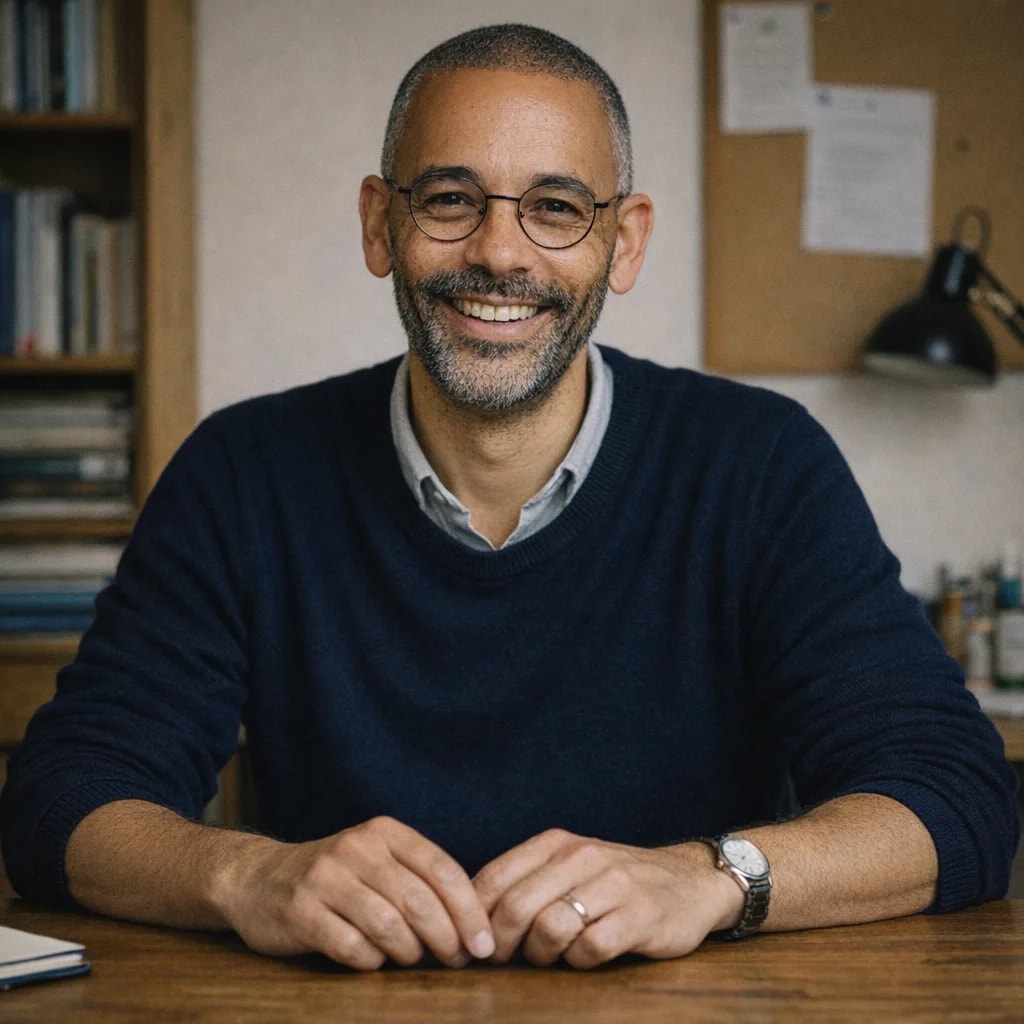
Callum Rhys Mahoney
Developmental Fiction Editor and Manuscript CoachI grew up between Wagga and my aunt’s place out near Narrandera, in a family that could argue for sport and then feed you like nothing happened. Books were around, but not in a precious way. My old man liked stories where people did what they said they’d do, even if it cost them. I still hear that voice when a character “can’t” make a decision because the plot needs another chapter. I didn’t set out to be an editor. I studied teaching, worked a few rough years in classrooms, and then left after a run of short contracts and one admin reshuffle that made it clear I was replaceable. A mate pulled me into doing learning materials and assessments because I could spot where people were gaming the question. That work taught me to watch for what the text rewards versus what it claims to reward - which is the same problem in a lot of manuscripts. I also spent a couple of seasons doing night shifts at a servo when money got tight. I kept a notebook behind the counter and wrote scenes between customers, mostly to stay awake. I remember one bloke coming in every Thursday, buying the same pie, and telling me the same story about a dog he swore was smarter than his ex. I don’t know why I remember that, but I do. Editing started as favour-work. People in town found out I’d read their drafts and I’d send back long emails with scene-by-scene notes. Somewhere along the line it became my paid work, mostly because I was consistent and because I’m not afraid to say, “This turn doesn’t belong to your protagonist.” I’m biased toward decisive characters and I don’t plan to cure myself of it; I’d rather a story risk an ugly choice than drift into polite inevitability.

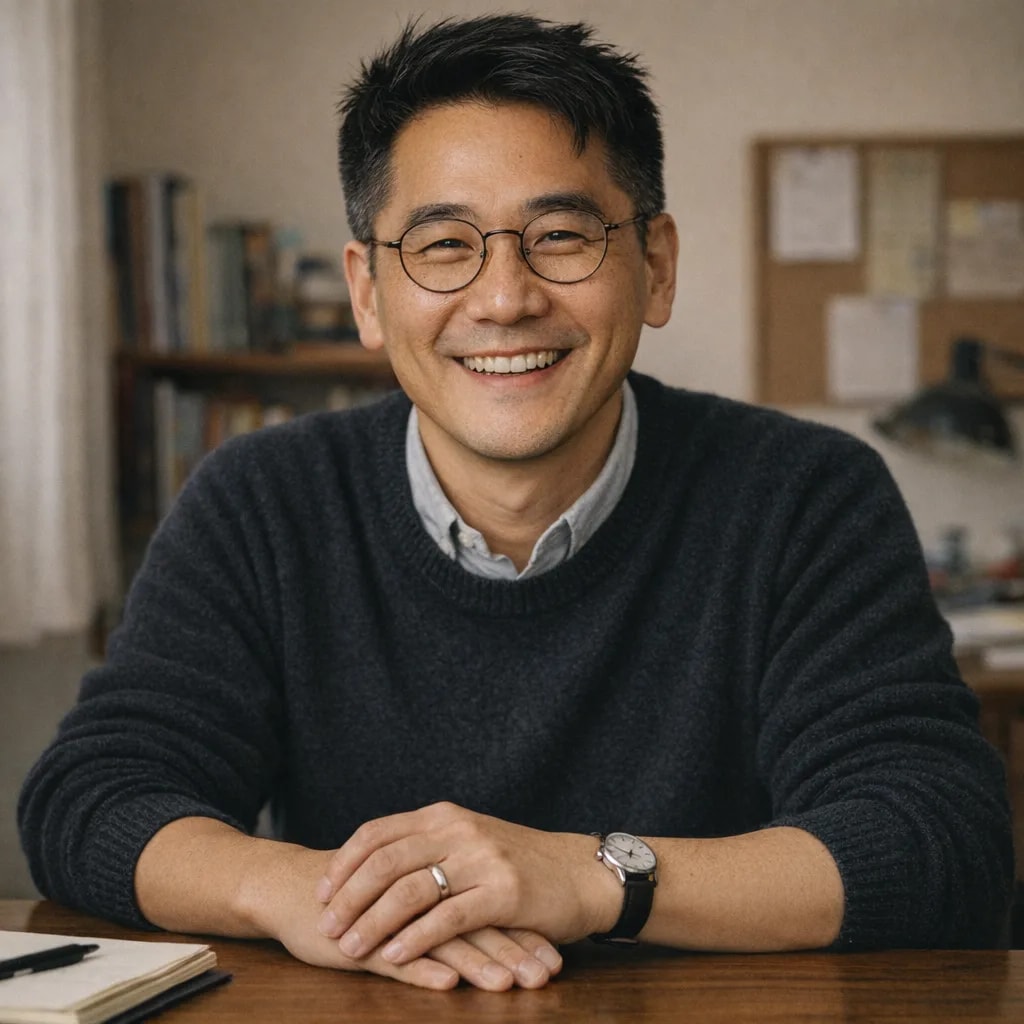
Danae Marcelline Brooks
Developmental Fiction Editor & Manuscript CoachI grew up between church basements, tidewater heat, and people who could tell a whole family story while stirring a pot and never looking up. My mom kept paperback romances in a shoebox like they were contraband, and my aunt kept a shelf of mystery novels with cracked spines. I read both. I learned early that readers forgive a lot, but they don’t forgive being bored or being lied to. I didn’t come up dreaming about editing. I wanted steadier work than “writer,” and I was the kid who could take notes fast, so I ended up in admin jobs where I got volunteered into fixing other people’s documents. Outside of that, I spent a couple years doing hair out of a friend’s kitchen. That part of my life doesn’t explain my editing, but it’s true: I still remember the sound of a cape snapping and how people tell you the most pointed truths when they think you’re not allowed to answer back. Sometimes I miss that kind of honesty. A storm took out power for a week when I was in my late twenties, and I agreed to help a neighbor organize a stack of workshop pages because there wasn’t much else to do at night. The pages were a mess, but the voice was alive. I wrote margin notes the way I talk, not the way school taught me, and the neighbor asked for more. That turned into being the person people handed drafts to. I still carry this old belief that if you “work hard enough,” the story will behave. I don’t defend it, but I catch myself acting like it’s true when I see a writer piling scenes on top of scenes. Now I’m a developmental editor because I’m impatient with pretty sentences that protect a story from making decisions. My bias is I’ll side-eye passive main characters harder than most editors will, even when the genre gives them excuses. I don’t correct that. It’s the lens I read through, and writers who want a gentler read should pick someone else. If you want a first reader who will point at the exact scene where your book starts dodging consequences, I’m your person.
Frequently Asked Questions
- What makes Romance of the Three Kingdoms so compelling?
- Most people assume it compels you through nonstop battles and famous heroes. It actually compels you through legitimacy pressure: every victory raises the question of who deserves to rule, and every “reasonable” tactic stains someone’s moral claim. Luo Guanzhong also repeats familiar scene types—oaths, councils, recruitment, stratagems—so you never feel lost even when the cast explodes. If your own epic feels messy, you likely need clearer recurring scene engines, not more action.
- How long is Romance of the Three Kingdoms?
- A common assumption says length equals sprawl, and sprawl equals confusion. The novel runs about 120 chapters in the classic division, but translations vary widely in page count depending on notes and formatting. The craft lesson hides in that scale: Luo manages length by modular construction and by attaching scenes to decisions with public consequences. If you plan a long book, track obligations, geography, and cause-and-effect per chapter, not just word count.
- What themes are explored in Romance of the Three Kingdoms?
- Readers often reduce it to loyalty and war, which sounds right but stays too small. The novel tests legitimacy, the cost of virtue, the seduction of expedience, and the way reputation becomes a form of currency in a collapsing state. It also treats fate and omen as psychological weather: leaders act differently when they believe Heaven watches. When you write theme, don’t announce it; make characters pay for it through choices that improve one value while destroying another.
- Is Romance of the Three Kingdoms appropriate for modern readers and younger audiences?
- People assume “classic” means safe and “historical” means educational. The book includes brutal warfare, executions, betrayals, and a moral universe that praises some violence when it serves order or loyalty, so you should match it to the reader’s tolerance and context. Younger readers can handle it if you guide them toward cause-and-effect and character choices instead of body counts. As a writer, notice what you choose to show on-page versus what you summarize, because that choice sets your ethical tone.
- How do I write a book like Romance of the Three Kingdoms?
- A common misconception says you start by inventing more characters and bigger battles. Start with a legitimacy question that can’t resolve through force alone, then build factions whose values make them powerful and dangerous in different ways. Use repeating scene modules—oath, recruitment, council, stratagem, campaign, aftermath—so readers learn how to read your story at speed. If your draft feels scattered, you don’t need more lore; you need stricter decision chains and clearer reputational stakes.
- How does Romance of the Three Kingdoms handle such a large cast without losing the reader?
- Many writers assume you need encyclopedic character sheets or constant reminders. Luo anchors memory with contrast and function: each major figure carries a clear method (patient planner, righteous claimant, efficient consolidator), then the plot tests that method in public. He also attaches characters to locations and factions, so geography becomes an indexing system. If your cast blurs together, stop adding traits and start giving each character a distinct obligation and a distinct way of paying debts.
About Luo Guanzhong
Alternate brisk summary with one high-stakes scene to make epic events feel inevitable, and keep readers turning pages.
Luo Guanzhong writes like a battlefield clerk with a poet's ear. He turns chaos into readable cause-and-effect by chaining motives to consequences, then consequences to the next motive. You never float in "vibes." You stand on a firm plank of narrative logic while the sea rages around you. That plank is his real gift: he makes history feel inevitable while still feeling dramatic.
His engine runs on alternation. He zooms out to summarize a campaign in clean strokes, then zooms in to stage a decisive scene where a person's choice locks the next turn of events. The reader gets relief (summary) and spike (scene) in steady rotation, which keeps huge casts and long timelines from turning into sludge. He also uses reputation as fuel. Characters arrive already carrying stories about themselves, and he tests those stories under pressure.
The hard part: he controls meaning with structure, not decoration. If you copy the archaic flavor, the banners, the oaths, and the "heroic" talk, you'll sound like cosplay. If you copy the real mechanism—setup, public claim, private motive, tactical move, visible consequence—you'll sound modern while still producing that grave, fated momentum.
Modern writers still need him because he solves a problem most novels dodge: how to make large-scale conflict feel personal without shrinking it into a single viewpoint. He proves you can compress time without losing clarity, and you can moralize without preaching by letting outcomes do the arguing. His drafting approach shows through in the architecture: modular episodes, repeated framing lines, and clear handoffs between threads—techniques that reward planning and ruthless revision for coherence.












Ready to improve your draft with direction?
Open Draftly, bring your draft, and move from stuck to a stronger draft without losing your voice. Editors are on standby when you want a deeper pass.
Free welcome credits included. No credit card needed.