Homo Faber
Book Summary & Analysis
Book summary and writing analysis of Homo Faber by Max Frisch.
Homo Faber doesn’t run on plot twists. It runs on collision: a man who worships control narrates his own undoing with the calm of an engineer writing a report. Your central dramatic question isn’t “what happens next?” It’s “how long can Walter Faber keep interpreting life as a solvable technical problem before life charges interest?” Frisch builds suspense by making the narrator competent, certain, and blind in exactly the way an ambitious writer often imitates: you’ll copy the cool tone and forget to plant the fault line that the tone tries to hide.
The setting matters because it flatters Faber’s worldview. You start in the mid-1950s, in motion, with airports, transatlantic routes, business travel, and the clean logic of timetables. You move through New York’s corporate clarity, a flight over the Atlantic, a desert trek in Mexico/Guatemala, then Europe and Greece. This isn’t travel writing. Each place functions as a pressure chamber. Modern infrastructure tells Faber he can outsource risk to systems. Then the book keeps stripping those systems away until he must face a body, a choice, and a consequence.
The inciting incident doesn’t show up as a single “bang.” It arrives as a decision Faber thinks carries no meaning: he boards a flight and falls into conversation with a stranger, Herbert Hencke, who connects him—accidentally, casually—to a past he avoids. Then the plane makes an emergency landing. Notice the mechanics: Frisch uses an external malfunction to force intimacy and time. Faber can’t “manage” his way out of sitting with people, sharing meals, making compromises. If you imitate this book, don’t imitate the accident. Imitate the way the accident removes options and exposes the story’s real vulnerability.
From there, the stakes escalate through a chain of “reasonable” choices that feel small in the moment. Faber agrees to travel with Hencke, then later meets and attaches himself to a young woman, Elisabeth (Sabeth), in a way he explains as coincidence, convenience, even courtesy. The opposing force doesn’t wear a villain’s face. Fate presses from outside, but Faber’s deeper antagonist lives inside his narration: his need to reduce messy human reality to statistics, probabilities, and neat cause-and-effect.
Frisch keeps tightening the noose by letting Faber narrate like he already knows what matters—then proving he doesn’t. He reports, he categorizes, he corrects himself, he cites “facts,” and the reader senses the missing emotional data. That gap creates dread. You watch him walk past warning signs because his voice treats warning signs as noise. That’s the craft move: the novel uses unreliability without making the narrator “crazy” or theatrical. He simply refuses the right interpretation until the cost spikes.
Structure-wise, the book behaves like a tragedy disguised as a memoir. The middle doesn’t “complicate” through subplots. It complicates through recognition deferred. Each new location adds a piece of context that redefines the previous scene, especially around family history, sexuality, and responsibility. Frisch makes coincidence feel inevitable by controlling information and by making Faber actively choose ignorance when knowledge would require emotional risk.
The climax lands because Frisch refuses the modern shortcut of catharsis-by-confession. Faber doesn’t suddenly “open up” in a pretty monologue. He meets consequences in the concrete: illness, loss, the limits of medicine, the ugly fact that time doesn’t negotiate. His tone keeps trying to stay technical, but his body and his memories start dictating terms.
If you try to write “a cool, rational narrator who spirals,” you’ll likely make him sarcastic, detached, and charming. Frisch makes Faber dull on purpose at the start—usefully dull—so the tension comes from what he omits and mishandles, not from witty performance. The engine works because the narrator’s style commits a moral error: he treats people as variables. The book punishes that error with precision.
Story Structure & Narrative Arc
Story structure and emotional arc in Homo Faber.
The emotional shape reads like a Tragedy with a delayed drop: Faber begins in cool, competent control, insulated by systems, money, and a technician’s pride. He ends stripped of control, forced into bodily reality and moral accounting he cannot engineer away.
Frisch earns the force of each plunge by staging it as “just logistics” until it isn’t. Small inconveniences become irreversible commitments. Coincidences first feel like travel noise, then reveal themselves as pattern. The low points land hard because Faber narrates them with the same flat instrument panel voice he uses for everything else, so the reader supplies the horror he refuses to name.

Studying this book—and stuck on your pages?
Put your draft in Draftly. Fix scenes and dialogue in the text—not in another tab. When you want sharper feedback, AI editors are ready.
Free welcome credits included. No credit card needed.Writing Lessons from Homo Faber
What writers can learn from Max Frisch in Homo Faber.
Frisch builds the whole novel out of a voice that insists on “facts,” then quietly proves that facts can lie when the narrator chooses the wrong frame. Faber writes like a man filing a case report: dates, routes, technical digressions, corrections, and hedges. That surface discipline makes the chaos underneath feel more real, not less, because you sense the strain of control. Many modern novels signal unreliability with flamboyant contradiction or quirky confession. Frisch does it with omission and misvaluation. Faber includes information that sounds objective and skips the one sentence that would make it honest.
Watch how Frisch handles dialogue as combat without theatrics. When Faber talks with Sabeth, he keeps steering the conversation toward logistics—where to go, when to leave, what to do next—while she keeps pulling toward meaning and personal history. He answers her questions with half-answers, then congratulates himself for being “straight.” That mismatch creates friction you can feel in the white space. Frisch doesn’t need clever banter. He uses conversational angle: each character speaks from a different model of reality.
The atmosphere comes from concrete systems failing at inconvenient times. A commercial flight that must land unexpectedly. A harsh stretch of landscape in Central America where plans stop working. Later, Greece doesn’t appear as postcard beauty; it appears as heat, stone, time, and a medical emergency that turns ancient setting into a modern helplessness. Frisch anchors dread to place by choosing locations that strip away the protagonist’s tools. You don’t fear “fate” as an abstraction. You fear being stuck somewhere your competence can’t save you.
Structurally, Frisch weaponizes delayed recognition. He lets you experience scenes as Faber misreads them, then later supplies context that re-casts the earlier moment as grotesque or tragic. That move sounds like a twist, but it operates like theme: your brain rehearses the cost of denial. Modern shortcuts often chase shock value or secret-keeping for its own sake. Frisch ties every withheld fact to character. Faber doesn’t hide information to tease you; he hides it because knowing it would require a different life.
How to Write Like Max Frisch
Writing tips inspired by Max Frisch's Homo Faber.
Write the voice like a professional document that leaks a soul against its will. You can’t fake this with dryness alone. Choose what your narrator notices with obsessive consistency, then make that consistency indict him. Let him name brands, times, and procedures, then let him miss the emotional headline in the room. Keep jokes rare and unshowy. If you reach for charming cynicism, you will soften the blade. The reader should feel you control the sentence while your narrator refuses to control himself.
Build your protagonist as a working worldview, not a bundle of traits. Faber doesn’t merely “fear intimacy.” He believes probability replaces morality, and he treats people as data points. Give your character a method for handling life, a method that works well enough to earn loyalty, then design story events that make the method expensive. Also give him competence you respect. If you make him an idiot, you kill the tragedy. The point hurts only when the fall starts from real capability.
Avoid the genre trap of blaming coincidence for everything. This book uses coincidence, yes, but it never uses coincidence as explanation. Frisch uses it as pressure. Each “chance” meeting forces a choice: ask, admit, stay, leave, tell the truth, or keep the schedule. Writers copy the surface and end up with a contrived chain of events. Instead, make your links psychological. Your protagonist should keep stepping into the same kind of mistake because it matches his identity.
Try this exercise. Write a 1,200-word “report” from a narrator who insists he only records facts. Put him in a transit space like an airport gate, a delayed train, or a roadside clinic. Force him into a conversation with someone who asks personal questions he doesn’t want to answer. Make an external malfunction trap him there. Then revise twice: first, remove every emotional adjective; second, add three precise sensory details that contradict his claimed neutrality. You will feel the story engine start.
Who Would Edit This Book?
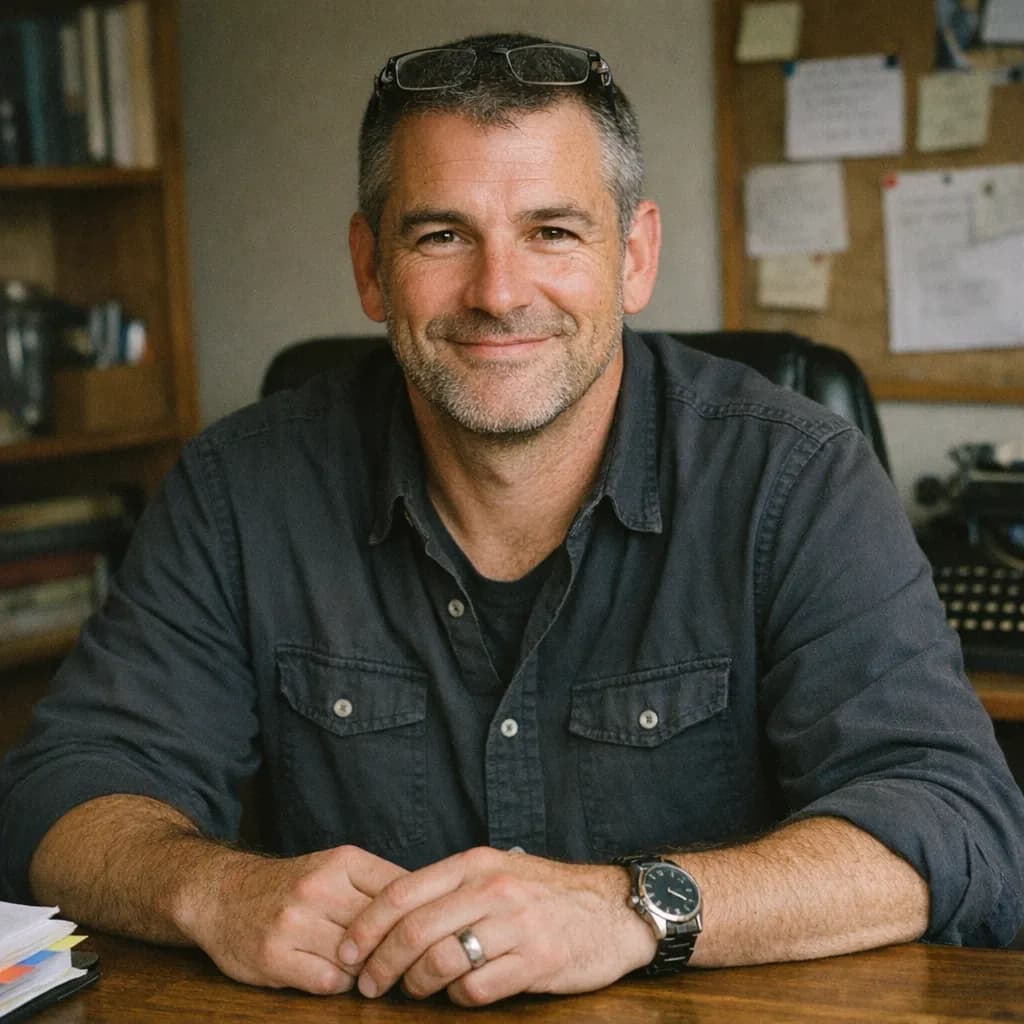
Callum Rhys Mahoney
Developmental Fiction Editor and Manuscript CoachI grew up between Wagga and my aunt’s place out near Narrandera, in a family that could argue for sport and then feed you like nothing happened. Books were around, but not in a precious way. My old man liked stories where people did what they said they’d do, even if it cost them. I still hear that voice when a character “can’t” make a decision because the plot needs another chapter. I didn’t set out to be an editor. I studied teaching, worked a few rough years in classrooms, and then left after a run of short contracts and one admin reshuffle that made it clear I was replaceable. A mate pulled me into doing learning materials and assessments because I could spot where people were gaming the question. That work taught me to watch for what the text rewards versus what it claims to reward - which is the same problem in a lot of manuscripts. I also spent a couple of seasons doing night shifts at a servo when money got tight. I kept a notebook behind the counter and wrote scenes between customers, mostly to stay awake. I remember one bloke coming in every Thursday, buying the same pie, and telling me the same story about a dog he swore was smarter than his ex. I don’t know why I remember that, but I do. Editing started as favour-work. People in town found out I’d read their drafts and I’d send back long emails with scene-by-scene notes. Somewhere along the line it became my paid work, mostly because I was consistent and because I’m not afraid to say, “This turn doesn’t belong to your protagonist.” I’m biased toward decisive characters and I don’t plan to cure myself of it; I’d rather a story risk an ugly choice than drift into polite inevitability.
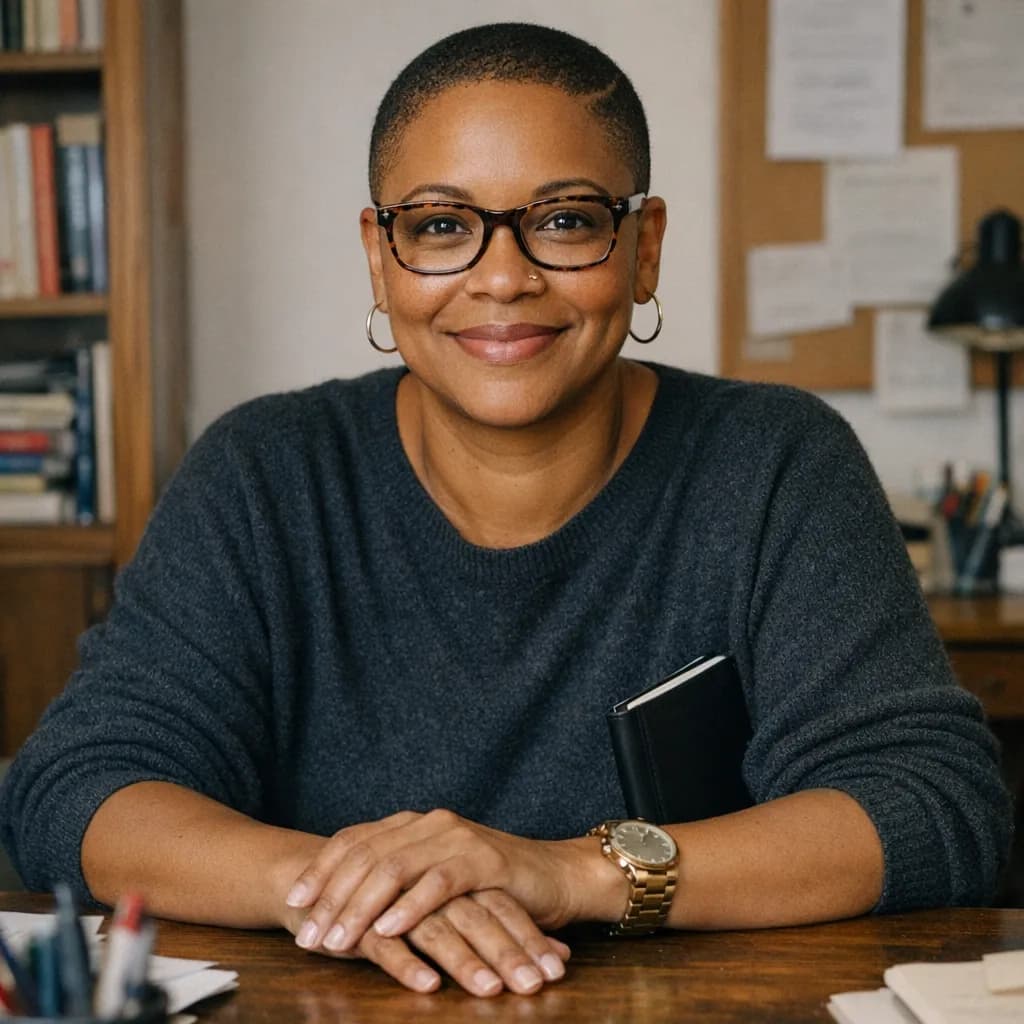
Danae Marcelline Brooks
Developmental Fiction Editor & Manuscript CoachI grew up between church basements, tidewater heat, and people who could tell a whole family story while stirring a pot and never looking up. My mom kept paperback romances in a shoebox like they were contraband, and my aunt kept a shelf of mystery novels with cracked spines. I read both. I learned early that readers forgive a lot, but they don’t forgive being bored or being lied to. I didn’t come up dreaming about editing. I wanted steadier work than “writer,” and I was the kid who could take notes fast, so I ended up in admin jobs where I got volunteered into fixing other people’s documents. Outside of that, I spent a couple years doing hair out of a friend’s kitchen. That part of my life doesn’t explain my editing, but it’s true: I still remember the sound of a cape snapping and how people tell you the most pointed truths when they think you’re not allowed to answer back. Sometimes I miss that kind of honesty. A storm took out power for a week when I was in my late twenties, and I agreed to help a neighbor organize a stack of workshop pages because there wasn’t much else to do at night. The pages were a mess, but the voice was alive. I wrote margin notes the way I talk, not the way school taught me, and the neighbor asked for more. That turned into being the person people handed drafts to. I still carry this old belief that if you “work hard enough,” the story will behave. I don’t defend it, but I catch myself acting like it’s true when I see a writer piling scenes on top of scenes. Now I’m a developmental editor because I’m impatient with pretty sentences that protect a story from making decisions. My bias is I’ll side-eye passive main characters harder than most editors will, even when the genre gives them excuses. I don’t correct that. It’s the lens I read through, and writers who want a gentler read should pick someone else. If you want a first reader who will point at the exact scene where your book starts dodging consequences, I’m your person.
Frequently Asked Questions
- What makes Homo Faber so compelling for writers?
- A common assumption says the book grips you through shocking coincidence, but the real hook comes from voice under stress. Frisch makes Walter Faber narrate like an engineer compiling evidence, so every omission and misread detail creates dread. The novel teaches you how to turn a calm tone into tension by letting the reader notice what the narrator refuses to name. If you want the same effect, you must control viewpoint discipline and information timing, not chase louder plot events.
- What themes are explored in Homo Faber?
- People often reduce the themes to “fate versus reason,” and that’s true but incomplete. Frisch also examines how modern systems—travel, industry, professional identity—can anesthetize moral attention, so a person confuses competence with wisdom. The book presses on responsibility, sexuality, and the cost of treating relationships as solvable problems. When you write theme like this, you don’t announce it; you embed it in what the protagonist consistently misinterprets, scene after scene.
- How do I write a book like Homo Faber?
- A common rule says you should start with a big inciting explosion, but Frisch shows you can start with a small “practical” decision that exposes a worldview. Build a narrator with a rigid interpretive system, then design events that look like logistics yet force intimacy and moral choice. Control what he notices, what he records, and what he rationalizes away. Revise for causality at the level of character: the plot should feel inevitable because he keeps choosing the same kind of blindness.
- How long is Homo Faber?
- Many readers assume length determines complexity, but this novel earns complexity through compression and structure, not sheer size. Most editions land roughly in the 200–250 page range, depending on translation and formatting. For writers, that matters because Frisch sustains momentum by cutting summary and keeping scenes that either tighten the noose or reframe what you thought you knew. Use page count as a constraint that forces selection, not as a target.
- Is Homo Faber appropriate for young readers or classroom study?
- A common assumption says any “classic” fits any classroom, but content and tone matter. The novel includes adult relationships and existential material that suits mature teens and adults, especially in guided study where you can discuss unreliable narration and ethical blindness. It rewards readers who tolerate discomfort and ambiguity rather than clean lessons. If you teach or write for that audience, set expectations early: the book offers craft clarity, not comforting resolution.
- What can writers learn from the dialogue in Homo Faber?
- Many writing guides claim dialogue must sound witty or “natural” to work, but Frisch uses dialogue as misalignment of goals. In Faber’s exchanges with Sabeth, he keeps translating personal questions into practical arrangements, and she keeps trying to pull him toward meaning and history. That tension makes even plain sentences do narrative work. When you revise dialogue, check intention per line: each speaker should pursue a different outcome, not just trade information.
About Max Frisch
A diary that forces its keeper to testify against himself. Readers judge what the character will not admit.
Max Frisch writes like an engineer who caught himself building a trap. He designs stories as identity tests: you watch a narrator or protagonist declare who they are, then the book calmly proves how flimsy that declaration is. The pleasure comes from the slow click of the mechanism. You don't get "twists." You get choices that look reasonable until they stack up into a verdict.
His main engine is controlled self-incrimination. He uses diaries, reports, statements, and retrospective narration to make the character do the prosecutor's job. That form feels honest, so you lean in. Then Frisch exploits the gap between what the voice claims and what the structure shows: omissions, rehearsed phrasing, sudden precision where emotion should blur. He makes you complicit by letting you supply the missing moral conclusion.
The technical difficulty hides in the restraint. Frisch can't rely on lush description or dramatic speeches. He has to place pressure on simple sentences, on what gets repeated, and on when the narrative refuses to interpret itself. Every page needs to feel "plain" while functioning like a cross-examination. Most imitations fail because they copy the cool tone and forget the underlying courtroom logic.
Modern writers should study him because he solved a contemporary problem before it had a name: how to show a self that narrates, edits, and brands itself in real time. His books model ruthless revision on the page—reframing, correcting, contradicting—so your draft can move forward by rewriting its own claims rather than by adding louder drama.










Ready to improve your draft with direction?
Open Draftly, bring your draft, and move from stuck to a stronger draft without losing your voice. Editors are on standby when you want a deeper pass.
Free welcome credits included. No credit card needed.