The Master and Margarita
Book Summary & Analysis
Book summary and writing analysis of The Master and Margarita by Mikhail Bulgakov.
If you imitate this novel by copying its “weirdness,” you will write a clever mess. Bulgakov succeeds because he builds a courtroom disguised as a circus. Every scene asks one central dramatic question: in a society trained to deny truth, who pays the price for saying it out loud? He turns that question into plot by making reality itself argue back. You watch characters try to keep their dignity, their careers, and their sanity while the world punishes them for the wrong kind of certainty.
The protagonist function belongs to two linked figures: Margarita, who chooses action, and the Master, who embodies the wound. They face one primary opposing force with many faces: Soviet Moscow’s system of fear and self-protection—editors, housing committees, bureaucrats, and the inner censor that trains you to pre-comply. Woland (the devil) does not oppose them in the usual way. He exposes the system by giving it exactly what it wants: spectacle, money, status, and excuses. The Master wants obscurity and peace; the city demands confession, conformity, and public performance.
The inciting incident does not arrive as a vague “devil comes to town.” It lands in a precise social setting: Patriarch’s Ponds in 1930s Moscow, where two literary officials (Berlioz and the poet Ivan) posture about atheism and literature as career. Woland enters that conversation, corrects them, predicts Berlioz’s death, and then the prediction comes true with humiliating specificity. That moment does craft work: it flips the rules of reality in front of skeptical professionals, and it forces Ivan to chase the impossible through public spaces where people can witness his degradation. Bulgakov uses the chase to introduce the real antagonist: institutions that re-label truth as madness.
From there, the stakes climb in two directions at once. Externally, reputations collapse, apartments change hands, and public order turns into farce—yet every joke costs someone a job, a home, or their freedom. Internally, the Master’s burned manuscript and broken confidence become the emotional baseline Margarita must defy. Bulgakov structures escalation by widening the radius of contagion: first a park, then a literary office, then a theater, then the entire city’s moral self-image. Each set piece feels like entertainment until you notice the pattern: people reveal what they worship when they think no one will hold them accountable.
He tightens the engine with a parallel narrative set in ancient Jerusalem (Yershalaim). Do not treat it like “a story within a story” that you can insert anywhere. Bulgakov uses it as a pressure gauge. Each return to Pilate and Yeshua reframes Moscow’s cowardice in a starker key, so the reader measures satire against tragedy. The Master’s novel does not decorate the plot; it supplies the book’s ethical axis. The question stops sounding clever and starts sounding dangerous.
At the midpoint, Bulgakov does not give you a twist; he gives you a transaction. Margarita agrees to serve as hostess at Satan’s Ball. She does not do it to become “empowered.” She does it to reclaim agency in a world that offers her only polite despair. After that choice, the book stops pretending events happen randomly. Margarita’s decision creates a chain of consequences with clear costs, and it proves Bulgakov’s thesis: moral action requires you to accept social risk, not just private feeling.
The final escalation forces a reckoning with what “reward” means in this universe. Bulgakov refuses the modern shortcut where virtue automatically wins and villains get tidy punishment. He lets the devil enforce a kind of justice that feels both satisfying and unsettling, and he grants the Master and Margarita not triumph but release. If you copy only the outrageous scenes, you miss the book’s real craft: Bulgakov builds a world where every laugh carries a receipt. He makes you pay attention to the moral math.
Story Structure & Narrative Arc
Story structure and emotional arc in The Master and Margarita.
The book runs as a subversive hybrid of Satire-as-Horror and Redemption-without-Victory. It starts with public certainty and private cowardice in Moscow, where people perform belief to stay safe. It ends with a quieter internal shift: Margarita chooses risk, the Master stops fighting the memory of failure, and both accept a form of peace that dodges public triumph.
Bulgakov lands his big moments by alternating laughter and dread, then forcing you to notice they share a source. The early highs come from seeing pompous officials humiliated; the lows hit when institutions reframe obvious truth as insanity and strip people of home and name. The climactic surge works because it comes from choice, not coincidence: Margarita’s bargain drives the plot, and the Jerusalem chapters keep reminding you what cowardice costs when jokes stop being funny.

Studying this book—and stuck on your pages?
Put your draft in Draftly. Fix scenes and dialogue in the text—not in another tab. When you want sharper feedback, AI editors are ready.
Free welcome credits included. No credit card needed.Writing Lessons from The Master and Margarita
What writers can learn from Mikhail Bulgakov in The Master and Margarita.
Bulgakov makes satire carry weight by giving it rules. He doesn’t stack random absurdities; he runs experiments. Woland introduces a controlled variable—impossible truth—and then Moscow’s institutions produce the predictable result: denial, scapegoating, and self-preservation dressed as rationality. You can feel the author’s editorial discipline in the set pieces. Each comic humiliation also solves a structural job: it tightens the net, widens the damage radius, and keeps the central question alive.
Notice how he handles dialogue as fencing, not information. At Patriarch’s Ponds, Berlioz tries to manage the conversation like a committee meeting, Ivan tries to perform certainty like a young recruit, and Woland speaks with calm specificity that turns their abstract claims into testable statements. That asymmetry creates tension without shouting. Bulgakov also uses named interruptions—questions, corrections, predictions—to seize control of the scene. Many modern novels rely on “banter” to feel alive; this book uses verbal pressure to expose hierarchy and fear.
World-building works because he anchors the uncanny inside concrete, petty locations: an editorial office, a communal apartment, a theater, an asylum. You don’t float in dream logic; you watch the supernatural collide with paperwork. The comedy comes from the exactness of the bureaucracy, not from random whimsy. When a character panics about a housing committee or a missing stamp while demons walk around, Bulgakov reveals what truly terrifies them. A modern shortcut would paint the regime as a vague dark cloud; Bulgakov names the desks, the corridors, the petty officials, and the social rituals that enforce silence.
The parallel Jerusalem narrative supplies more than contrast; it supplies moral calibration. Bulgakov cuts away at moments when Moscow’s farce might tempt you to treat everything as a joke, then he forces you to watch Pilate bargain with his conscience in a heat-baked courtyard. That braid prevents tonal collapse. Writers often attempt “two timelines” by alternating chapters on a schedule; Bulgakov alternates when the story needs ethical voltage. He earns the right to be funny because he keeps reminding you what cowardice looks like without the laugh track.
How to Write Like Mikhail Bulgakov
Writing tips inspired by Mikhail Bulgakov's The Master and Margarita.
Write with a straight face even when you stage the impossible. Bulgakov’s best jokes land because the sentence stays calm while the world turns upside down. You should treat absurd events as paperwork, not fireworks. Keep your narrator precise, sometimes politely judgmental, and never eager to impress. If you chase quirk, you will sound like you want applause. If you chase accuracy—of motives, of social rituals, of what people fear—you can let the strange walk in quietly and do maximum damage.
Build characters as belief systems under stress, not as bundles of traits. Give each major figure a public mask, a private hunger, and a specific vulnerability that institutions can exploit. Margarita works because she acts; the Master works because he flinches. That contrast generates motion and tenderness without speeches. Design your opposing force the same way. Don’t invent a single moustache-twirling villain. Invent a network of incentives that makes ordinary people choose cowardice, then let your protagonist pay for refusing.
Don’t fall into the prestige-tragic trap where the satire becomes decoration and the “message” becomes a lecture. Bulgakov avoids that by making every moral point cost someone something tangible—housing, sanity, reputation, love. He also avoids the fantasy trap where magic solves the protagonist’s problems. Woland exposes; he doesn’t rescue for free. If you write in this lane, you must keep your moral ledger honest. Let spectacle tempt characters into revealing themselves, then enforce consequences that feel inevitable, not moralistic.
Write a two-strand engine on purpose. Draft a present-day storyline built from social set pieces where status matters, and draft a second strand that carries your ethical baseline in a harsher key. Now plan three cut points where the second strand must interrupt the first to prevent tonal drift. Finally, create one irreversible bargain your protagonist chooses at the midpoint, and attach a price you can show on the page. If your bargain doesn’t change the story’s causality, you wrote ornament, not structure.
Who Would Edit This Book?
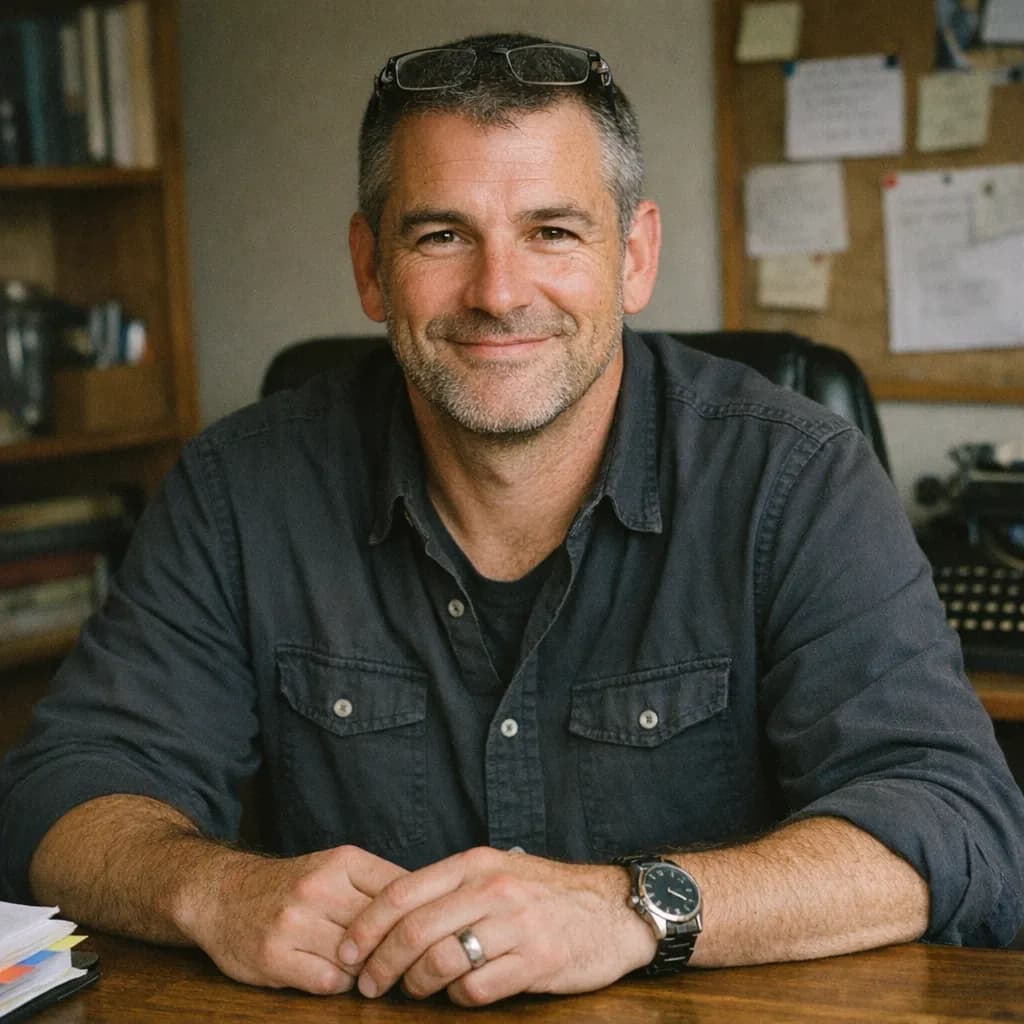
Callum Rhys Mahoney
Developmental Fiction Editor and Manuscript CoachI grew up between Wagga and my aunt’s place out near Narrandera, in a family that could argue for sport and then feed you like nothing happened. Books were around, but not in a precious way. My old man liked stories where people did what they said they’d do, even if it cost them. I still hear that voice when a character “can’t” make a decision because the plot needs another chapter. I didn’t set out to be an editor. I studied teaching, worked a few rough years in classrooms, and then left after a run of short contracts and one admin reshuffle that made it clear I was replaceable. A mate pulled me into doing learning materials and assessments because I could spot where people were gaming the question. That work taught me to watch for what the text rewards versus what it claims to reward - which is the same problem in a lot of manuscripts. I also spent a couple of seasons doing night shifts at a servo when money got tight. I kept a notebook behind the counter and wrote scenes between customers, mostly to stay awake. I remember one bloke coming in every Thursday, buying the same pie, and telling me the same story about a dog he swore was smarter than his ex. I don’t know why I remember that, but I do. Editing started as favour-work. People in town found out I’d read their drafts and I’d send back long emails with scene-by-scene notes. Somewhere along the line it became my paid work, mostly because I was consistent and because I’m not afraid to say, “This turn doesn’t belong to your protagonist.” I’m biased toward decisive characters and I don’t plan to cure myself of it; I’d rather a story risk an ugly choice than drift into polite inevitability.
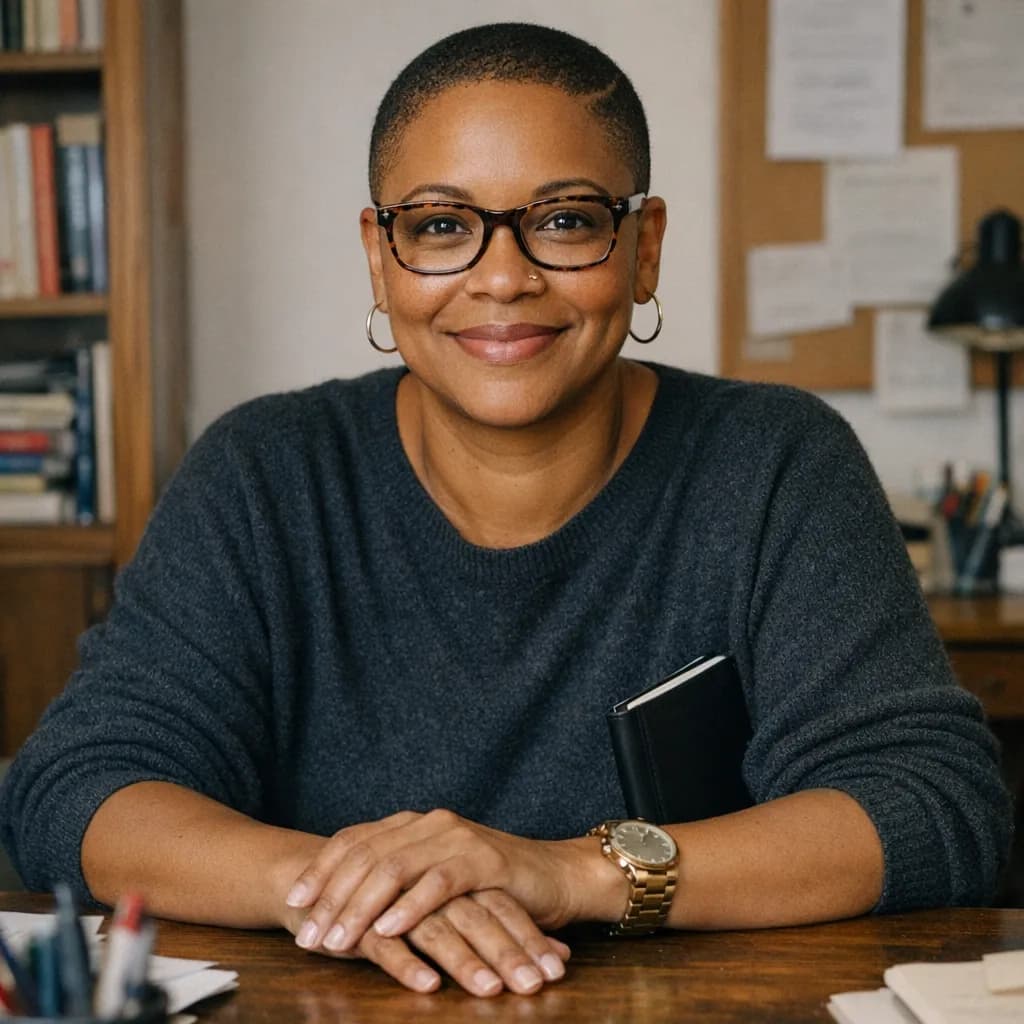
Danae Marcelline Brooks
Developmental Fiction Editor & Manuscript CoachI grew up between church basements, tidewater heat, and people who could tell a whole family story while stirring a pot and never looking up. My mom kept paperback romances in a shoebox like they were contraband, and my aunt kept a shelf of mystery novels with cracked spines. I read both. I learned early that readers forgive a lot, but they don’t forgive being bored or being lied to. I didn’t come up dreaming about editing. I wanted steadier work than “writer,” and I was the kid who could take notes fast, so I ended up in admin jobs where I got volunteered into fixing other people’s documents. Outside of that, I spent a couple years doing hair out of a friend’s kitchen. That part of my life doesn’t explain my editing, but it’s true: I still remember the sound of a cape snapping and how people tell you the most pointed truths when they think you’re not allowed to answer back. Sometimes I miss that kind of honesty. A storm took out power for a week when I was in my late twenties, and I agreed to help a neighbor organize a stack of workshop pages because there wasn’t much else to do at night. The pages were a mess, but the voice was alive. I wrote margin notes the way I talk, not the way school taught me, and the neighbor asked for more. That turned into being the person people handed drafts to. I still carry this old belief that if you “work hard enough,” the story will behave. I don’t defend it, but I catch myself acting like it’s true when I see a writer piling scenes on top of scenes. Now I’m a developmental editor because I’m impatient with pretty sentences that protect a story from making decisions. My bias is I’ll side-eye passive main characters harder than most editors will, even when the genre gives them excuses. I don’t correct that. It’s the lens I read through, and writers who want a gentler read should pick someone else. If you want a first reader who will point at the exact scene where your book starts dodging consequences, I’m your person.
Frequently Asked Questions
- What makes The Master and Margarita so compelling?
- Many readers assume the book works because it feels wild and imaginative. It actually works because Bulgakov runs a disciplined moral experiment: he drops the supernatural into a city obsessed with appearances and records the social reactions like evidence. He also braids satire with a solemn counterweight (the Pilate narrative), so the comedy never dissolves the stakes. If you want a similar pull, build scenes that entertain and indict at the same time, then make your protagonist’s choices, not your cleverness, drive the verdict.
- What are the best writing lessons from The Master and Margarita?
- A common rule says you must keep one tone, one genre, one promise. Bulgakov breaks that rule, but he replaces it with something stricter: he keeps one central question and one consequence system, so every tonal shift still serves the same engine. He also shows how to use set pieces as structural gears, not as “cool scenes.” When you borrow these lessons, check your draft for causal clarity. If your weirdness doesn’t force decisions and payments, it won’t feel Bulgakovian—it will feel random.
- How do I write a book like The Master and Margarita?
- People usually start by copying the surface: demons, talking animals, surreal theater, outrageous punishments. The harder move involves building an antagonist that acts like a system and letting your supernatural element expose that system instead of replacing it. Then you must braid at least two narrative keys—comic and tragic—without letting either become a gimmick. Keep asking: what does this scene make my character risk today? If you can’t name the risk in concrete terms, you need revision, not more imagination.
- What themes are explored in The Master and Margarita?
- It’s easy to reduce the book to big labels like good versus evil or faith versus atheism. Bulgakov works in sharper themes that behave like plot mechanics: cowardice as a social survival strategy, reputation as currency, art as a threat, and mercy as a choice that costs you. He ties those themes to objects and places—apartments, committees, theaters—so they don’t float as slogans. When you write theme, tether it to recurring decisions. Theme lives in what characters risk to stay “safe.”
- How long is The Master and Margarita?
- A common assumption says length predicts difficulty, as if pages equal complexity. Most editions run roughly 350–450 pages depending on translation and notes, but the real challenge comes from its braided structure and rapid tonal turns. You can read it quickly and still miss the causal engine if you skim the social mechanics and treat the Jerusalem chapters as optional. For craft study, track where Bulgakov switches strands and why. Your attention, not the page count, determines what you learn.
- Is The Master and Margarita appropriate for young readers or sensitive readers?
- Some assume “classic” automatically means tame, or that fantasy automatically softens darker material. Bulgakov includes satire aimed at real oppression, depictions of institutional cruelty, moral brutality in the Pilate chapters, and a major set piece built around a decadent ball; different translations also vary in explicitness. The book rarely lingers for shock, but it does insist you look at cowardice and complicity without comforting edits. If you write for a specific audience, note what the book does: it earns intensity through consequence, not gore.
About Mikhail Bulgakov
Use deadpan narration to make absurd events feel inevitable, and your satire will land before the reader realizes you aimed it at them.
Bulgakov writes like a stage magician who also files paperwork. He shows you the trick, then distracts you with a form stamped in triplicate, and you still end up amazed. His engine runs on a simple craft bet: if you render the absurd with administrative clarity, the reader will accept the impossible as "obviously true." That's how he gets satire to bite without turning the page into a lecture.
He controls reader psychology by swapping "what is real?" for "who benefits from calling this real?" Scenes don't argue; they demonstrate. An official lies, a crowd agrees, a rational person doubts their own eyes. The comedy lands because the prose stays calm while the world goes feral. You laugh, then you notice the trap: you helped the system work by wanting the scene to make sense.
Imitating him fails when you copy the devilish flair but skip the scaffolding. Bulgakov's effects come from structure: parallel storylines that cross on purpose, repeating motifs that change meaning, and tonal discipline that keeps wonder and dread in the same room. He also uses sharp transitions—one clean cut and you're in another layer of reality—so the reader feels swept along, not dragged.
Modern writers need him because he solved a problem we still have: how to tell the truth under pressure without sounding "important." He builds allegory that reads like entertainment, then makes entertainment read like indictment. Accounts of his working life suggest persistent drafting and revision under constraint; you can feel that pressure in the final control—nothing rambles, even when the world does.









Ready to improve your draft with direction?
Open Draftly, bring your draft, and move from stuck to a stronger draft without losing your voice. Editors are on standby when you want a deeper pass.
Free welcome credits included. No credit card needed.