The Unbearable Lightness of Being
Book Summary & Analysis
Book summary and writing analysis of The Unbearable Lightness of Being by Milan Kundera.
If you copy The Unbearable Lightness of Being badly, you will copy its surfaces: the aphorisms, the philosophy, the erotic intrigue. Kundera’s real trick sits underneath. He builds a novel where ideas behave like plot events. He asks a central dramatic question that stays personal even when tanks roll through the streets: can Tomas live with the weight of commitment—ethical, romantic, political—without losing the freedom he treats as identity?
He sets the story in 1960s–70s Czechoslovakia and Switzerland, with Prague Spring and the Soviet invasion not as “background,” but as a machine that converts private choices into public consequences. The primary opposing force does not wear one face. It includes the state’s surveillance and coercion, but also Tomas’s own addiction to lightness and the moral accounting Tereza imposes by simply existing. The world punishes neutrality. It also punishes self-mythology.
The inciting incident works because it looks small. Tomas meets Tereza when she arrives at his hotel in a small provincial town, carrying a heavy suitcase and an even heavier need. He takes her home, then keeps taking her back in after she leaves. That decision matters more than sex, more than politics, more than “fate.” It introduces the novel’s core mechanism: every time Tomas tries to keep life light, he creates a heavier bond, and every time he tries to carry the bond properly, he feels his self-image crack.
Kundera escalates stakes by widening the radius of consequence. First, the stakes look intimate: Tereza’s jealousy, nightmares, and demand for meaning versus Tomas’s erotic freedom and contempt for melodrama. Then history crowds the room. Tomas writes a short political piece (the Oedipus article) and refuses to recant when pressured. That single act upgrades the conflict from “what kind of lover will you be?” to “what kind of person will you be when power demands a performance?”
The structure keeps you off-balance on purpose. Kundera shuffles time, jumps between Tomas, Tereza, Sabina, and Franz, and interrupts with commentary that feels like an essay—but he uses that essay voice to tighten causality, not loosen it. He repeatedly reframes the same event with a different moral lens, which makes you feel the trap: no choice stays pure once you examine it. Each return to a scene acts like a new draft of the character’s conscience.
Watch how he handles the so-called “love triangle.” He refuses the lazy version where jealousy creates plot via misunderstandings. He makes desire ideological. Sabina represents betrayal as aesthetic and spiritual principle; Franz represents grand gestures and kitsch; Tereza represents the pain of embodiment and the hunger for a single, legible meaning; Tomas tries to treat them as separate compartments. The opposing force, in practice, becomes the impossibility of compartmentalization.
The late movement of the novel lowers the volume but raises the cost. Exile, demotion, loss of professional identity, and the steady narrowing of options push Tomas and Tereza toward a life that looks smaller. But “smaller” functions as a structural feint. Kundera turns the question from ambition to attention: can they choose a life and stop arguing with the life they did not choose?
Here’s the warning if you want to reuse this engine. Do not paste philosophical paragraphs on top of a thin plot and call it “literary.” Kundera earns his thinking by attaching it to decisions with consequences, then making characters pay in concrete currencies: job, safety, reputation, sleep, sex, self-respect. If your ideas do not change what your characters do next, your reader will treat them as decoration and leave.
Story Structure & Narrative Arc
Story structure and emotional arc in The Unbearable Lightness of Being.
The book runs on a subversive Man-in-Hole that refuses the usual “growth” payoff. Tomas starts with buoyant certainty: freedom equals virtue, attachment equals trap. He ends with a quieter, heavier peace that looks like surrender if you only measure status, but reads like earned presence if you measure integrity.
Kundera lands his strongest blows at the sentiment pivots: when private desire collides with public consequence, when exile exposes what “freedom” actually costs, and when the narrative grants tenderness after stripping away illusion. The low points hit hard because they do not come from melodrama. They come from small refusals to lie—refusals that trigger disproportionate punishment—and from the slow recognition that a life can feel light only if someone else carries the weight.

Studying this book—and stuck on your pages?
Put your draft in Draftly. Fix scenes and dialogue in the text—not in another tab. When you want sharper feedback, AI editors are ready.
Free welcome credits included. No credit card needed.Writing Lessons from The Unbearable Lightness of Being
What writers can learn from Milan Kundera in The Unbearable Lightness of Being.
Kundera makes an essay behave like a scene. He doesn’t stop the story to “say something.” He uses authorial commentary as a lever that changes what you think an event means, then he sends you back into character behavior with that new meaning as pressure. That move lets him compress decades of moral argument into a few pages without losing narrative momentum. Most modern imitators try to sound wise; Kundera tries to make you complicit in the analysis, so you keep reading to test your own conclusions.
He builds characters as philosophies with nervous systems. Tomas doesn’t “represent freedom” in the abstract; he enacts it through a repeatable pattern: erotic variety, avoidance of entanglement, and a belief that lightness equals cleanliness. Tereza doesn’t “represent love”; she carries the ache of embodiment—shame, hunger for singular meaning, the need to be seen as irreplaceable. Sabina turns betrayal into an aesthetic practice (the bowler hat matters because it turns motif into identity), and Franz turns ideals into theater. You can steal that method today: pick an idea, then give it a body that sweats under consequence.
Look at the dialogue between Tomas and Tereza when his affairs surface and she demands an explanation he can’t supply. He doesn’t argue facts; he argues metaphysics. He treats her pain as a category error, as if suffering proves a faulty premise. She doesn’t win by debating better. She wins by existing as the cost he can’t algebra away. You learn a brutal craft lesson here: the strongest relationship conflicts do not hinge on information. They hinge on incompatible systems for assigning meaning to the same act.
Kundera’s Prague feels specific because he pins atmosphere to concrete moments: the tightening after 1968, the social air of surveillance, the career consequences that follow a single published piece, the way a private photograph can become a political object. He avoids the modern shortcut where “historical backdrop” works like wallpaper and characters stay psychologically modern. He forces his cast to think inside their era’s constraints, then he forces you to watch what that does to desire. That’s why the book feels both intimate and inevitable: the room stays small, but history keeps leaning in.
How to Write Like Milan Kundera
Writing tips inspired by Milan Kundera's The Unbearable Lightness of Being.
Write the voice like a calm, opinionated editor who refuses to pretend your story has one clean meaning. You can speak directly, even philosophically, but you must earn every aside by tying it to a character decision and its cost. When you state an idea, treat it like you just loaded a gun. Then fire it in the next scene through consequence, not through more explanation. If your narrator sounds clever but your characters keep behaving the same, you wrote decoration.
Construct characters as recurring contradictions, not as “deep backstories.” Give each major character one belief they protect and one need that embarrasses them. Then make those two things collide in public. Tomas wants freedom and also wants to see himself as good; Tereza wants singular love and also can’t stop looking for proof she will lose it. Build your cast so their desires cannot peacefully coexist. You don’t need constant plot twists. You need desires that twist each other.
Avoid the prestige-lit trap of mistaking ambiguity for vagueness. Kundera stays slippery about conclusions, but he stays precise about actions. Many writers attempt this style and hide behind mood, trauma hints, and “complicated” relationships where nobody chooses anything. Do the opposite. Force crisp decisions, then refuse to grant easy moral accounting. Let characters rationalize. Let them contradict themselves. But make them pay in visible, non-poetic currencies: status, work, safety, intimacy.
Try this exercise. Write a five-scene sequence where one private choice escalates into public consequence. In scene one, a character makes a small decision that feels personal and reversible. In scene two, another character interprets that decision through a different moral framework. In scene three, add an institution that demands a performance of loyalty or repentance. In scene four, let the protagonist refuse a small lie and suffer a disproportionate loss. In scene five, write a short narrator aside that reframes what “freedom” or “love” meant across the sequence, then cut 30% of it.
Who Would Edit This Book?
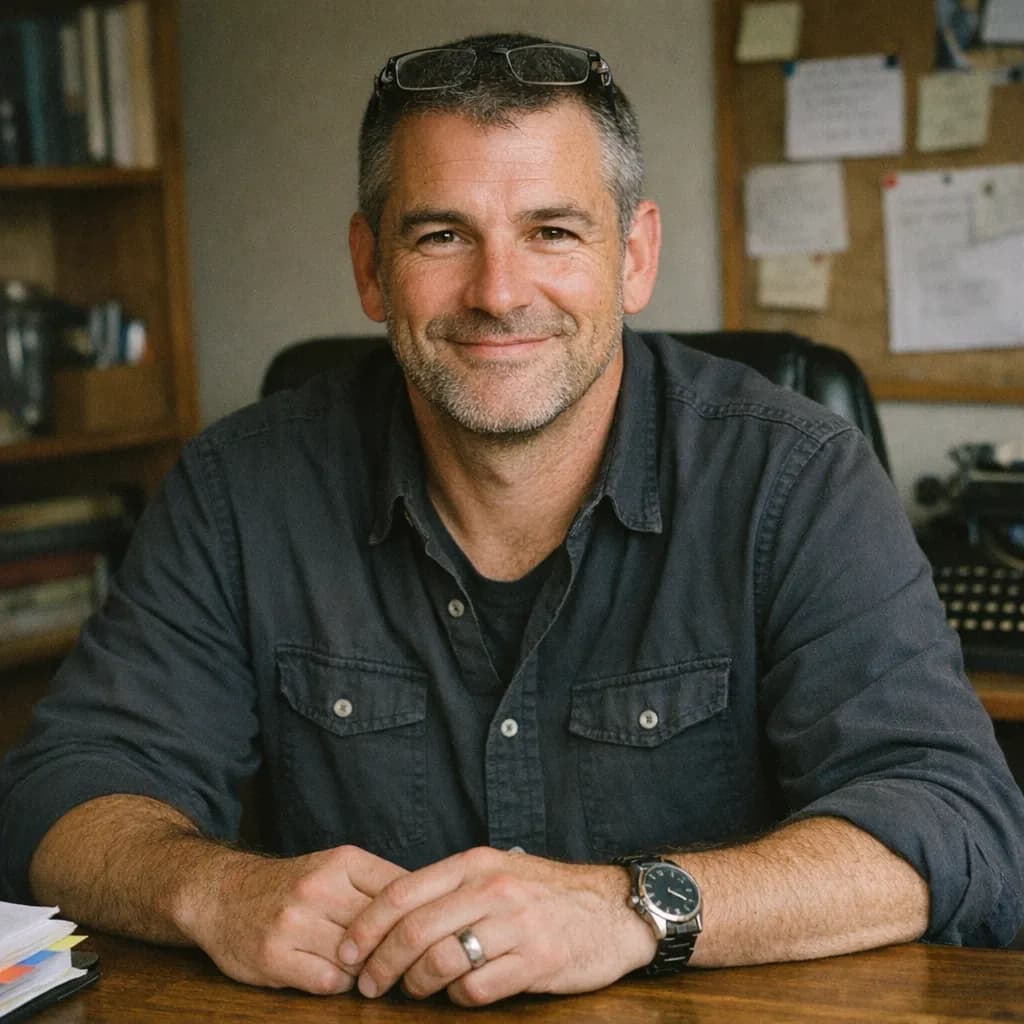
Callum Rhys Mahoney
Developmental Fiction Editor and Manuscript CoachI grew up between Wagga and my aunt’s place out near Narrandera, in a family that could argue for sport and then feed you like nothing happened. Books were around, but not in a precious way. My old man liked stories where people did what they said they’d do, even if it cost them. I still hear that voice when a character “can’t” make a decision because the plot needs another chapter. I didn’t set out to be an editor. I studied teaching, worked a few rough years in classrooms, and then left after a run of short contracts and one admin reshuffle that made it clear I was replaceable. A mate pulled me into doing learning materials and assessments because I could spot where people were gaming the question. That work taught me to watch for what the text rewards versus what it claims to reward - which is the same problem in a lot of manuscripts. I also spent a couple of seasons doing night shifts at a servo when money got tight. I kept a notebook behind the counter and wrote scenes between customers, mostly to stay awake. I remember one bloke coming in every Thursday, buying the same pie, and telling me the same story about a dog he swore was smarter than his ex. I don’t know why I remember that, but I do. Editing started as favour-work. People in town found out I’d read their drafts and I’d send back long emails with scene-by-scene notes. Somewhere along the line it became my paid work, mostly because I was consistent and because I’m not afraid to say, “This turn doesn’t belong to your protagonist.” I’m biased toward decisive characters and I don’t plan to cure myself of it; I’d rather a story risk an ugly choice than drift into polite inevitability.
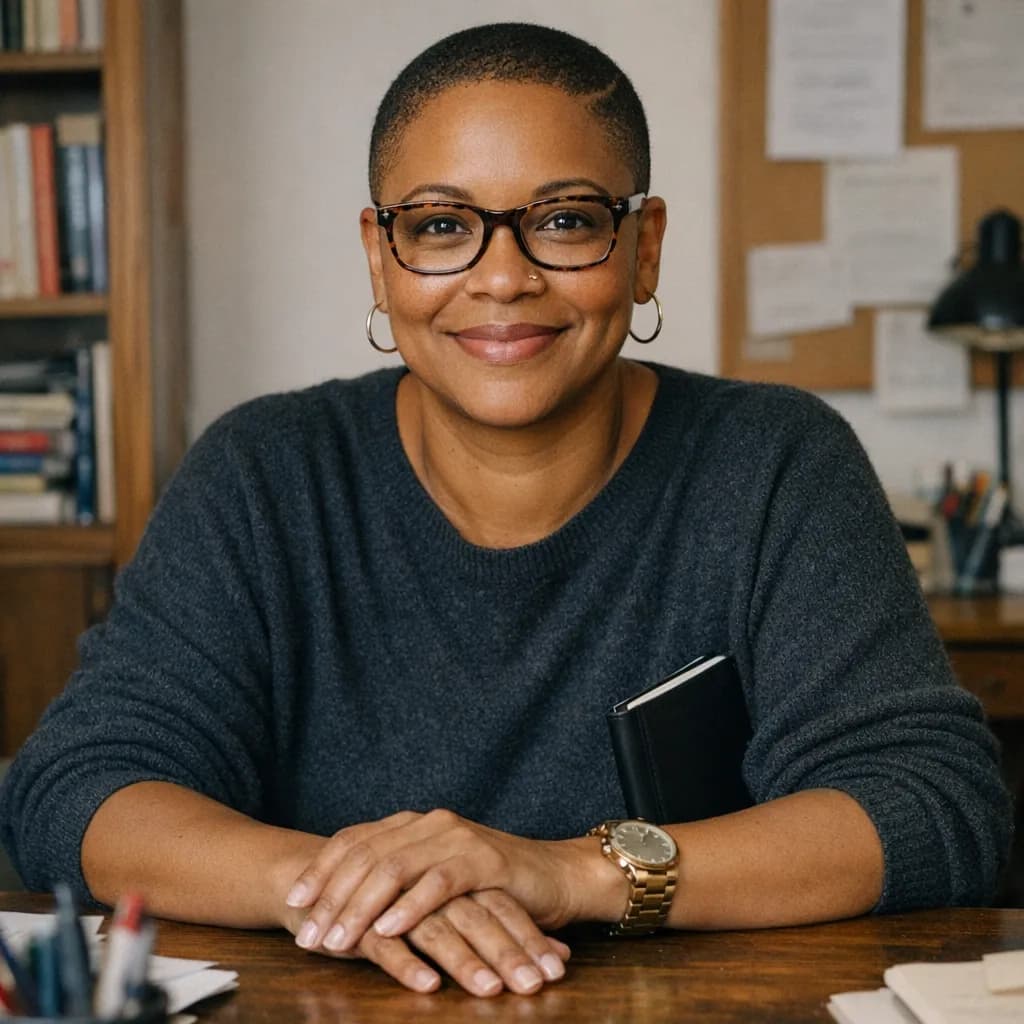
Danae Marcelline Brooks
Developmental Fiction Editor & Manuscript CoachI grew up between church basements, tidewater heat, and people who could tell a whole family story while stirring a pot and never looking up. My mom kept paperback romances in a shoebox like they were contraband, and my aunt kept a shelf of mystery novels with cracked spines. I read both. I learned early that readers forgive a lot, but they don’t forgive being bored or being lied to. I didn’t come up dreaming about editing. I wanted steadier work than “writer,” and I was the kid who could take notes fast, so I ended up in admin jobs where I got volunteered into fixing other people’s documents. Outside of that, I spent a couple years doing hair out of a friend’s kitchen. That part of my life doesn’t explain my editing, but it’s true: I still remember the sound of a cape snapping and how people tell you the most pointed truths when they think you’re not allowed to answer back. Sometimes I miss that kind of honesty. A storm took out power for a week when I was in my late twenties, and I agreed to help a neighbor organize a stack of workshop pages because there wasn’t much else to do at night. The pages were a mess, but the voice was alive. I wrote margin notes the way I talk, not the way school taught me, and the neighbor asked for more. That turned into being the person people handed drafts to. I still carry this old belief that if you “work hard enough,” the story will behave. I don’t defend it, but I catch myself acting like it’s true when I see a writer piling scenes on top of scenes. Now I’m a developmental editor because I’m impatient with pretty sentences that protect a story from making decisions. My bias is I’ll side-eye passive main characters harder than most editors will, even when the genre gives them excuses. I don’t correct that. It’s the lens I read through, and writers who want a gentler read should pick someone else. If you want a first reader who will point at the exact scene where your book starts dodging consequences, I’m your person.
Frequently Asked Questions
- What makes The Unbearable Lightness of Being so compelling?
- Many readers assume it works because it sounds philosophical, as if the ideas alone carry the book. The real pull comes from how the ideas create consequences: each belief about love, freedom, and responsibility drives a decision that costs the character something tangible. Kundera also keeps resetting your judgment by revisiting events from new angles, so you keep reading to retest what you think you know. If you want to write with similar force, track what changes on the page after every reflection.
- How long is The Unbearable Lightness of Being?
- People often treat length as a promise of depth, but this novel earns depth through compression and structure rather than sheer page count. Most English editions run roughly 300–330 pages, depending on translation and formatting. The pacing feels unusual because Kundera jumps in time, shifts viewpoint, and inserts commentary, yet he keeps scenes doing work. When you plan a similar book, measure length by how many meaningful decision-points you can sustain.
- What themes are explored in The Unbearable Lightness of Being?
- A common assumption says the book “covers big themes” and leaves it at that, which tempts writers to become abstract. Kundera explores lightness versus weight, fidelity versus freedom, private desire versus political coercion, and the seduction of kitsch, but he roots them in choices that hurt. The themes do not float above the story; they grind inside relationships, jobs, and reputations. When you draft, treat theme as a test your characters keep failing in new ways.
- How does Kundera blend philosophy and fiction without slowing the story?
- Writers often follow the rule “show, don’t tell” and conclude that any telling equals a lecture. Kundera tells, but he tells like a strategist: he uses reflection to change the stakes, reframe a scene, or expose a character’s self-deception right before the next decision. The commentary does not replace action; it sharpens it. If your philosophical voice doesn’t force a new choice or a new cost, you should cut it or relocate it.
- Is The Unbearable Lightness of Being appropriate for all audiences?
- Some assume “classic” automatically means broadly suitable, but this novel includes explicit sexual content and an unsparing emotional register. It also treats politics and intimacy as intertwined, which can feel confrontational if you expect a straightforward romance or a clean moral arc. For writers, that discomfort teaches a useful craft point: tone comes from what you refuse to soften. When you choose similar material, decide what you want the reader to wrestle with and why.
- How do I write a book like The Unbearable Lightness of Being?
- Many people think they should imitate the voice—aphorisms, big questions, a knowing narrator—and they end up with polished emptiness. Start instead with an engine: one belief that makes your protagonist choose badly, and a world (social, political, institutional) that turns those choices into consequences. Build characters as rival meaning-systems, then let their interpretations collide in dialogue and decision. Your draft should feel like an argument where every paragraph changes what someone can live with next.
About Milan Kundera
Interrupt a scene with a short, blunt reflection to flip the reader's certainty into doubt, and make them reread what they just believed.
Milan Kundera writes novels that think on the page without turning into lectures. He treats story as an argument you feel: an erotic scene, a political mistake, a private joke, then a sudden sentence that names what you just experienced. He toggles between lived moment and reflective distance, so you keep falling into the scene and then catching yourself, like you got caught eavesdropping on your own mind.
His engine runs on controlled interruption. He breaks momentum on purpose, but not randomly: each digression reframes the last scene, steals certainty from a character's motives, and forces you to reread what you assumed. He uses irony as a precision tool, not a mood. It lets him show how people believe their own stories while reality keeps filing objections.
The technical difficulty hides in the balance. If you imitate the "philosophical" voice without the scene-work underneath, you get essays in costumes. If you imitate the comedy without the moral geometry, you get cleverness that evaporates. Kundera's pages earn their ideas by staging choices, consequences, and misreadings first—then naming the pattern.
Modern writers need him because he offers a blueprint for mixing plot with thought without diluting either. He composes like a curator: he selects, repeats, and positions motifs until meaning clicks. His revisions aim for structure, not ornament—he tightens the chain between scene, concept, and callback until the book feels inevitable, even when it keeps changing its mind.








Ready to improve your draft with direction?
Open Draftly, bring your draft, and move from stuck to a stronger draft without losing your voice. Editors are on standby when you want a deeper pass.
Free welcome credits included. No credit card needed.