Loading
We’re getting things ready. This won’t take long.
We’re getting things ready. This won’t take long.
Write history that reads like a thriller: learn Figes’s engine for turning messy public events into personal, escalating stakes.
Book summary and writing analysis of A People's Tragedy by Orlando Figes.
If you copy A People's Tragedy naively, you will write a long timeline with opinions sprinkled on top. Figes does the opposite. He builds a pressure system. His central dramatic question stays simple even when the cast explodes: when a society loses its old rules, who gains the right to command, and what does that do to ordinary lives who still need bread, work, and dignity?
He answers that question by braiding two protagonists into one narrative function. On the public stage, he tracks the state’s will through leaders, parties, and institutions. On the intimate stage, he tracks the same will through families, soldiers, and peasants who bargain with power one day and suffer it the next. Treat “the Russian people” as the protagonist if you like, but notice the craft move: he gives that abstract protagonist bodies, addresses, wages, and fears, so you can feel Fortune rise and fall instead of watching it drift.
You can see the inciting mechanics early, in the hinge between 1891–92’s famine relief efforts and the tsarist system’s response. The crisis forces private citizens, local officials, and educated reformers to act in public, and the regime answers with suspicion and control. That scene-level choice matters more than any slogan. People step across a line from endurance into participation, and the state teaches them what it thinks of participation. Figes uses that collision as the seed of everything that follows.
From there, he escalates stakes through repeated tests of legitimacy. 1905 does not “happen” as an isolated chapter; it functions as a failed rehearsal. The regime survives, but it spends credibility. Every survival tactic it uses—repression, half-reform, scapegoating—solves a short-term problem and compounds a long-term one. That’s a writer’s lesson: escalation does not require bigger explosions; it requires narrowing options.
He then uses war as a structural accelerant. In Petrograd during World War I, shortages, strikes, and desertions don’t just raise tension; they convert private misery into collective action because the city’s systems can’t hide their failure. Figes keeps returning to concrete bottlenecks—bread lines, transport breakdowns, mutinous units—so “collapse” feels like cause and effect, not a mood.
The primary opposing force shifts masks, but it stays coherent: coercive authority that refuses accountable limits. Under the Romanovs it looks like divine right and police power; under revolutionary committees it looks like ideological necessity and emergency rule; under Bolshevik consolidation it looks like party discipline backed by guns. Figes makes the opposition persuasive in the moment, which stops the book from turning into a morality play.
Discover editors who specialize in books like this one and would love to work on similar projects.
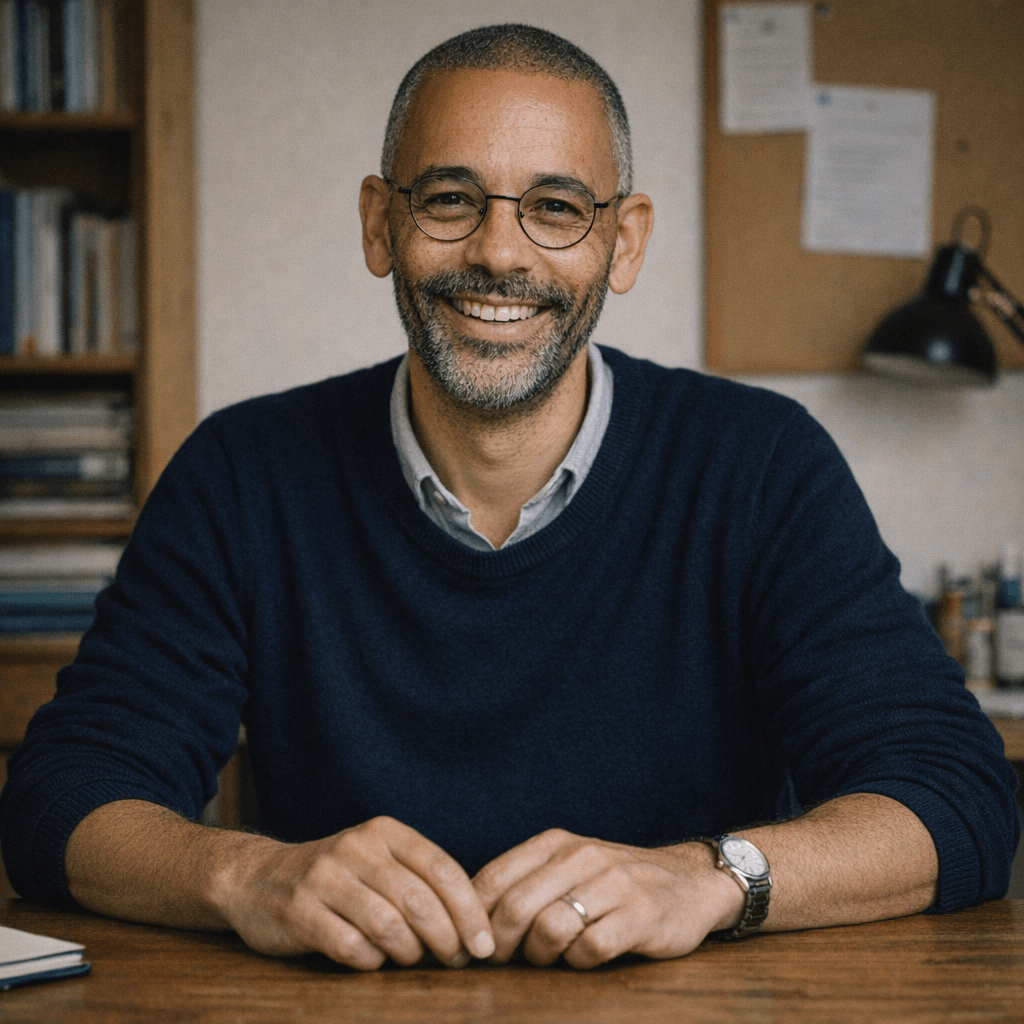
I grew up between Leeds and Glasgow, in that half-and-half way where you’re never fully from one place, so you learn to listen for what people mean instead of what they say. My mum kept old paperbacks and my dad kept newspapers, and I read both with the same suspicion. I still hear my gran’s voice when I write notes: she’d tap the page and say, “Aye, but what made that happen?” At nineteen I worked nights stacking shelves and days in a dull admin job for a small training provider, mostly because rent doesn’t care about your plans. They had me tidying course handouts and “improving the flow,” which meant cutting waffle and moving sections around until the trainer could teach without apologising. Around that time I got obsessed with making the perfect chilli recipe and kept a notebook of tiny tweaks. It didn’t make me a better editor, but I still do it, and I still overreact when a list of ingredients comes before the method. I didn’t set out to be an editor. A friend needed a second pair of eyes on a grant application, then another person asked, then a whole department started sliding documents onto my desk because I’d tell them the truth without making it personal. Later, I ended up in a communications role after a reorg - pure convenience - and I started doing beta-style reads for people writing practical books and narrative non-fiction on the side. Now I work with authors who want a manuscript that can survive a hard reader. I’m calm about most things, but I’m stubborn about causality: if a chapter claims a result, I want to see the choice that led there, and what it cost. I know my bias: I don’t spend long admiring lyrical voice if the argument is dodging responsibility. I’m the person you hand the draft to when you want the first reader who says, “This part doesn’t earn its conclusion,” and then shows you where it went off the rails.
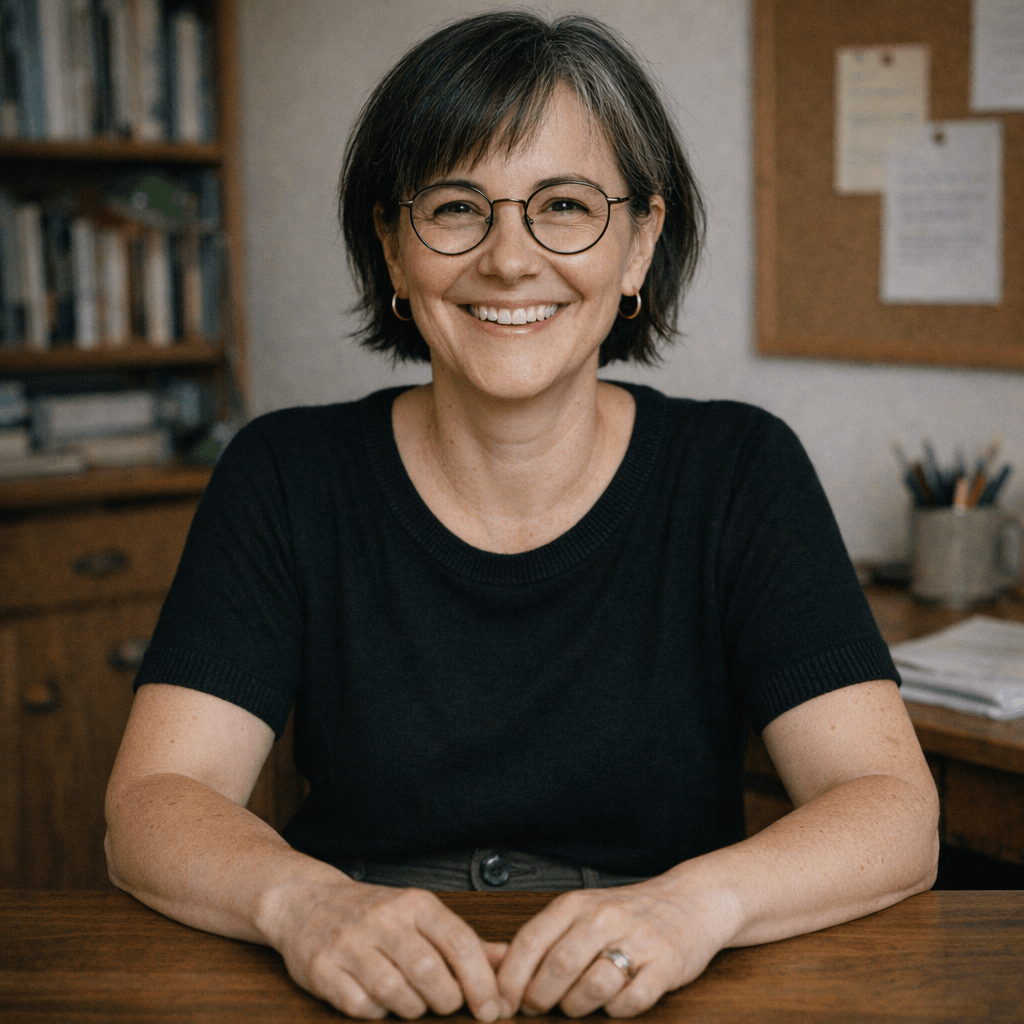
I grew up between Punjabi at home and English everywhere else, which taught me early that “I understood it” and “it was said clearly” aren’t the same thing. My dad ran a small trucking outfit and kept every receipt like it was scripture. My mom read Punjabi poetry and refused to explain it. I landed in the middle: I like meaning you can point to, and I don’t trust pretty fog. I didn’t plan on editing. I studied business because it was easy to explain at family dinners, then worked jobs where nobody had time for long sentences - operations, training docs, policy rewrites. I took a night improv course once because a friend wouldn’t go alone. I was bad at it. I still keep the ticket stub like it proves something. I started giving notes because people kept sending drafts with “can you make this make sense?” and I didn’t know how to say no. A supervisor once handed me a 40-page internal guide and said, “Fix it by Friday or we get audited.” That deadline became a habit: I read fast, I mark the real breaks, and I don’t pretend confusion is a personality trait. I’m harsher on fuzzy claims than clunky style, and I’m not interested in correcting that. Now I work with authors who want a first reader who won’t protect feelings at the expense of the book. I still ask, “What are you promising me in the first ten pages?” I don’t care if your voice is charming if your logic cheats. If your structure is designed to wander on purpose, I’m probably not your best match.
Common questions about writing a book like A People's Tragedy.
Use a braided timeline (person + institution + consequence) to make history read like a page-turner without losing credibility.
Orlando Figes writes history with the pressure and payoff of a novel, but he earns that momentum through ruthless structure. He doesn’t stack facts until they look impressive; he arranges them so one detail forces the next question. A letter, a rumor, a bureaucratic memo, a hunger-scraped diary entry—each becomes a lever that moves a larger argument. You keep reading because the page keeps making promises: this small human moment will explain the big machine.
His core engine is the braid: personal voice, institutional logic, and moral consequence woven into one line of thought. He shifts scale fast—kitchen table to party committee to battlefield—without losing you, because he keeps the same throughline question in your hands. The craft challenge isn’t “write vividly.” It’s “hold causality steady while you change the camera angle.” Most imitations fail because they copy the sweep and forget the connective tissue.
Figes also practices a controlled kind of fairness. He grants people intelligible motives, then shows how systems punish motives anyway. That creates a specific reader psychology: you feel sympathy and alarm at the same time. He uses uncertainty as a tool—what someone believed, what they said, what the archive can’t confirm—so the reader experiences history as lived risk, not as settled hindsight.
Study him now because modern nonfiction competes with feeds, not libraries. Figes shows how to build narrative velocity without lying, and how to turn research into scene without turning people into props. He tends to work from large structural plans—period blocks, thematic threads, a cast map—then revises to sharpen transitions and to make evidence do more than one job at once: character, context, and consequence in a single move.
Open Draftly, bring your draft, and move from stuck to a stronger draft without losing your voice. Editors are on standby when you want a deeper pass.
🤑 Free welcome credits included. No credit card needed.In the final act, he drives the same engine harder: civil war and state-building demand obedience, and the new regime learns fast. The stakes stop being “who rules Russia” and become “what kind of human survives under the new rules.” He shows how institutions teach everyday people to talk differently, fear differently, and even hope differently.
If you want to imitate this, don’t imitate the length, the footnotes, or the panoramic cast. Imitate the compression. Figes selects scenes where a person must choose between two bad options inside a broken system, then he shows the system learning from that choice and tightening the vise. That’s how he makes history feel like fate without claiming it had to happen.
Story structure and emotional arc in A People's Tragedy.
The emotional trajectory runs like a slow-rising tragedy with brief, dangerous peaks of hope. The collective protagonist starts with a battered faith in reform and continuity, the belief that suffering counts for something and institutions can still mend. It ends with survival recalibrated into compliance and exhaustion, where ideals shrink into tactics.
Figes makes the high points feel intoxicating because he ties them to real levers—crowds, councils, newly permissive speech, the sense that history finally listens. Then he undercuts each lift with a sharper mechanism than “disillusionment”: logistics fail, violence answers ambiguity, and every faction solves chaos by concentrating power. The low points land because he shows how quickly moral language turns into administrative language, and how administrative language turns into orders.
What writers can learn from Orlando Figes in A People's Tragedy.
Figes earns scope through selection, not accumulation. He keeps returning to the same narrative question—who gets to command, and why—so every new event answers or complicates it. You can feel his editorial hand in the way he compresses explanation into consequence: he names a policy or a shortage, then he shows the behavioral change it forces. That move lets him cover decades without reading like lecture notes, because he anchors meaning to what people do next.
He uses counterpoint as a pacing engine. A political chapter never stands alone; it rebounds off a social or personal one that reveals the cost. Notice how he turns abstract nouns into tactile props—bread, land, uniforms, trains, petitions—so ideology always meets friction. Many modern nonfiction writers shortcut this by summarizing “public mood” or quoting one viral line, then moving on. Figes keeps the camera on the bottlenecks where systems fail, because bottlenecks create story.
Listen to his dialogue handling when he stages a clash of mentalities rather than a cute exchange. When Nicholas II speaks with ministers who beg for reform, or when Kerensky postures before soviet delegates who demand certainty, Figes frames the talk as a negotiation over reality: who gets to define what counts as order, what counts as betrayal, what counts as “the people.” He doesn’t write dialogue to display personality; he writes it to expose the limits of a worldview under pressure.
He builds atmosphere by attaching it to place and routine, not adjectives. Petrograd streets, factories, barracks, and meeting halls recur as working spaces where exhaustion and rumor travel faster than policy. You smell the city through queues and shortages, and you understand politics through where bodies gather and who controls the doors. Writers often oversimplify revolutions into heroes and villains or treat setting as wallpaper. Figes shows how a room’s temperature, a train schedule, or a missing loaf can decide which ideology feels true that week.
Writing tips inspired by Orlando Figes's A People's Tragedy.
Write with moral clarity but resist moral narration. Figes does not pretend neutrality, yet he avoids sermon tones by letting causality carry judgment. You should name what happens, who benefits, and who pays, then stop talking. Keep your sentences clean and your nouns concrete. If you feel tempted to inflate your voice to “sound historical,” cut the extra adjectives and add one specific object in a real place. Authority comes from precision, not from gravitas.
Build characters as bundles of incentives, fears, and blind spots, not as representatives of ideas. Even when you write about leaders, treat them as decision machines inside constraints. Give each major figure one governing need they cannot admit, one public principle they must perform, and one private cost they keep misreading. Track how pressure changes their speech patterns over time. If their rhetoric stays stable while the world tilts, you wrote a symbol, not a person.
Avoid the genre trap of inevitability. Many revolution narratives cheat by hinting from page one that everything “had to” end in terror, then they cherry-pick evidence to match the ending. Figes earns the tragedy by showing forks in the road, partial solutions, and plausible alternatives that fail for specific reasons. When you write your version, force yourself to articulate what each faction thinks it prevents by choosing violence or control. If you can’t state the fear, you can’t make the choice feel real.
Steal his braid. Pick one public timeline and one private timeline. For the public line, choose six turning points where legitimacy shifts hands. For the private line, choose one household or unit that must react to each turning point with a concrete decision about food, work, safety, or speech. Draft twelve short scenes, alternating lines, and end each scene with a changed constraint, not a changed emotion. Then revise to remove explanations you don’t dramatize through consequence.

Put your draft in Draftly. Fix scenes and dialogue in the text—not in another tab. When you want sharper feedback, AI editors are ready.
🤑 Free welcome credits included. No credit card needed.