2666
Book Summary & Analysis
Book summary and writing analysis of 2666 by Roberto Bolaño.
2666 works because it runs on a single pressure system: obsession collides with a void that refuses to explain itself. The central dramatic question never asks “What happens next?” It asks “Can anyone find the author at the center of this maze, and if they do, will it make the horror make sense?” You watch smart, driven people follow patterns the way gamblers follow a hot hand. Bolaño makes that chase feel like plot, even when he starves you of conventional payoff.
The inciting incident sits early in The Part About the Critics, when Pelletier, Espinoza, Norton, and Morini stop treating Archimboldi as a topic and start treating him as a missing person. They link rumors, sightings, editions, and footnotes, then they choose to travel—first into the machinery of academic prestige, then toward the Mexican border city of Santa Teresa. That decision matters because it turns a private fixation into action, and action creates consequences. If you try to imitate this book by copying the surface (five parts, lots of named characters), you will miss the real trigger: a collective desire hardens into a quest.
Your “protagonist” here shifts, but the book still behaves like it has one: the seeker. In each section, a different character wears that role—four critics, a journalist (Fate), a policeman (Juan de Dios Martínez), and finally Archimboldi himself. The primary opposing force never takes a neat human form. Santa Teresa does. It operates as an adversary made of bureaucracy, impunity, misogyny, desert geography, and the everyday shrug that says, “That’s just how it is here.” Individual men commit crimes, but the system supplies cover, and that system fights like weather.
Bolaño sets the story across late-20th-century Europe and the Americas, but he pins its dread to a specific place and texture: Santa Teresa in the Sonoran desert, with maquiladoras, cheap motels, police stations that run on favors, and empty lots where bodies appear. He uses real-world gravity (the Ciudad Juárez femicides) without turning the book into a message with a bow. He makes the setting behave like a magnet. People arrive for different reasons, and the city reorders their lives around its hidden mass.
The stakes escalate by switching what “success” even means. At first, the critics want intellectual possession: to find Archimboldi, to own the story. Then the novel drags you into moral stakes: the murders of women, the numbing repetition of violence, the cost of looking and not acting. In The Part About the Crimes, the book stops flattering your readerly appetite for mystery. It dares you to keep reading while it denies the comforts of “clues” and “closure.” That choice forces you to feel your own consumption of horror.
The structure looks like a series of novellas, but it behaves like a single long sentence with five clauses. Each part introduces a method of knowing—criticism, confession, journalism, police procedure, biography—and then shows you its limits. The book’s engine builds meaning through recurrence: names reappear, minor incidents echo, locations repeat, and the same unsolved absence (why this violence, why this city, where does Archimboldi fit) keeps tightening.
The climax does not “solve” Santa Teresa. It reframes it. When Bolaño finally gives you Archimboldi’s life—Germany, war, publishing, the slow construction of a writer—he does not redeem the violence or explain it away. He shows you how a person becomes a maker of stories in a world that manufactures slaughter. If you imitate this naively, you will chase sprawl as a virtue. Bolaño earns sprawl by making every detour pay rent to the same landlord: obsession meets the void, and the void collects.
Story Structure & Narrative Arc
Story structure and emotional arc in 2666.
2666 uses a subversive hybrid of “Quest” and “Tragedy,” where each seeker starts with confidence in a method—scholarship, reporting, policing, biography—and ends with a bruised awareness of what that method cannot touch. The internal starting state reads as mastery: the critics think interpretation equals control; Fate thinks professionalism equals safety; the investigators think procedure equals progress. The ending state looks like chastened witness: they can name details, but they cannot fix the world that produces them.
The major sentiment shifts land because Bolaño swaps the reader’s contract midstream. He begins with witty intellectual pursuit and social comedy, then drags that energy into a landscape where wit feels obscene. The low points hit hardest in The Part About the Crimes because he replaces “mystery escalation” with “accumulation,” and the repetition turns each new body into both a singular tragedy and a statistical unit. The climactic force arrives not through a showdown but through revelation of context: Archimboldi’s biography reframes the entire book as a study of how art and atrocity share the same century and the same air.
Studying this book—and stuck on your pages?
Put your draft in Draftly. Fix scenes and dialogue in the text—not in another tab. When you want sharper feedback, AI editors are ready.
Free welcome credits included. No credit card needed.Writing Lessons from 2666
What writers can learn from Roberto Bolaño in 2666.
Bolaño builds propulsion without a single “main plot” by treating obsession as the plot and switching lenses instead of escalating set pieces. Each part works like a different genre machine—campus satire, confessional melodrama, reportage, procedural, wartime biography—but all of them point at the same absence. He uses recurrence the way a composer uses a motif: Santa Teresa, Archimboldi, rumors, lists, and secondary characters keep reappearing in altered contexts, so your brain keeps trying to reconcile them. That reconciliation impulse becomes your page-turner.
He also controls tone with ruthless line-level discipline. He writes clean, often matter-of-fact sentences, then drops a jolt of surreal or comic detail at the exact moment you start to relax. In Santa Teresa scenes, he often gives you concrete logistics—streets, lots, bus rides, police stations—then lets dread seep in through what characters refuse to say. That restraint beats the modern shortcut of “atmosphere by adjective,” where writers stack gloomy words and hope the reader supplies fear. Bolaño makes fear from behavior, timing, and omission.
Watch how he handles dialogue: he lets it expose hierarchies, not just personality. The critics talk about Archimboldi with competitive tenderness, and their conversations double as dominance games—who knows more, who counts more, who gets Norton’s attention. Later, when Fate talks with Rosa Amalfitano, the conversation turns practical and urgent; it carries the subtext “leave now” without turning into a speech about evil. Bolaño avoids the TED Talk line. He lets dialogue move like real talk: partial, sidelong, full of social risk.
The most audacious device sits in The Part About the Crimes: the near-forensic repetition of murder reports. Many writers mistake that section for “shock value.” It does the opposite. It drains sensationalism by refusing narrative reward, and it forces you to feel the ethics of attention—what it means to look, to list, to move on. Contemporary fiction often tries to solve violence with a twist or a villain you can hate. Bolaño keeps the wound open because the system keeps it open. That choice gives the novel its moral voltage and its strange, unbearable honesty.
How to Write Like Roberto Bolaño
Writing tips inspired by Roberto Bolaño's 2666.
Write in a voice that trusts plain statements. If you want Bolaño’s authority, you cannot perform it. You earn it by naming what happens without showing off, then letting one strange detail tilt the whole paragraph. Keep your jokes dry and situational, not wink-at-the-reader. And keep your metaphors on a short leash. When you feel the urge to “sound literary,” stop and ask what your narrator observes that another narrator would miss. Precision beats prettiness every time.
Build characters as vectors of attention. Each major figure in 2666 fixates on a different object and reveals themselves through that fixation: the critics on Archimboldi, Fate on responsibility, the police on procedure, Amalfitano on sanity and fatherhood, Archimboldi on survival and writing. Give every viewpoint character a competence and a blind spot, then test both under stress. Do not “develop” them with backstory dumps. Make them choose, hesitate, rationalize, and misread people in scenes.
Do not confuse sprawl with depth. The common pitfall in books that imitate 2666 involves random tangents, cameo characters, and loosely connected horrors that never accrue meaning. Bolaño connects everything through repeating pressures: institutional shrug, male entitlement, the seduction of interpretation, the failure of systems, the desert’s vastness. If you cannot name the pressure system in one sentence, you will write a bag of fragments. Your reader will feel that you lost the thread, even if you insist you meant it.
Try this exercise: write five short “parts” (1,500–3,000 words each) about the same invisible center. Change the method in each part: a scholar’s pursuit, a family member’s letter, a reporter’s assignment, a cop’s case log, a biography. In every part, plant the same three recurring elements—a place, a name, and an object—but change their meaning each time. End each part with an action decision, not a revelation. Then revise for two things only: clean sentences and escalating moral stakes.
Who Would Edit This Book?
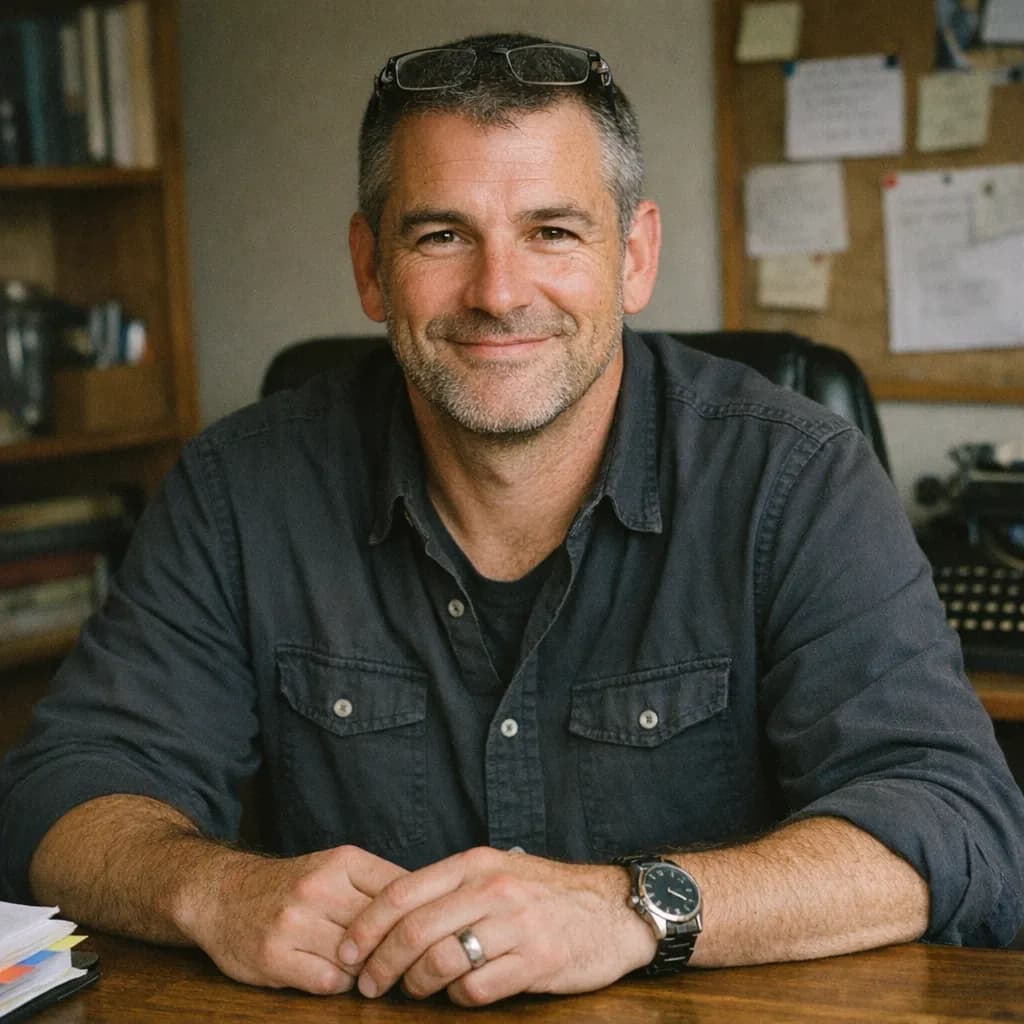
Callum Rhys Mahoney
Developmental Fiction Editor and Manuscript CoachI grew up between Wagga and my aunt’s place out near Narrandera, in a family that could argue for sport and then feed you like nothing happened. Books were around, but not in a precious way. My old man liked stories where people did what they said they’d do, even if it cost them. I still hear that voice when a character “can’t” make a decision because the plot needs another chapter. I didn’t set out to be an editor. I studied teaching, worked a few rough years in classrooms, and then left after a run of short contracts and one admin reshuffle that made it clear I was replaceable. A mate pulled me into doing learning materials and assessments because I could spot where people were gaming the question. That work taught me to watch for what the text rewards versus what it claims to reward - which is the same problem in a lot of manuscripts. I also spent a couple of seasons doing night shifts at a servo when money got tight. I kept a notebook behind the counter and wrote scenes between customers, mostly to stay awake. I remember one bloke coming in every Thursday, buying the same pie, and telling me the same story about a dog he swore was smarter than his ex. I don’t know why I remember that, but I do. Editing started as favour-work. People in town found out I’d read their drafts and I’d send back long emails with scene-by-scene notes. Somewhere along the line it became my paid work, mostly because I was consistent and because I’m not afraid to say, “This turn doesn’t belong to your protagonist.” I’m biased toward decisive characters and I don’t plan to cure myself of it; I’d rather a story risk an ugly choice than drift into polite inevitability.
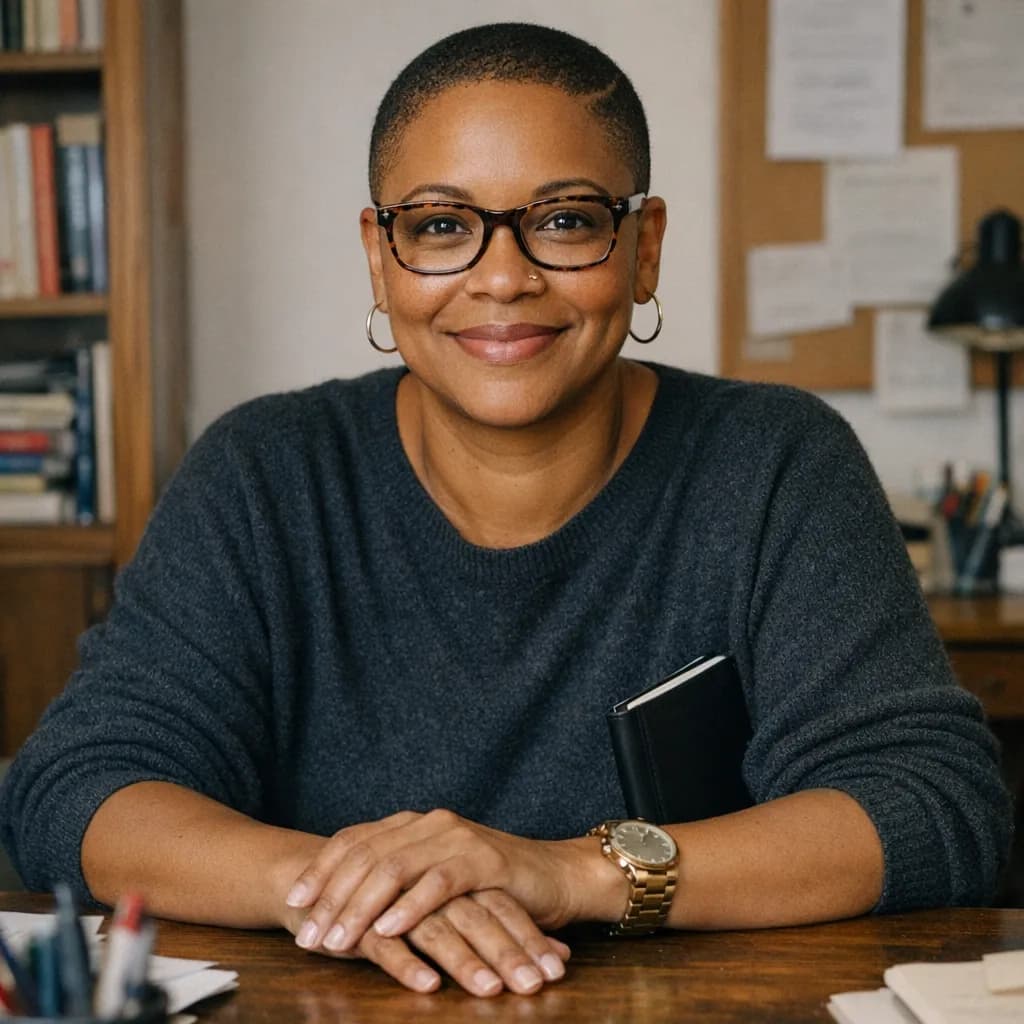
Danae Marcelline Brooks
Developmental Fiction Editor & Manuscript CoachI grew up between church basements, tidewater heat, and people who could tell a whole family story while stirring a pot and never looking up. My mom kept paperback romances in a shoebox like they were contraband, and my aunt kept a shelf of mystery novels with cracked spines. I read both. I learned early that readers forgive a lot, but they don’t forgive being bored or being lied to. I didn’t come up dreaming about editing. I wanted steadier work than “writer,” and I was the kid who could take notes fast, so I ended up in admin jobs where I got volunteered into fixing other people’s documents. Outside of that, I spent a couple years doing hair out of a friend’s kitchen. That part of my life doesn’t explain my editing, but it’s true: I still remember the sound of a cape snapping and how people tell you the most pointed truths when they think you’re not allowed to answer back. Sometimes I miss that kind of honesty. A storm took out power for a week when I was in my late twenties, and I agreed to help a neighbor organize a stack of workshop pages because there wasn’t much else to do at night. The pages were a mess, but the voice was alive. I wrote margin notes the way I talk, not the way school taught me, and the neighbor asked for more. That turned into being the person people handed drafts to. I still carry this old belief that if you “work hard enough,” the story will behave. I don’t defend it, but I catch myself acting like it’s true when I see a writer piling scenes on top of scenes. Now I’m a developmental editor because I’m impatient with pretty sentences that protect a story from making decisions. My bias is I’ll side-eye passive main characters harder than most editors will, even when the genre gives them excuses. I don’t correct that. It’s the lens I read through, and writers who want a gentler read should pick someone else. If you want a first reader who will point at the exact scene where your book starts dodging consequences, I’m your person.
Frequently Asked Questions
- What makes 2666 so compelling for writers?
- Many people assume a compelling novel must deliver steady answers and a single dominant protagonist. Bolaño keeps you hooked by making obsession the engine and by switching lenses so each section reframes what “story” even means. He also uses recurrence—names, places, rumors—as structural glue, so your mind keeps searching for pattern. If you borrow the trick, track what your repetitions change, not just what they repeat, and make each return cost your characters something.
- How long is 2666?
- A common assumption says length equals self-indulgence, especially in big literary novels. 2666 runs roughly 900 pages in English (varies by edition), and it earns that space by treating each part as a different narrative instrument aimed at the same unresolved center. The length lets Bolaño use accumulation as a form of escalation rather than rushing to a plot solution. If you plan something long, outline your pressure system first, not your scenes.
- Is 2666 appropriate for sensitive readers or younger audiences?
- People often treat “literary” as a guarantee of tasteful distance. This book includes repeated descriptions of sexual violence and murdered women, and the cumulative effect can feel deliberately punishing because Bolaño refuses sensational release or tidy justice. The difficulty does not come from gore so much as repetition and moral exposure. If you write about violence, decide what you want the reader to feel and why, and revise to remove any moment that reads like entertainment.
- What themes are explored in 2666?
- Readers sometimes reduce the book to a single theme—violence in Mexico, or the mystery of a writer. Bolaño layers themes that collide: the seduction of interpretation, the failure of institutions, the commodification of bodies, the ethics of witnessing, and the way art persists inside historical brutality. He makes themes emerge from methods of attention, not from speeches. When you write theme-forward work, dramatize how characters explain things to themselves, then show where those explanations break.
- How does 2666 structure its story across five parts?
- A common rule says multipart novels must link parts through direct plot causality. 2666 links them through a shared gravitational center—Santa Teresa and Archimboldi—and through repeating motifs that change meaning as the lens changes. Each part behaves like a genre module with its own pacing logic, so the book can accelerate by reframing rather than by stacking bigger events. If you try this structure, make each module answer a different question and end with a choice that pushes someone closer to the center.
- How do I write a book like 2666 without copying it?
- Many writers assume they need to copy the surface: sprawling cast, bleak tone, five sections, and an “unsolved” ending. The deeper lesson involves building a coherent pressure system, then rotating viewpoint methods to expose the system’s blind spots—scholarship fails, reporting fails, policing fails, biography fails, and the failure becomes the meaning. Start smaller: choose one invisible center (a city, a scandal, a disappearance) and design 3–5 lenses that would misinterpret it in different ways. Revise for clarity, not cleverness.
About Roberto Bolaño
Use witness-style narration (testimony, lists, reports) to create credibility fast, then withhold the motive so the reader supplies the dread.
Roberto Bolaño writes like an investigator who refuses to solve the case. He builds meaning by stacking testimonies, rumors, letters, travel anecdotes, and half-remembered scenes until the reader starts doing the joining-up. The trick is not "mystery." It's delegated attention: he makes you notice what the characters refuse to name, then he leaves you alone with it.
His engine runs on drift with purpose. He lets scenes wander through bookstores, cheap rooms, deserts, bars, and conversations that feel offhand—then he locks in a detail that changes the temperature. The reader's psychology flips from relaxed to alert because the narration acts casual while the stakes keep creeping up.
The technical difficulty hides in the balance. Bolaño keeps a plain surface and an unstable structure: long stretches of report-like calm, sudden lyric spikes, and hard cuts that pretend they aren't cuts. He also knows when to withhold the "why." He offers credible specificity (names, dates, jobs, addresses) so you'll accept spiritual uncertainty.
Modern writers need him because he proved you can write big moral novels without tidy moral math. He showed how to make a story feel like a continent: partially mapped, full of dead ends, and still compulsive. His drafting approach often favored accumulation—writing outward, collecting fragments—then revising by arrangement: what to place next, what to omit, and where to stop so the silence keeps working after the last line.














Ready to improve your draft with direction?
Open Draftly, bring your draft, and move from stuck to a stronger draft without losing your voice. Editors are on standby when you want a deeper pass.
Free welcome credits included. No credit card needed.