The Name of the Rose
Book Summary & Analysis
Book summary and writing analysis of The Name of the Rose by Umberto Eco.
The Name of the Rose works because it runs two engines at once and refuses to let you treat either as decoration. Engine one: a locked-setting murder investigation with a clock. Engine two: a philosophical trial about who controls knowledge, laughter, and truth. Umberto Eco makes you feel the pleasure of solving while he quietly moves the floorboards under your feet. If you copy the surface—Latin quotes, monks, “medieval vibes”—you will bore readers. Eco wins because every scholarly flourish either delays, misdirects, or sharpens the hunt.
The central dramatic question sounds simple: can William of Baskerville, a Franciscan investigator, uncover who kills monks at a Benedictine abbey before the abbey destroys itself? But Eco stacks a second question inside it: can any method—logic, faith, institutions—claim the right to decide what counts as true? William fights murders, yes, but he also fights the abbey’s culture of secrecy and fear, plus the looming authority of the Inquisition. The primary opposing force takes two forms: the human guardian of the labyrinthine library (Jorge of Burgos) and the larger system that prefers certainty over inquiry.
Eco sets you in northern Italy in 1327, inside a wealthy abbey that functions like a fortress and a factory for manuscripts. He traps you there with winter weather, rigid rules, and a chain of command that punishes curiosity. That setting does more than look impressive. It creates a closed circuit where information becomes contraband, and where a single book can move faster than a body. If you want to reuse this engine today, don’t start by building lore. Start by deciding what your setting forbids—and what your protagonist cannot stop wanting.
Eco triggers the story with a clean mechanical inciting incident: William and his young novice Adso arrive at the abbey for a church-political dispute, and the abbot immediately pulls William aside to investigate a death that threatens the abbey’s reputation. Eco frames the request as a bargain and a deadline. Solve this quietly, solve it fast, or the abbey loses control when higher powers arrive. Notice the craft: Eco ties the “case” to public humiliation and institutional collapse, not just “catch the killer.” That’s why each new corpse lands like a structural blow, not a repeated beat.
Stakes escalate in three directions at once. First, the body count rises, and each death echoes a pattern that invites superstition. Second, the abbey’s political visitors close in, turning the investigation into a liability. Third, William’s method starts to look dangerous in a place that treats questions as sin. Eco ratchets pressure by shrinking William’s room to maneuver: witnesses clam up, documents vanish, and the library itself becomes an adversary. If you imitate this, resist the lazy move of making obstacles random. Eco makes every obstruction come from a value system.
Eco also weaponizes viewpoint. Adso narrates as an older man remembering his youth, which gives you two useful tensions: the innocence of the young observer and the ache of hindsight. You watch Adso misread signals, idolize William, and stumble into desire, while the older voice admits gaps, distortions, and lost certainty. Eco turns “unreliable” into a moral issue, not a twist. If you copy this, don’t just add a frame narrator for flavor. Use the frame to show what the story cost the narrator.
By the final movements, Eco pays off the double engine: the detective story reaches an explanation, but the explanation refuses to restore order. William can name causes and still lose control of consequences. The abbey’s center of knowledge turns into a literal and symbolic hazard, and the conflict between inquiry and authority stops feeling like an academic debate. Eco’s warning to you as a writer sounds blunt: don’t promise readers that intelligence guarantees victory. Promise them that intelligence changes what losing looks like—and then earn it.
Story Structure & Narrative Arc
Story structure and emotional arc in The Name of the Rose.
Eco builds a subversive Man-in-a-Hole. William enters confident in method: observe, infer, explain. He leaves with method intact but faith in method bruised, forced to admit that institutions, fear, and chance can overpower clean reasoning. Adso begins as a receptive disciple hungry for order and ends as a man marked by ambiguity, desire, and the knowledge that meaning often survives only as fragments.
Key sentiment shifts land because Eco keeps converting progress into moral cost. Each time William gets closer to an answer, the abbey tightens its grip, and the political stakes sour the victory. The low points cut deep because Eco frames them as failures of interpretation, not just failures of action: a clue “works” and still leads somewhere wrong, a confession clarifies and still distorts, a solved puzzle still detonates the world around it. The climax hits hard because it resolves the case while refusing the comfort you expect from resolution.

Studying this book—and stuck on your pages?
Put your draft in Draftly. Fix scenes and dialogue in the text—not in another tab. When you want sharper feedback, AI editors are ready.
Free welcome credits included. No credit card needed.Writing Lessons from The Name of the Rose
What writers can learn from Umberto Eco in The Name of the Rose.
Eco earns his authority through constraints. He locks you inside a winter abbey and then tightens the screws with schedules, vows, rank, and architecture. The library does not “feel mysterious” because Eco describes it moodily; it feels mysterious because it controls movement and information. Notice how often characters talk about what they cannot see, cannot enter, cannot name. Eco turns setting into plot. Many modern novels treat world-building as wallpaper; Eco treats it as a machine that produces outcomes.
He also solves the “smart book” problem with a blunt craft move: he attaches every idea to a conflict of incentives. The theological dispute does not sit off to the side as background research. It arrives as people with careers, fears, and weapons. You watch William reason under surveillance, and you learn that intellect changes shape under pressure. If you want to write ideas without writing lectures, copy that. Put the argument in a room where someone can lose their freedom for saying the wrong sentence.
Eco’s dialogue teaches you how to make talk feel like action. Listen to William and Adso: Adso asks naive questions, William answers, then pivots into a sharper question that exposes what Adso assumed. The exchange does not exist to “share information with the reader.” It trains the reader to think in hypotheses, and it reveals character through method. When William spars with Jorge, Eco writes debate as a contact sport. Each line advances a goal: to define what laughter does, who gets to permit it, and why that permission matters. You can steal this by giving every conversational beat a hidden stake.
Finally, Eco uses intertext and erudition as misdirection and mood, not as a résumé. Latin tags, catalogues, and textual echoes slow you down at strategic moments, then reward you with sharper pattern recognition later. He makes the act of reading feel like investigation. The common shortcut today goes the other way: simplify the language, flatten the references, and rely on a twist to feel “smart.” Eco shows you a tougher path. He makes complexity itself part of the suspense contract, then pays it off by letting meaning stay unstable even after the culprit emerges.
How to Write Like Umberto Eco
Writing tips inspired by Umberto Eco's The Name of the Rose.
Write your narrator like a person who remembers wrong on purpose. Eco lets Adso narrate with devotion, embarrassment, and regret, sometimes in the same paragraph. That mix builds trust because it feels human, not because it feels “accurate.” If you want this tone, control your distance. Let the older narrator interpret, then let the younger self blunder on the page. Use learned language sparingly and strategically. When you choose a dense sentence, make it earn its place by changing the reader’s suspicion, not by showing your vocabulary.
Build your protagonist as a method, not a mood. William does not charm you with quirks; he persuades you with procedures: observe, test, revise. Then Eco stresses those procedures until they crack, which creates character change without melodrama. Give your lead one dominant tool for making sense of the world, and then attack that tool with a world that refuses to cooperate. Make your secondary character an instrument panel. Adso shows awe, lust, fear, and confusion, so you can register what William’s cool mind tries to ignore.
Don’t fall into the “mystery tourism” trap. Writers read Eco and think the secret sauce equals a spooky library, cryptic deaths, and a sprinkle of medieval trivia. That approach produces a museum tour with corpses. Eco avoids it by making every clue a moral threat. The killer does not just hide a body; he protects an idea about who deserves knowledge. If your story treats clues as inert objects, you will stall. Tie every discovery to a value conflict that forces a character to risk status, safety, or identity.
Try this exercise and you will feel Eco’s engine click. Design a closed setting with a forbidden archive, then write seven scenes that alternate between investigation and argument. In each investigation scene, your detective finds a concrete clue that points two ways: one practical explanation and one ideological implication. In each argument scene, a gatekeeper character reframes the clue to defend a worldview. After scene seven, write a short “solution” that answers the practical mystery but worsens the ideological conflict. You will learn to make answers dangerous.
Who Would Edit This Book?
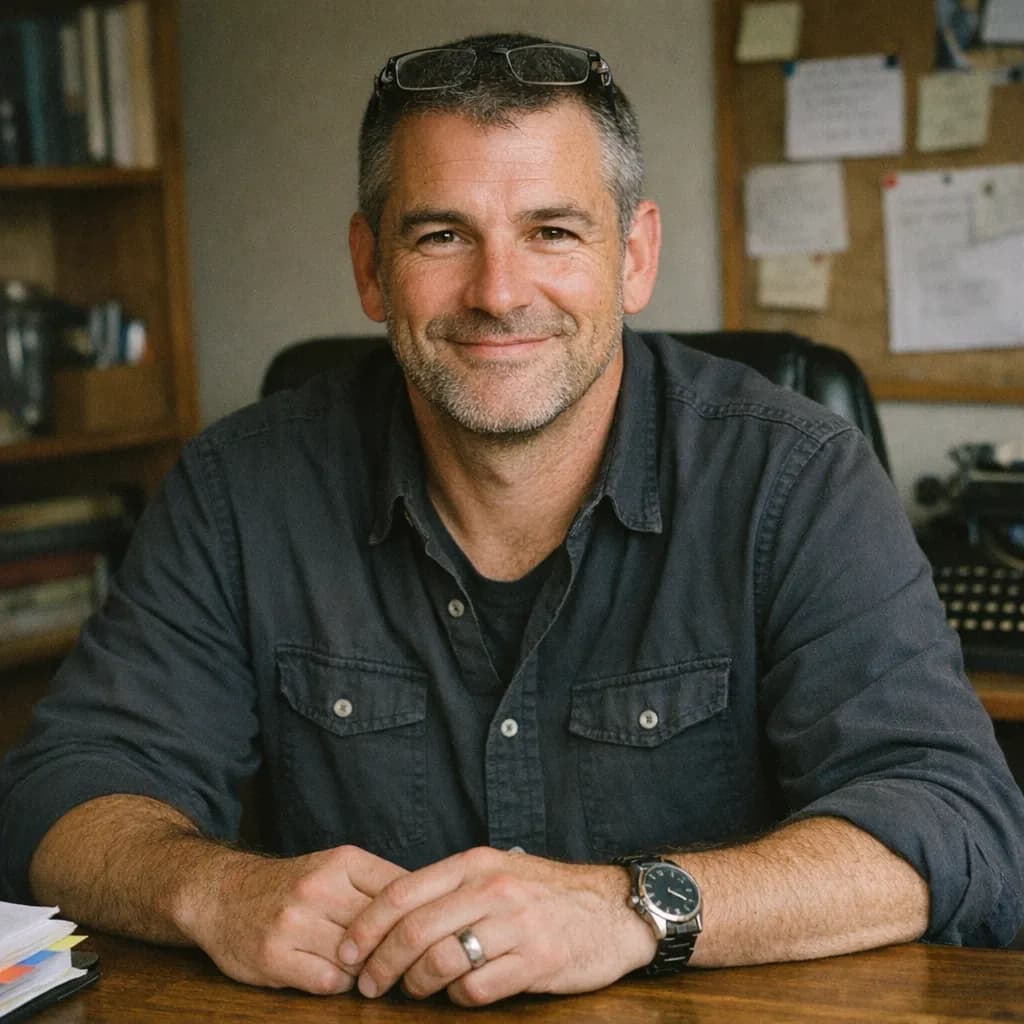
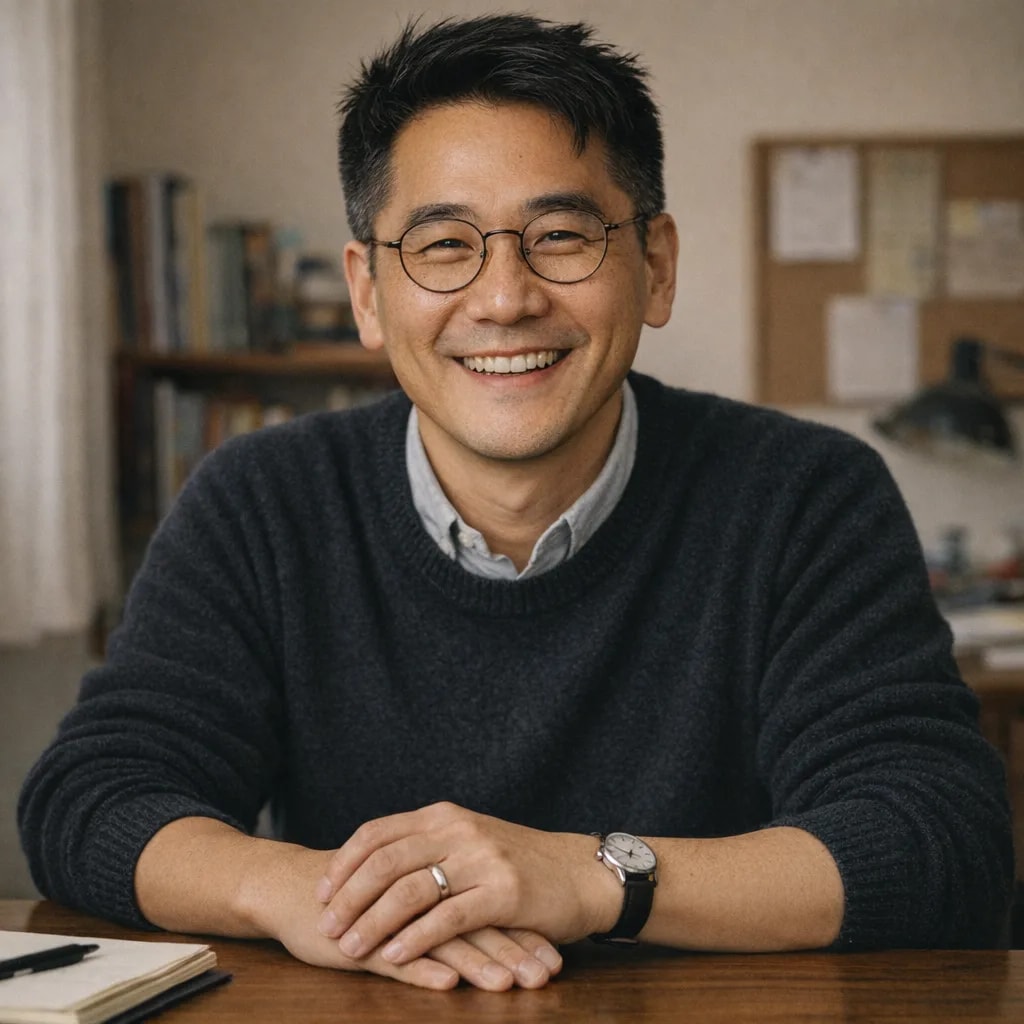
Callum Rhys Mahoney
Developmental Fiction Editor and Manuscript CoachI grew up between Wagga and my aunt’s place out near Narrandera, in a family that could argue for sport and then feed you like nothing happened. Books were around, but not in a precious way. My old man liked stories where people did what they said they’d do, even if it cost them. I still hear that voice when a character “can’t” make a decision because the plot needs another chapter. I didn’t set out to be an editor. I studied teaching, worked a few rough years in classrooms, and then left after a run of short contracts and one admin reshuffle that made it clear I was replaceable. A mate pulled me into doing learning materials and assessments because I could spot where people were gaming the question. That work taught me to watch for what the text rewards versus what it claims to reward - which is the same problem in a lot of manuscripts. I also spent a couple of seasons doing night shifts at a servo when money got tight. I kept a notebook behind the counter and wrote scenes between customers, mostly to stay awake. I remember one bloke coming in every Thursday, buying the same pie, and telling me the same story about a dog he swore was smarter than his ex. I don’t know why I remember that, but I do. Editing started as favour-work. People in town found out I’d read their drafts and I’d send back long emails with scene-by-scene notes. Somewhere along the line it became my paid work, mostly because I was consistent and because I’m not afraid to say, “This turn doesn’t belong to your protagonist.” I’m biased toward decisive characters and I don’t plan to cure myself of it; I’d rather a story risk an ugly choice than drift into polite inevitability.
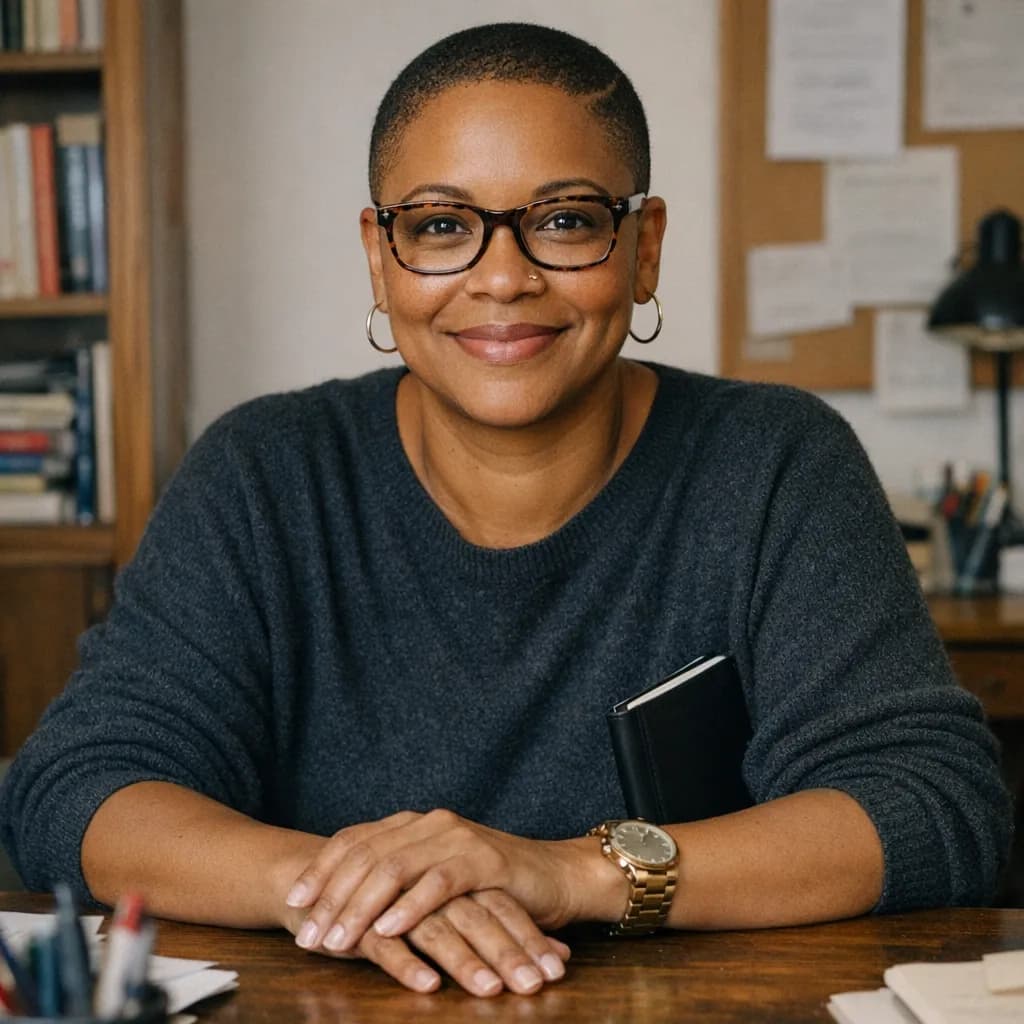
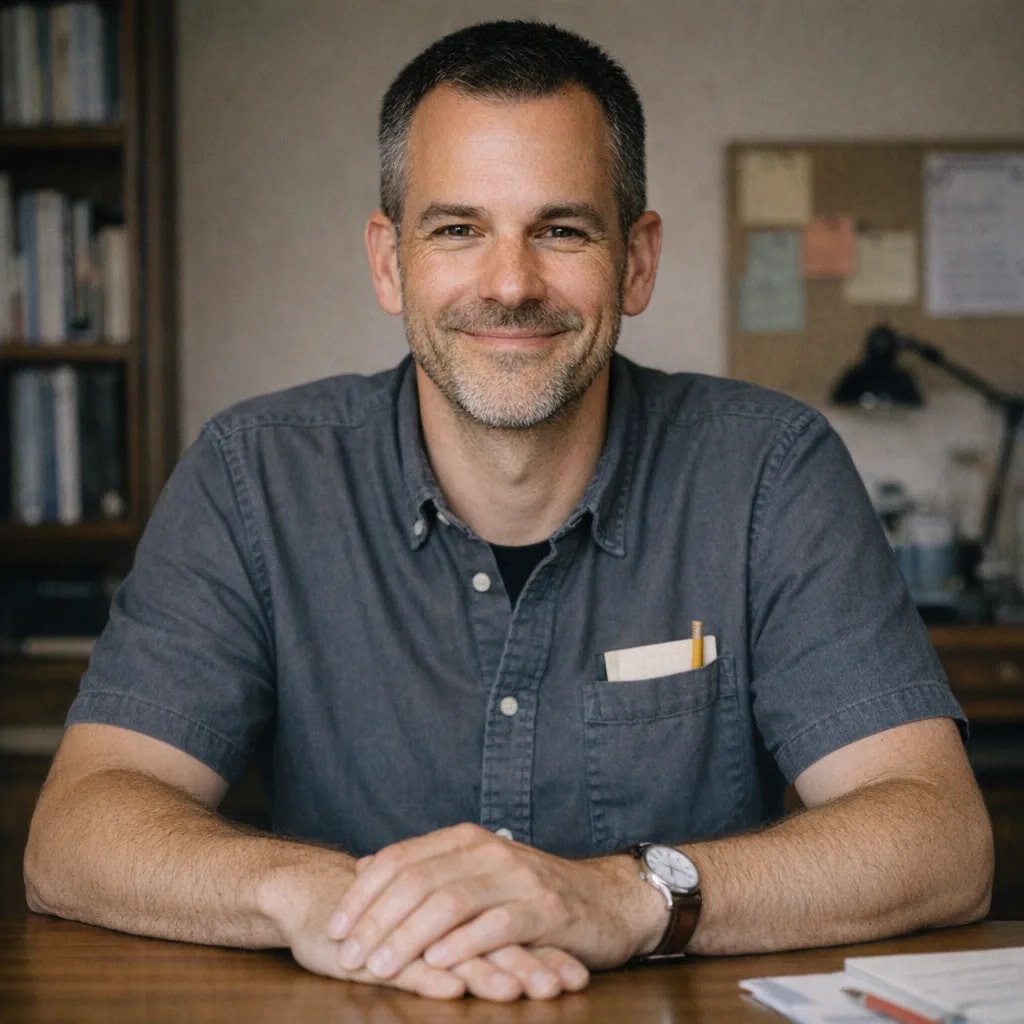
Danae Marcelline Brooks
Developmental Fiction Editor & Manuscript CoachI grew up between church basements, tidewater heat, and people who could tell a whole family story while stirring a pot and never looking up. My mom kept paperback romances in a shoebox like they were contraband, and my aunt kept a shelf of mystery novels with cracked spines. I read both. I learned early that readers forgive a lot, but they don’t forgive being bored or being lied to. I didn’t come up dreaming about editing. I wanted steadier work than “writer,” and I was the kid who could take notes fast, so I ended up in admin jobs where I got volunteered into fixing other people’s documents. Outside of that, I spent a couple years doing hair out of a friend’s kitchen. That part of my life doesn’t explain my editing, but it’s true: I still remember the sound of a cape snapping and how people tell you the most pointed truths when they think you’re not allowed to answer back. Sometimes I miss that kind of honesty. A storm took out power for a week when I was in my late twenties, and I agreed to help a neighbor organize a stack of workshop pages because there wasn’t much else to do at night. The pages were a mess, but the voice was alive. I wrote margin notes the way I talk, not the way school taught me, and the neighbor asked for more. That turned into being the person people handed drafts to. I still carry this old belief that if you “work hard enough,” the story will behave. I don’t defend it, but I catch myself acting like it’s true when I see a writer piling scenes on top of scenes. Now I’m a developmental editor because I’m impatient with pretty sentences that protect a story from making decisions. My bias is I’ll side-eye passive main characters harder than most editors will, even when the genre gives them excuses. I don’t correct that. It’s the lens I read through, and writers who want a gentler read should pick someone else. If you want a first reader who will point at the exact scene where your book starts dodging consequences, I’m your person.
Frequently Asked Questions
- What makes The Name of the Rose so compelling?
- Many people assume it works because it mixes a murder mystery with medieval scholarship. That mix helps, but the real hook comes from how Eco turns knowledge into a contested resource: every clue threatens someone’s power, faith, or safety. The book keeps giving you the pleasure of pattern-finding while reminding you that patterns can seduce and mislead. If you borrow this, don’t chase complexity for its own sake; make each layer increase consequence, not just information.
- How long is The Name of the Rose?
- A common rule says long novels need constant action to justify their length. Eco breaks that assumption by using density as suspense: catalogues, debates, and slow investigations become pressure systems, not padding. Editions vary by translation and formatting, but you should expect a substantial novel that asks for attention. As a writer, treat length as a function of causal weight. If a scene does not change the investigation or the argument, cut it.
- What themes are explored in The Name of the Rose?
- People often reduce it to “faith versus reason,” which sounds tidy and harmless. Eco goes sharper: he explores who controls interpretation, how institutions weaponize certainty, and why laughter terrifies authority. He also threads in memory, textual loss, and the fragility of meaning when archives burn or get sealed. When you write theme, don’t announce it in speeches. Make your theme the price characters pay for the choices that seem necessary at the time.
- Is The Name of the Rose appropriate for young readers?
- Some assume a historical mystery stays “safe” because it feels distant. Eco includes mature content, ideological violence, and scenes where authority crushes the vulnerable, plus heavy discussions that demand patience. A motivated teen can handle it, but the book does not aim at a YA reading experience. If you write for a younger audience, notice what Eco prioritizes: cognitive challenge and moral ambiguity. Decide what you want to demand from your reader, then support them with clarity, not simplification.
- How do I write a book like The Name of the Rose?
- The common misconception says you need a mountain of research and a clever twist. Research matters, but Eco’s larger craft move lies in building a closed system where information equals danger and every clue collides with ideology. Start by designing your setting’s rules, then decide who benefits from secrecy and who suffers from it. Write your detective as a method under stress, not as a personality delivering snark. And test every scene with one question: what does this discovery cost?
- What can writers learn from Eco’s use of unreliable narration in The Name of the Rose?
- Many writers treat unreliable narration as a gimmick that hides a twist. Eco uses it as a philosophy of reading: Adso’s older voice admits limits, desire, and misinterpretation, so certainty becomes part of the story’s conflict. That choice lets Eco explore how memory edits experience and how texts survive as fragments. If you try it, keep it disciplined. Make unreliability create new questions and sharper stakes, not confusion for its own sake.
About Umberto Eco
Offer information as bait, then tighten it into a chain of clues. Readers feel cleverer and more anxious at once.
A horse has gone missing and the monks are searching the wrong slope. William of Baskerville, still on the path up to the abbey in The Name of the Rose, tells them which way the animal went, where it is standing now, and what it is called, and he has seen none of it. He worked from hoofprints in the snow, horsehair caught on a bramble, the way the branches were broken, and the fact that a logician of that century would call any horse in his examples Brunellus. Then he lays the reasoning out for Adso, step by step, so the reader can check it.
That is the offer. Evidence first, in full, then the meaning, at a price. Eco described a story as a lazy machine that gets the reader to do part of its work, and his novels are built to collect that labour, which is what the catalogues and the disputations and the long quoted documents are for.
The bill comes due at the end. William names the killer, then admits that the pattern he followed, the seven trumpets of the Apocalypse, was not the killer's plan at all. He reached the truth through an error he can reconstruct. Readers who spent the whole book assembling that pattern have it taken away from them, and the taking away is the argument of the novel.
Writers come to Eco when the material has grown heavier than the plot. More research will not fix that. What fixes it is a schedule: who may know what, in what order, and what a wrong reading costs. The schedule transfers. It works on an abbey library and on a family argument over a will.






Ready to improve your draft with direction?
Open Draftly, bring your draft, and move from stuck to a stronger draft without losing your voice. Editors are on standby when you want a deeper pass.
Free welcome credits included. No credit card needed.