My Ántonia
Book Summary & Analysis
Book summary and writing analysis of My Ántonia by Willa Cather.
My Ántonia works because it refuses the usual bargain of “big plot in exchange for your attention.” Cather builds a different engine: a narrator (Jim Burden) tries to pin down what a person meant to him before time smooths the edges. The central dramatic question doesn’t ask “Will they win?” It asks “Can Jim tell the truth about Ántonia—and about himself—without turning her into a symbol?” If you imitate this book naively, you’ll copy the prairie and miss the real motor: a mind revising its own past in public.
The inciting incident happens early and it looks almost too quiet to count: orphaned Jim rides the wagon out to his grandparents’ Nebraska farm near Black Hawk and meets the new Bohemian neighbors, the Shimerdas. Jim’s choice to cross that social and physical distance—and to keep crossing it—creates the story. That meeting sets up the true opposition, which doesn’t wear a villain’s hat. It comes as poverty, immigrant isolation, gendered labor, and the blunt indifference of weather and reputation. Cather turns those forces into pressure by making intimacy costly.
The setting does heavy lifting, but not as postcard description. Cather uses late-19th-century Nebraska as a moral physics lab: winter punishes, summer seduces, the town judges, and the land demands endurance. You watch Jim move between the open country and the tidier, narrower world of Black Hawk. Each shift in place changes what he notices, what he allows himself to feel, and how safe it feels to want things. That’s the craft trick: setting doesn’t decorate the story, it edits the narrator.
Stakes escalate through a chain of irreversible losses and compromises, not through a single rising conflict line. The Shimerdas arrive already in debt and confusion; the land doesn’t care. When the family’s strain breaks into tragedy, Jim learns that affection doesn’t protect anyone from consequence. Later, as Ántonia grows into her strength, the town converts that strength into gossip and suspicion. Then the book tightens the screws: desire and opportunity separate along class and gender lines. Jim can leave. Ántonia must stay and carry the visible costs.
Cather structures the novel as memory arranged into “books” and episodes, but each episode functions like a test. The question always stays the same—what does loyalty mean here?—and the answer keeps changing as Jim’s vantage point changes. A small scene can carry a whole season of moral weather. That’s why the book keeps its grip without cliffhangers: every return to Ántonia forces Jim to confront a new version of himself, and the reader feels that gap widen.
The primary opposing force, in practical terms, includes Black Hawk’s social code (especially around women’s respectability), the economic grind that narrows choices, and Jim’s own romantic distance. He wants Ántonia to stand for “the country” and “the past,” which sounds flattering until you notice how it reduces her. Cather lets you feel Jim’s admiration and his evasion at the same time. If you try to copy this novel by writing “beautifully” about nostalgia, you’ll produce perfume. Cather produces friction.
By the end, the book resolves its dramatic question in a sideways way. Jim can’t preserve the past, and he can’t fix what happened to Ántonia. He can only see her whole, in the present, without demanding she match his private myth. That recognition lands because Cather earned it through a long pattern of concrete costs. You don’t finish My Ántonia thinking, “What a plot.” You finish thinking, “That’s what it feels like to remember honestly.”
Here’s the warning label for writers: don’t confuse episodic structure with looseness. Cather chooses scenes that carry double duty—story event plus moral revelation plus sensory anchoring. If you treat this as a “slice-of-life classic” and write whatever comes to mind, you’ll drift. Cather never drifts. She simply hides her rails under snow, grass, and quiet sentences.
Story Structure & Narrative Arc
Story structure and emotional arc in My Ántonia.
The emotional shape reads like a quiet Man-in-Hole hybrid: Jim starts displaced but hopeful, then drops into grief and disillusionment, and ends with a steadier, less romantic kind of peace. Internally, he begins by treating the prairie and Ántonia as sources of wonder and identity. He ends by accepting that time changes meaning, and that love can exist without possession.
Key sentiment shifts land because Cather times them against seasons, moves, and social thresholds. The early lift comes from discovery and friendship; the first deep drop comes when hardship turns lethal and Jim realizes the land doesn’t reward innocence. Later, the story rises on youthful energy and work, then dips again when town judgment and adult consequences narrow Ántonia’s options. The final rise doesn’t “fix” anything; it stabilizes. Jim’s last emotion carries weight because Cather denies him a neat triumph and gives him clarity instead.

Studying this book—and stuck on your pages?
Put your draft in Draftly. Fix scenes and dialogue in the text—not in another tab. When you want sharper feedback, AI editors are ready.
Free welcome credits included. No credit card needed.Writing Lessons from My Ántonia
What writers can learn from Willa Cather in My Ántonia.
Cather teaches you how to make “memory” feel like narrative, not like a scrapbook. She filters everything through Jim’s selective attention, then she makes that selectivity part of the meaning. Notice how the prose stays clean and concrete, even when Jim talks about big feelings. He names what he sees—the cut of the land, the weight of winter, the look of a face in lamplight—and you feel emotion arrive as a byproduct. Many modern drafts announce the emotion first and hunt for an image later. Cather reverses the order and gets credibility.
She also shows you how to build a book out of episodes without writing a baggy, plotless “vibes novel.” Each episode changes the moral weather. Early wonder turns into responsibility; friendship turns into obligation; admiration turns into distance. The prairie outside Black Hawk never functions as backdrop. It acts like a force that shapes behavior: long distances create dependence, storms create urgency, and abundance creates risk-taking. If you want to write setting well, stop describing. Start asking what the place makes your characters do.
Watch her dialogue strategy, especially around the hired girls and the town’s code. In conversations that include Lena Lingard, Ántonia, and Jim, Cather lets subtext do the heavy work. People don’t declare, “Society oppresses women.” They tease, boast, dodge, and warn each other. Jim hears more than he says, which matches his role as observer and, frankly, as someone who can leave. Modern dialogue often tries to sound “real” by adding chatter. Cather makes dialogue real by making every line carry a social cost.
Finally, Cather handles judgment without writing a cartoon town full of villains. Black Hawk doesn’t hate Ántonia; it evaluates her. That difference matters. The book gains power because you see how ordinary people enforce reputation, how they translate a woman’s labor into a threat, and how quickly desire turns into condemnation. Many contemporary stories shortcut this by making the community openly cruel from page one. Cather makes it familiar first, then she shows you the blade inside the handshake. That’s how you write harm that readers recognize.
How to Write Like Willa Cather
Writing tips inspired by Willa Cather's My Ántonia.
Write your narrator like a person with a stake, not like a tour guide. Jim doesn’t “tell a story”; he tries to hold onto meaning that time keeps changing. You can copy that by letting your voice show its preferences and blind spots in the same sentence. Keep the language plain. Earn lyric moments by anchoring them to a physical fact the narrator can’t deny. If you chase “beautiful prose” as a goal, you’ll varnish the page. If you chase accurate noticing, beauty shows up on its own.
Build characters through what they can endure and what they refuse to say out loud. Ántonia feels alive because Cather gives her contradictory pressures that never resolve into a brand. She works hard, she boasts, she gets hurt, she returns to work anyway. Jim grows by misreading her, then correcting himself slowly. Give your cast jobs, chores, and social constraints that shape their choices. Don’t rely on backstory speeches. Make the reader infer history from how a person handles a bad day.
Avoid the prestige trap of “nothing happens.” Cather writes a quiet book, but she never writes an inconsequential scene. Each episode turns a screw: the land demands more, the town judges more, time removes options. Writers who imitate the calm surface often skip escalation and call it subtlety. Subtlety still moves. Make every scene change the narrator’s valuation of someone, or change what the narrator believes the future can hold. If the value doesn’t shift, cut the scene.
Try this exercise for craft, not nostalgia. Write ten short scenes from the same narrator across fifteen years of contact with one person. Set five scenes in one location that changes by season, and set five in a “civilized” place with rules and spectators. In each scene, force a small decision that costs something social, practical, or emotional. After you draft, underline the concrete details and circle any abstract claims about what something “meant.” Replace half those abstractions with an object, a gesture, or a refusal to speak.
Who Would Edit This Book?

Callum Rhys Mahoney
Developmental Fiction Editor and Manuscript CoachI grew up between Wagga and my aunt’s place out near Narrandera, in a family that could argue for sport and then feed you like nothing happened. Books were around, but not in a precious way. My old man liked stories where people did what they said they’d do, even if it cost them. I still hear that voice when a character “can’t” make a decision because the plot needs another chapter. I didn’t set out to be an editor. I studied teaching, worked a few rough years in classrooms, and then left after a run of short contracts and one admin reshuffle that made it clear I was replaceable. A mate pulled me into doing learning materials and assessments because I could spot where people were gaming the question. That work taught me to watch for what the text rewards versus what it claims to reward - which is the same problem in a lot of manuscripts. I also spent a couple of seasons doing night shifts at a servo when money got tight. I kept a notebook behind the counter and wrote scenes between customers, mostly to stay awake. I remember one bloke coming in every Thursday, buying the same pie, and telling me the same story about a dog he swore was smarter than his ex. I don’t know why I remember that, but I do. Editing started as favour-work. People in town found out I’d read their drafts and I’d send back long emails with scene-by-scene notes. Somewhere along the line it became my paid work, mostly because I was consistent and because I’m not afraid to say, “This turn doesn’t belong to your protagonist.” I’m biased toward decisive characters and I don’t plan to cure myself of it; I’d rather a story risk an ugly choice than drift into polite inevitability.
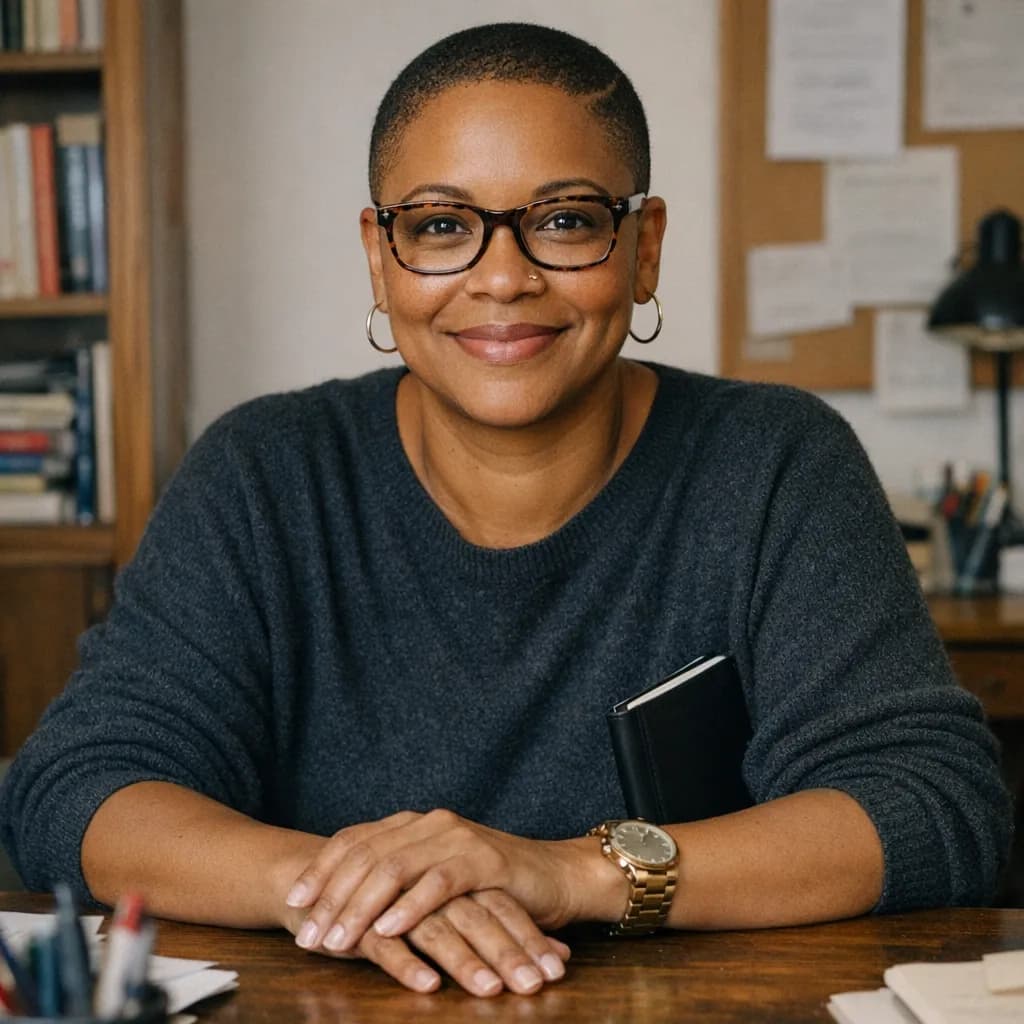
Danae Marcelline Brooks
Developmental Fiction Editor & Manuscript CoachI grew up between church basements, tidewater heat, and people who could tell a whole family story while stirring a pot and never looking up. My mom kept paperback romances in a shoebox like they were contraband, and my aunt kept a shelf of mystery novels with cracked spines. I read both. I learned early that readers forgive a lot, but they don’t forgive being bored or being lied to. I didn’t come up dreaming about editing. I wanted steadier work than “writer,” and I was the kid who could take notes fast, so I ended up in admin jobs where I got volunteered into fixing other people’s documents. Outside of that, I spent a couple years doing hair out of a friend’s kitchen. That part of my life doesn’t explain my editing, but it’s true: I still remember the sound of a cape snapping and how people tell you the most pointed truths when they think you’re not allowed to answer back. Sometimes I miss that kind of honesty. A storm took out power for a week when I was in my late twenties, and I agreed to help a neighbor organize a stack of workshop pages because there wasn’t much else to do at night. The pages were a mess, but the voice was alive. I wrote margin notes the way I talk, not the way school taught me, and the neighbor asked for more. That turned into being the person people handed drafts to. I still carry this old belief that if you “work hard enough,” the story will behave. I don’t defend it, but I catch myself acting like it’s true when I see a writer piling scenes on top of scenes. Now I’m a developmental editor because I’m impatient with pretty sentences that protect a story from making decisions. My bias is I’ll side-eye passive main characters harder than most editors will, even when the genre gives them excuses. I don’t correct that. It’s the lens I read through, and writers who want a gentler read should pick someone else. If you want a first reader who will point at the exact scene where your book starts dodging consequences, I’m your person.
Frequently Asked Questions
- What makes My Ántonia so compelling?
- Many readers assume the book works because it “captures the prairie” or because Ántonia seems admirable. That helps, but the deeper hook comes from Jim’s remembered narration: he tells you as much about his longing and avoidance as he tells you about her. Cather keeps forcing Jim to update his internal story in response to concrete events, so you feel time acting on meaning. If you want the same pull, make memory an argument with yourself, not a highlight reel.
- How is My Ántonia structured if it doesn’t follow a typical plot?
- A common assumption says episodic novels float without structure. Cather proves the opposite by chaining episodes through value shifts: each section changes what loyalty costs, what work buys, and what the community permits. The “books” work like movements in a piece of music, returning to motifs with harsher or gentler variations. If you write episodically, track what changes in consequence and perception, not just what happens on the surface.
- What are the main themes explored in My Ántonia?
- People often list themes like immigration, the frontier, and nostalgia, and those appear plainly. The craft-level theme you can steal involves perception: who gets to define someone’s story, and how class and gender bend that definition. Cather also explores how place shapes morality, not just mood, by making weather and labor produce different kinds of courage. When you write about themes, let them emerge from repeated choices under pressure, not from statements.
- Who is the protagonist in My Ántonia, and what is the primary opposing force?
- It’s tempting to say Ántonia serves as the protagonist because her life carries the heaviest material stakes. But Jim Burden drives the narration and the central tension because he controls the lens and must confront his own romanticizing. The primary opposing force doesn’t come as a single antagonist; it comes as the combined weight of poverty, reputation, gender expectations, and an indifferent landscape. When you design opposition, you don’t need a villain—just forces that consistently charge a price.
- Is My Ántonia appropriate for students and aspiring writers?
- Some assume classics suit students only as “required reading,” which drains the fun out of them. My Ántonia rewards aspiring writers because it shows how to sustain interest without twists, and how to write emotionally intense scenes with restrained language. It also includes adult hardship and social judgment that can provoke strong reactions, so context matters in a classroom. If you study it as craft, keep asking what each scene changes in the narrator’s belief, not what it “symbolizes.”
- How do I write a book like My Ántonia without copying it?
- A common misconception says you should copy the surface ingredients: pastoral setting, immigrant neighbors, lyrical description. Cather’s transferable method lies in her lens: a narrator revisits a person over time, and each revisit tests a private myth against public consequence. You can apply that to any era or genre by building episodes that revise perception, not just advance events. When you draft, check each scene for a cost paid and a belief updated—otherwise you’re writing postcards.
About Willa Cather
Select the concrete detail and refuse the explanation. The emotion belongs to the reader.
Ivar finds the mare first. In the fourth part of O Pioneers!, he comes down from his loft at dawn, sees Emil's horse standing lather-stained and spent, and knows something has gone wrong before he holds a single fact. Then he walks to the hedge. Cather declines to stage the shooting, and she hands over the evidence instead, in the order a frightened man would find it: two bodies under the white mulberry tree, one ball through the lung and another through the artery, a light trail of blood out toward the hedge and a heavier trail back, where Marie had dragged herself to Emil and died with his hand held in both of hers. You assemble the murder from marks in the grass.
She put the argument on paper nine years after that novel. "The Novel Démeublé" appeared in The New Republic in 1922, and its central wish is that a novelist could throw all the furniture out of the window, and with it the reiterated physical sensations and the tiresome old patterns. Balzac's inventories of rooms and trades she called unworthy of an artist. The essay asks for redistribution. Strip the upholstery and the feeling has to live somewhere, so it moves into a few objects and a few decisions, which then carry a load no single object in an over-furnished novel is ever asked to carry.
How does she keep you oriented while removing so much? She pays for the cut with the pages beside it. Shimerda's suicide in the barn happens off the page in My Ántonia, reported in a few flat lines, and what fills the space is the morning after: Jim alone in his grandparents' house while the adults drive over to the Shimerdas', working out that the dead man's spirit might be resting there in the warm kitchen before it starts the long way back to Bohemia. The event is cheap. Its aftermath is expensive. That ratio is the technique.
Nothing in the method is hard to describe and all of it is hard to do. Restraint costs a writer nothing on a page with no pressure underneath, which is why imitators produce something courteous and inert, and it costs a great deal on a page where a family's land or a marriage or a reputation is at stake. Build the squeeze first. Keep the sentence level. Let the reader reach the verdict you refused to write down, and the verdict will feel like theirs.













Ready to improve your draft with direction?
Open Draftly, bring your draft, and move from stuck to a stronger draft without losing your voice. Editors are on standby when you want a deeper pass.
Free welcome credits included. No credit card needed.