Caricamento
Stiamo preparando tutto. Non ci vorrà molto.
Stiamo preparando tutto. Non ci vorrà molto.
Write smarter mysteries that feel inevitable by mastering Eco’s real trick: layering a detective plot over an argument so every clue changes what the story means.
Trama del libro e analisi della scrittura di The Name of the Rose di Umberto Eco.
The Name of the Rose works because it runs two engines at once and refuses to let you treat either as decoration. Engine one: a locked-setting murder investigation with a clock. Engine two: a philosophical trial about who controls knowledge, laughter, and truth. Umberto Eco makes you feel the pleasure of solving while he quietly moves the floorboards under your feet. If you copy the surface—Latin quotes, monks, “medieval vibes”—you will bore readers. Eco wins because every scholarly flourish either delays, misdirects, or sharpens the hunt.
The central dramatic question sounds simple: can William of Baskerville, a Franciscan investigator, uncover who kills monks at a Benedictine abbey before the abbey destroys itself? But Eco stacks a second question inside it: can any method—logic, faith, institutions—claim the right to decide what counts as true? William fights murders, yes, but he also fights the abbey’s culture of secrecy and fear, plus the looming authority of the Inquisition. The primary opposing force takes two forms: the human guardian of the labyrinthine library (Jorge of Burgos) and the larger system that prefers certainty over inquiry.
Eco sets you in northern Italy in 1327, inside a wealthy abbey that functions like a fortress and a factory for manuscripts. He traps you there with winter weather, rigid rules, and a chain of command that punishes curiosity. That setting does more than look impressive. It creates a closed circuit where information becomes contraband, and where a single book can move faster than a body. If you want to reuse this engine today, don’t start by building lore. Start by deciding what your setting forbids—and what your protagonist cannot stop wanting.
Eco triggers the story with a clean mechanical inciting incident: William and his young novice Adso arrive at the abbey for a church-political dispute, and the abbot immediately pulls William aside to investigate a death that threatens the abbey’s reputation. Eco frames the request as a bargain and a deadline. Solve this quietly, solve it fast, or the abbey loses control when higher powers arrive. Notice the craft: Eco ties the “case” to public humiliation and institutional collapse, not just “catch the killer.” That’s why each new corpse lands like a structural blow, not a repeated beat.
Stakes escalate in three directions at once. First, the body count rises, and each death echoes a pattern that invites superstition. Second, the abbey’s political visitors close in, turning the investigation into a liability. Third, William’s method starts to look dangerous in a place that treats questions as sin. Eco ratchets pressure by shrinking William’s room to maneuver: witnesses clam up, documents vanish, and the library itself becomes an adversary. If you imitate this, resist the lazy move of making obstacles random. Eco makes every obstruction come from a value system.
Scopri gli editor specializzati in libri come questo, desiderosi di lavorare su progetti simili.
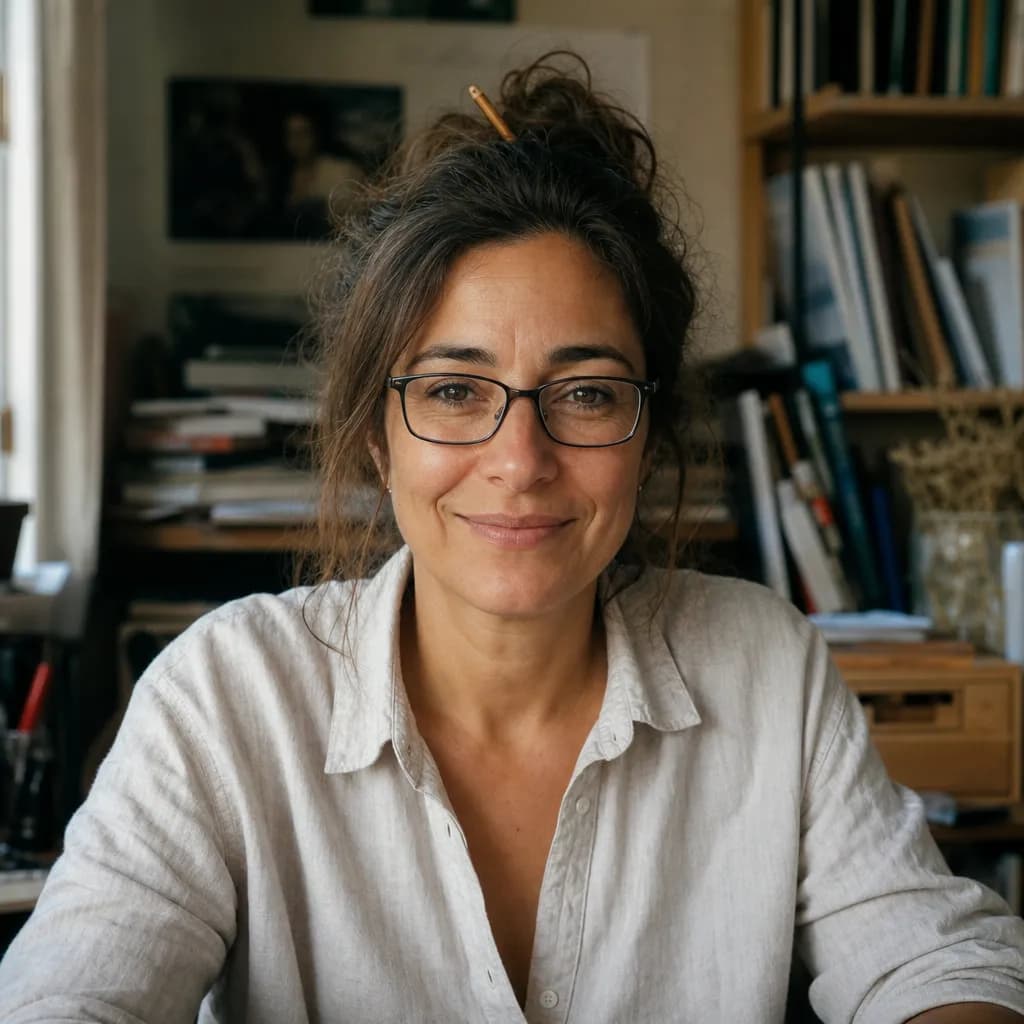
Sono cresciuta a Prato sopra una merceria di famiglia, tra rocchetti, fatture e telefonate in tre lingue. Mia madre parlava poco quando era stanca. Mio padre faceva conti su foglietti piegati in quattro. In casa i racconti finivano quasi sempre con qualcuno che aveva deciso troppo tardi. Mia nonna diceva: “Chi non decide, obbedisce.” Io me la sono scritta dentro, anche se oggi non sono sicura che sia vero. Però quando leggo un personaggio fermo troppo a lungo, la matita mi va da sola sul margine. Non sono arrivata ai libri con un piano. Ho studiato economia perché sembrava una cosa utile e perché in casa nessuno aveva voglia di discutere ancora di affitti, stipendi e futuro. Per un’estate ho riparato biciclette nell’officina di mio zio a Campi Bisenzio. Non c’entra molto con il mio lavoro, credo. Ricordo solo il grasso nero sotto le unghie e il rumore secco delle camere d’aria quando scoppiavano. Ancora oggi, quando una trama perde pressione, penso a quel suono prima di trovare le parole giuste. Il primo lavoro editoriale è arrivato per convenienza, non per vocazione. Una piccola casa editrice cercava qualcuno che sapesse usare bene Excel, leggere contratti e non spaventarsi davanti a manoscritti lunghi. Una redattrice era in maternità. Io avevo bisogno di pagare il mutuo. Ho iniziato sistemando schede, bozze, lettere agli autori. Poi mi hanno passato romanzi completi perché ero “quella che trovava dove la storia smetteva di fare i conti con se stessa”. Non era un complimento elegante, ma era abbastanza preciso. Adesso lavoro come editor generalista perché molti manoscritti non hanno un solo problema. Hanno una scelta mancata al capitolo tre, una promessa di genere dimenticata al centro, dialoghi che coprono il vuoto e un finale che arriva per comodità. So di essere più dura con i protagonisti contemplativi che con quelli impulsivi. Non provo a correggere del tutto questo limite. Nella Fiction posso accettare lentezza, ambiguità e silenzio, ma non accetto che il romanzo chieda al lettore di aspettare cento pagine prima di vedere qualcuno pagare il prezzo di una decisione.
Domande comuni su come scrivere un libro come The Name of the Rose.
Use structured information dumps as bait—then tighten them into a clue chain that makes the reader feel smarter and more anxious at the same time.
Umberto Eco writes like a novelist with a librarian’s keys and a magician’s timing. He builds stories as systems: texts inside texts, clues inside catalogs, arguments disguised as scenes. The engine runs on one core move: he makes the act of reading part of the drama. You don’t just follow events—you test hypotheses, revise assumptions, and feel your own certainty wobble.
Eco manipulates reader psychology through controlled overload. He gives you more facts, names, and frameworks than you can comfortably hold, then he uses that pressure to create a craving for order. The trick is that he also supplies the tools for order: recurring motifs, repeated terms, echoing structures, and precise signals about what matters. Your attention learns his rules the way a detective learns a city.
The technical difficulty isn’t “being smart” or sounding scholarly. It’s staging knowledge so it produces suspense instead of static. Eco treats exposition as an action with consequences: a definition changes what a character can risk; a citation becomes a trap; a footnote turns into a door. He often plans heavily—schemas, constraints, timelines—then revises to make the scaffolding feel inevitable rather than visible.
Modern writers need Eco because he solved a problem that keeps getting worse: how to write for readers who carry Wikipedia in their pockets and still make them feel wonder, doubt, and urgency. He proved you can write intellectually dense fiction that stays readable—if you control the information economy on the page. He changed the bargain: the reader doesn’t just consume the story; the reader co-authors meaning under your supervision.
Apri Draftly, porta la tua bozza e passa dall'impasse a una bozza più solida senza perdere la tua voce. Gli editor sono in attesa quando vuoi un'analisi più approfondita.
🤑 Crediti di benvenuto gratuiti inclusi. Nessuna carta di credito richiesta.Eco also weaponizes viewpoint. Adso narrates as an older man remembering his youth, which gives you two useful tensions: the innocence of the young observer and the ache of hindsight. You watch Adso misread signals, idolize William, and stumble into desire, while the older voice admits gaps, distortions, and lost certainty. Eco turns “unreliable” into a moral issue, not a twist. If you copy this, don’t just add a frame narrator for flavor. Use the frame to show what the story cost the narrator.
By the final movements, Eco pays off the double engine: the detective story reaches an explanation, but the explanation refuses to restore order. William can name causes and still lose control of consequences. The abbey’s center of knowledge turns into a literal and symbolic hazard, and the conflict between inquiry and authority stops feeling like an academic debate. Eco’s warning to you as a writer sounds blunt: don’t promise readers that intelligence guarantees victory. Promise them that intelligence changes what losing looks like—and then earn it.
Struttura della storia e arco emotivo in The Name of the Rose.
Eco builds a subversive Man-in-a-Hole. William enters confident in method: observe, infer, explain. He leaves with method intact but faith in method bruised, forced to admit that institutions, fear, and chance can overpower clean reasoning. Adso begins as a receptive disciple hungry for order and ends as a man marked by ambiguity, desire, and the knowledge that meaning often survives only as fragments.
Key sentiment shifts land because Eco keeps converting progress into moral cost. Each time William gets closer to an answer, the abbey tightens its grip, and the political stakes sour the victory. The low points cut deep because Eco frames them as failures of interpretation, not just failures of action: a clue “works” and still leads somewhere wrong, a confession clarifies and still distorts, a solved puzzle still detonates the world around it. The climax hits hard because it resolves the case while refusing the comfort you expect from resolution.
Cosa possono imparare gli scrittori da Umberto Eco in The Name of the Rose.
Eco earns his authority through constraints. He locks you inside a winter abbey and then tightens the screws with schedules, vows, rank, and architecture. The library does not “feel mysterious” because Eco describes it moodily; it feels mysterious because it controls movement and information. Notice how often characters talk about what they cannot see, cannot enter, cannot name. Eco turns setting into plot. Many modern novels treat world-building as wallpaper; Eco treats it as a machine that produces outcomes.
He also solves the “smart book” problem with a blunt craft move: he attaches every idea to a conflict of incentives. The theological dispute does not sit off to the side as background research. It arrives as people with careers, fears, and weapons. You watch William reason under surveillance, and you learn that intellect changes shape under pressure. If you want to write ideas without writing lectures, copy that. Put the argument in a room where someone can lose their freedom for saying the wrong sentence.
Eco’s dialogue teaches you how to make talk feel like action. Listen to William and Adso: Adso asks naive questions, William answers, then pivots into a sharper question that exposes what Adso assumed. The exchange does not exist to “share information with the reader.” It trains the reader to think in hypotheses, and it reveals character through method. When William spars with Jorge, Eco writes debate as a contact sport. Each line advances a goal: to define what laughter does, who gets to permit it, and why that permission matters. You can steal this by giving every conversational beat a hidden stake.
Finally, Eco uses intertext and erudition as misdirection and mood, not as a résumé. Latin tags, catalogues, and textual echoes slow you down at strategic moments, then reward you with sharper pattern recognition later. He makes the act of reading feel like investigation. The common shortcut today goes the other way: simplify the language, flatten the references, and rely on a twist to feel “smart.” Eco shows you a tougher path. He makes complexity itself part of the suspense contract, then pays it off by letting meaning stay unstable even after the culprit emerges.
Consigli di scrittura ispirati a The Name of the Rose di Umberto Eco.
Write your narrator like a person who remembers wrong on purpose. Eco lets Adso narrate with devotion, embarrassment, and regret, sometimes in the same paragraph. That mix builds trust because it feels human, not because it feels “accurate.” If you want this tone, control your distance. Let the older narrator interpret, then let the younger self blunder on the page. Use learned language sparingly and strategically. When you choose a dense sentence, make it earn its place by changing the reader’s suspicion, not by showing your vocabulary.
Build your protagonist as a method, not a mood. William does not charm you with quirks; he persuades you with procedures: observe, test, revise. Then Eco stresses those procedures until they crack, which creates character change without melodrama. Give your lead one dominant tool for making sense of the world, and then attack that tool with a world that refuses to cooperate. Make your secondary character an instrument panel. Adso shows awe, lust, fear, and confusion, so you can register what William’s cool mind tries to ignore.
Don’t fall into the “mystery tourism” trap. Writers read Eco and think the secret sauce equals a spooky library, cryptic deaths, and a sprinkle of medieval trivia. That approach produces a museum tour with corpses. Eco avoids it by making every clue a moral threat. The killer does not just hide a body; he protects an idea about who deserves knowledge. If your story treats clues as inert objects, you will stall. Tie every discovery to a value conflict that forces a character to risk status, safety, or identity.
Try this exercise and you will feel Eco’s engine click. Design a closed setting with a forbidden archive, then write seven scenes that alternate between investigation and argument. In each investigation scene, your detective finds a concrete clue that points two ways: one practical explanation and one ideological implication. In each argument scene, a gatekeeper character reframes the clue to defend a worldview. After scene seven, write a short “solution” that answers the practical mystery but worsens the ideological conflict. You will learn to make answers dangerous.

Metti la tua bozza in Draftly. Correggi scene e dialoghi nel testo — non in un'altra scheda. Quando vuoi un feedback più preciso, gli editor AI sono pronti.
🤑 Crediti di benvenuto gratuiti inclusi. Nessuna carta di credito richiesta.